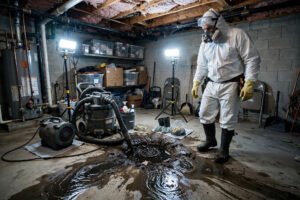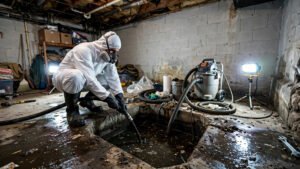
A slow drain or a faint sewer smell can look minor, but some signs mean the problem is already bigger than one fixture. This guide explains the 7 warning signs that sewage cleanup arvada homeowners should take seriously, why waiting raises the health risk, and what to do safely while help is arranged. If two or three signs appear together, treat it as a main line problem, not a small clog.
Why One Small Sign Rarely Stays Small in Arvada, Colorado
Most sewage backups do not start with a flood.
They start with a toilet that gurgles once.
Or a basement drain that smells for a day, then seems fine.
The trouble is that wastewater does not pause while you watch it. A partial blockage in a main sewer line keeps catching paper, grease, and debris every time water runs.
Each flush adds a little more.
Each shower pushes a little more water against the same restriction.
That is why a home needing sewage cleanup in Arvada, Colorado often had quiet warnings days earlier. The signs in this guide are the ones that separate a simple, single fixture issue from a sewer problem that needs professional attention.
What Changes Once Sewage Reaches a Living Area
Clean water and sewage are not the same kind of problem.
Sewage is a health hazard. It can carry bacteria, viruses, and parasites, and it soaks into carpet, padding, drywall, and insulation as it spreads.
Once it reaches finished rooms, the question is no longer just about a drain. It becomes a question about contaminated materials, indoor air, and how long damp building materials sit before mold can start.
That shift is the reason these signs matter.

Warning Sign 1: Sewage Rising Through the Lowest Drains, Tubs, or Toilets
This is the clearest sign on the list.
Water, or worse, sewage, comes up through a floor drain, a basement shower, or a downstairs toilet. Nobody ran that fixture. It rose on its own.
Wastewater takes the easiest path out. When the main line cannot carry it away, it pushes back through the lowest openings in the house.
That is why the basement and the ground floor usually speak first.
If sewage is rising in your home in Arvada, Colorado, the blockage is rarely at that fixture. The fixture is simply where a deeper problem became visible.
Why the Lowest Fixtures Speak First
Gravity explains most of it.
Every drain in the house joins the same main sewer line. When that line is blocked or overloaded, pressure builds behind the blockage.
The water looks for the lowest release point. A floor drain near the furnace, a basement tub, or a toilet on the lowest level becomes that release point.
So a backup there is a whole system message. Read it that way.
Warning Sign 2: Several Drains Slow at the Same Time
One slow sink is usually a local problem.
Hair in a bathroom drain is common. So is soap buildup in a shower trap.
But when the kitchen sink, a tub, and a toilet all drain slowly in the same week, the pattern changes. Three fixtures in different rooms share only one thing: the main sewer line.
That shared line is where the restriction likely sits.
Homes across Arvada, Colorado see this pattern before a full backup. The drains do not stop. They just get slower, day by day, as the opening in the line gets smaller.
One Slow Drain Versus a Whole House Pattern
A useful test is timing.
Did the problem start in one fixture and stay there? That points to that fixture, or its branch line.
Did several fixtures slow down together, or in quick order? That points to the sewer lateral or the municipal sewer connection side of the system.
Patterns matter more than any single slow drain. A whole house pattern is one of the strongest signs you need professional sewage cleanup help soon, before slow becomes standing water.
Warning Sign 3: Gurgling Toilets and Drains
Gurgling sounds odd the first time you hear it.
A toilet bubbles when the shower runs. A sink makes a low glug after the washing machine drains.
That sound is air. Wastewater moving through a partly blocked line pushes trapped air back up through the water in traps and toilet bowls.
Healthy drains move water quietly. Air has room to travel through the vent system, and nothing bubbles back.
When gurgling shows up in more than one fixture, air is struggling. The line is not breathing properly because something is narrowing it.
In Arvada, Colorado homes, recurring gurgling is often an early warning of tree root intrusion, grease buildup, or a sagging section of pipe. None of those fix themselves.
What Gurgling Says About Air in the Line
Think of the plumbing as two systems working together.
One carries water out. The other lets air in and out so water can flow smoothly.
A blockage disturbs both. Water slows, air gets trapped, and the trapped air escapes through the nearest water filled trap.
That escape is the gurgle you hear. It is a small sound with a clear meaning: flow is restricted somewhere downstream, and the restriction is growing.
Warning Sign 4: A Sewer Smell That Keeps Coming Back
A brief odor near a little used drain can have a simple cause.
Traps hold a small plug of water that blocks sewer gas. If a guest bathroom sits unused, that water can dry out, and the smell slips through.
Running water in that fixture for a minute often settles it.
A smell that keeps coming back is different. So is a smell that shows up in several rooms, or near floor drains in the basement.
That pattern suggests sewer gas is finding a path indoors because of a blockage, a damaged line, or wastewater sitting where it should not sit.
For anyone arranging sewage cleanup arvada help, a returning smell is a sign to act on, not to cover up. Air fresheners mask it for an hour. The source keeps working underneath.
A Dry Trap Smell Versus a Deeper Problem
Location tells you a lot.
A dry trap smell stays close to one fixture. It fades after that fixture is used again.
A deeper problem spreads. The smell appears near the basement floor drain, then near a tub, then in a hallway.
It may also get stronger when large amounts of water drain, like after a laundry load. That timing links the smell to the main line, not to one dry trap.
If the smell returns within days, treat it as a sewer line sign, not a housekeeping issue.

Warning Sign 5: Standing Dark Water or Visible Sewage
Standing water after a backup is never just water.
Dark, cloudy, or gray water in a basement, a tub, or around a floor drain should be treated as contaminated. So should any water with visible waste, even a small amount.
This is the sign people most often underestimate. The puddle looks manageable, so the instinct is to mop it and move on.
Resist reading it by size. A small amount of sewage on a hard floor is a different problem from sewage soaked into carpet, padding, or drywall, and only an assessment can tell how far it traveled.
Sewage is Category 3 black water, the most contaminated of the three water damage categories.
Why Color and Source Matter More Than Amount
Clean water from a supply line is one category of problem.
Used water from appliances sits in a middle category. Sewage sits in the highest one, because of what it can carry.
Source decides how an area must be handled, what can be kept, and what should be removed. That is true whether the affected area is one bathroom or a finished basement in Arvada, Colorado.
So judge this sign by what the water is, not by how much of it you can see.
Warning Sign 6: The Same Backup Keeps Returning
A backup that clears and then returns is telling you the cause is still there.
The first clearing moved loose material. It did not remove the root mass, the grease ring, the cracked joint, or the sag in the line that caught the material in the first place.
Recurring backups follow a rhythm. Weeks of normal use, then a slow drain, then another backup after a busy laundry day or a house full of guests.
Understanding why sewage keeps backing up in the first place helps here, because repeat events point to a line problem, not bad luck.
Tree roots are linked to more than 50 percent of all sewer blockages, according to research published through the U.S. Forest Service.
Roots grow toward moisture. They enter through small cracks and loose joints, then thicken inside the pipe and catch debris like a net.
That is why a returning backup in Arvada, Colorado deserves a camera look at the line and a cleanup plan, not another round of waiting. Each return usually affects a little more of the home than the one before it.
Warning Sign 7: Wet or Soggy Ground or Pooling Over the Sewer Line Outside
Sometimes the house gives no warning first. The yard does.
A patch of ground over the sewer line stays wet in dry weather. Grass in one strip grows faster and greener than the rest of the lawn. Water pools near a cleanout or along the path the line takes to the street.
That can mean wastewater is escaping underground. A cracked or blocked lateral can leak into the soil, or back up and surface at a low point outside.
For homes in Olde Town Arvada where many properties are older, an outdoor sign like this is worth taking as seriously as an indoor one.
The problem is in the same line either way.
What to Watch for After Rain in Arvada, Colorado
Rain can confuse the picture, so watch what happens after the ground dries.
A wet patch that lingers days after other areas dry out stands out. So does a soft, sinking spot along the line, or a sewer smell outdoors near the same area.
If outdoor signs appear together with slow drains or gurgling indoors, the two sets of signs support each other. The line is struggling along its whole run, inside and outside the house.
What to Do Safely When These Signs Appear in Arvada, Colorado
Knowing the signs is only half the job. The next hour matters too.
The safe steps are simple, and none of them involve cleaning sewage yourself. Sewage cleanup arvada calls usually go better when the area is left undisturbed and the problem is described clearly.
Stop Using Water and Drains First
Stop flushing toilets and stop running sinks, showers, dishwashers, and washing machines.
Every gallon added to a blocked line has to go somewhere. In a backing up system, that somewhere is often the lowest drain in the house.
Pausing water use does not fix the line. It simply keeps the affected area from growing while help is arranged.
Keep People and Pets Away From the Area
Keep children, pets, and anyone who is ill away from the affected rooms.
Avoid contact with the water and with items it has touched. Do not carry contaminated items through clean parts of the home.
If you can do it safely from a dry area, note what you see, hear, and smell, and take photos from the doorway. That record helps the dispatcher and your records, without putting you in the water.
Electrical, Gas, and Health Safety Checks
If water has reached outlets, appliances, or the electrical panel, stay out of the area. Do not enter standing water to reach a switch, and call an electrician or the utility for help.
If you smell gas, leave the home and call 911 from outside.
If sewage has touched your skin, wash well with soap and clean water. If you feel ill after contact, see a doctor and say what you were exposed to.
What Not to Do While You Wait
A few common reactions make things worse.
Do not keep testing the system by flushing or running water to see if it cleared. Each test adds volume to a line that already cannot cope.
Do not run household fans in the affected area before it is cleaned. Moving air can spread contaminated particles to rooms that were clean.
Do not move soaked belongings into clean rooms, a garage used by the family, or shared hallways. That spreads contamination on shoes, hands, and the items themselves.
And do not close up a wet wall, lay flooring back down, or throw damaged items away before they are documented. A careful first hour protects both the home and the paperwork that may follow.
How Fast Damage Grows After a Sewage Backup
Sewage damage runs on a clock.
In the first hours, contaminated water wicks into baseboards, drywall, and flooring edges. It travels further than the visible puddle suggests, especially under flooring and inside wall cavities.
Then moisture becomes its own problem. Damp materials that stay damp invite mold, and the window for simple drying is short.
The U.S. Environmental Protection Agency says water damaged areas and items should be dried within 24 to 48 hours to prevent mold growth.
That short window is the practical reason waiting it out rarely works. A sign spotted on Monday can be a removal job by Thursday, not because anyone is exaggerating, but because water keeps moving and materials keep absorbing.
Why Basements in Olde Town Arvada Need a Faster Decision
Finished basements hold value and moisture at the same time.
Carpet, padding, drywall, and stored belongings sit at exactly the level where backups arrive first. Older homes near the historic district can also have older lines, which makes repeat signs more likely.
For sewage cleanup arvada homeowners in this area, a fast decision is mostly about limiting how much has to be removed later.

Who This Matters For in Arvada, Colorado
Homeowners come first on this list, because they live with the health risk and the repair decisions.
Rentals, condos, and HOA managed properties come next. Tenants may spot the signs first, while owners or managers arrange the response, so clear reporting of what was seen, and when, helps everyone.
Commercial properties follow, and they are never left out. Restaurants, retail spaces, offices, multifamily buildings, and light industrial properties in Arvada, Colorado all face the same signs, with more people exposed and more rooms connected to the same lines.
The signs do not change by property type. Only the number of people affected does.
Sewage Cleanup Arvada Serving the Olde Town Arvada Community and Beyond in Arvada
Sewage Cleanup Arvada serves the Olde Town Arvada community in Arvada, Colorado, near local landmarks like Teocalli Cocina, for homes close to the crossing of Ralston Rd and W 57th Ave, at coordinates 39.800576993620986, -105.08140381464582. A local dispatcher confirms the next available window, and a written quote is given before any work begins.
Navigate from Olde Town Arvada to Sewage Cleanup Arvada Now
Get Sewage Cleanup Olde Town Arvada Service Now
Frequently Asked Questions About Sewage Cleanup in Arvada, Colorado
What are the first signs of a sewage backup in a house?
The earliest signs are usually slow drains in more than one room, gurgling toilets, and a sewer smell near floor drains. In Arvada, Colorado, treat two or more of these together as a main line warning, not as separate small issues.
Can a sewer smell in the house make you sick?
Sewer gas and sewage itself can irritate the eyes, throat, and stomach, and sewage can carry germs that cause illness. Keep people away from the source, and if anyone feels ill after contact with sewage, see a doctor.
How long can sewage sit before it becomes a bigger problem?
Not long. The U.S. Environmental Protection Agency advises drying water damaged areas within 24 to 48 hours to prevent mold growth, and sewage adds contamination on top of moisture, so arranging sewage cleanup arvada help the same day you spot clear signs is the safer course.
Is it safe to stay in a house with a sewage backup?
It depends on how much of the home is affected. Keep everyone out of affected rooms, stop using drains, and if water has reached electrical outlets or the panel, stay out of that area entirely and call an electrician or the utility.
When should you call a professional for sewage cleanup?
Call when you see any one of the clear signs in this guide, like sewage rising through a drain, standing dark water, or a backup that keeps returning. A 24/7 dispatch line can confirm the next available window, and a written quote is given before any work begins.