Sewage backup cleanup in Arvada, Colorado
Under-home sewage cleanup, done right.
Crawl space sewage cleanup in Arvada is the removal, sanitizing, and drying of sewage that has backed up into the low space beneath a home. Sewage in a crawl space is dangerous because it carries bacteria and pathogens, feeds mold, and can rot joists and piers while odors and contaminants rise into the rooms above. Our crew extracts the standing sewage, removes contaminated soil and insulation, sanitizes joists and piers, and dries the space until moisture readings show it is safe again.
What's included
Our crawl space sewage cleanup service includes thorough assessment, sewage extraction, sanitization, and drying. Additional services may be available depending on the situation.
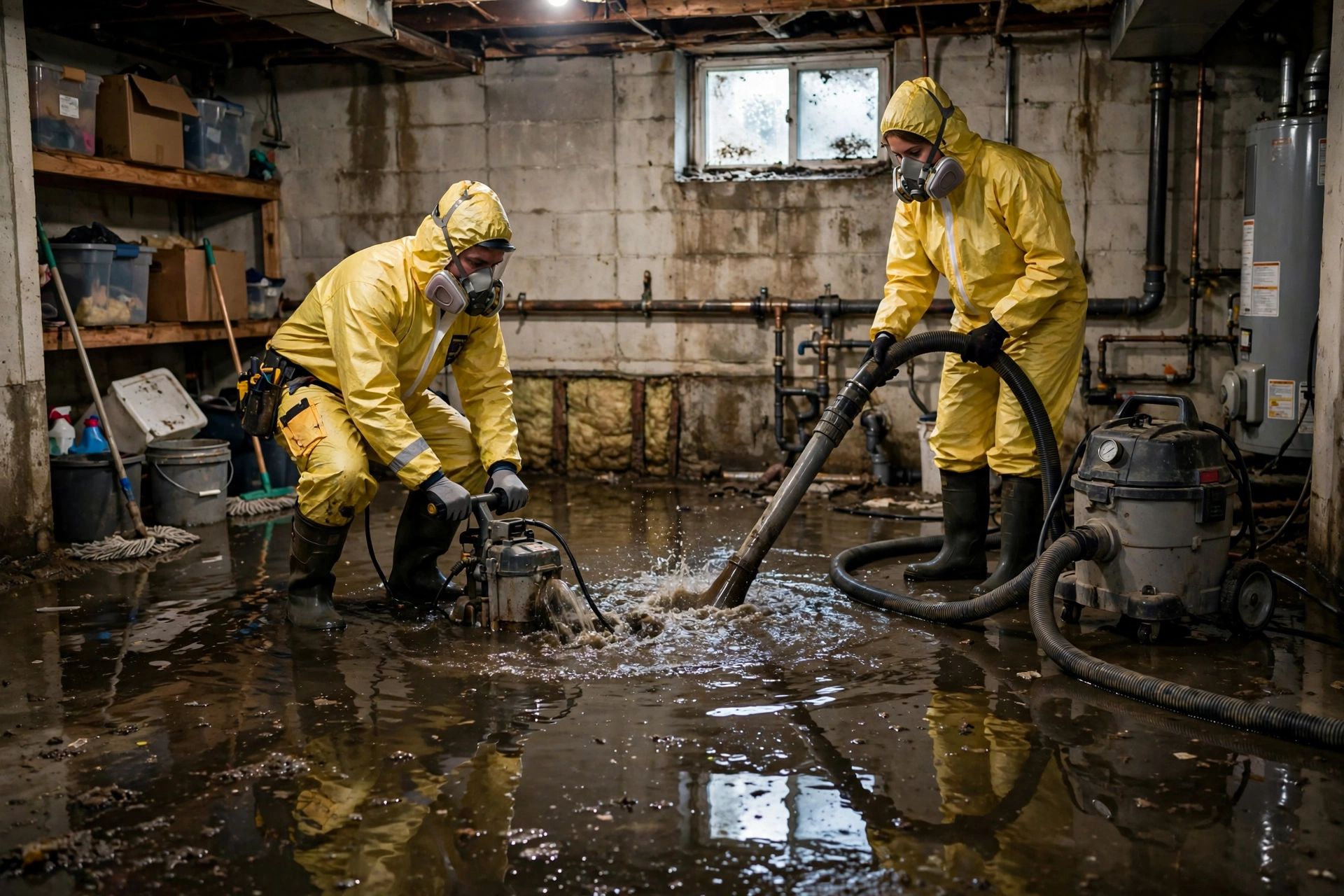
We remove all sewage and wastewater from under your home using low-clearance extraction equipment, ensuring complete removal from the crawl space.
We use professional-grade disinfectants to sanitize joists, piers, and surfaces, eliminating harmful bacteria and odors.
Compact air movers and dehumidifiers sized for low spaces dry the crawl space thoroughly, preventing mold growth.
A comprehensive inspection with moisture readings ensures the space is dry and free from any remaining contaminants.
Service overview
Crawl space sewage cleanup in Arvada involves the removal of sewage and wastewater from the space beneath a home, ensuring the area is thoroughly sanitized and restored to a safe condition. A crawl space is not a basement: it is the low, unfinished void under a house, and it is handled differently from a finished room. For sewage in a basement, see basement sewage cleanup in Arvada. This service is essential when a blocked or broken line releases sewage under the house, which can lead to health hazards and structural damage.
Local Arvada customers often need crawl space sewage cleanup after a main line blockage or a cracked pipe under the floor sends wastewater into the soil below. Our Arvada crawl space sewage removal experts are equipped to handle these situations, providing emergency crawl space sewage cleanup to mitigate damage and restore safety.
The service timeline
01
We begin with a thorough assessment of the crawl space, identifying the source and extent of the contamination across the soil, joists, and piers.
Using extraction equipment worked through the access hatch, we remove all standing sewage and wastewater from under the home.
After water removal, we apply professional-grade sewage treatment chemicals to sanitize joists, piers, and remaining surfaces, eliminating harmful pathogens and odors.
We use compact air movers and dehumidifiers placed for a low, enclosed space to ensure the crawl space is completely dry, preventing mold growth.
Finally, we conduct a thorough inspection with moisture readings at the joists, piers, and soil to ensure the crawl space is safe and clean. This step involves checking for any lingering issues.
After extraction and sanitizing, drying is the work that decides whether the crawl space stays clean. Compact air movers are placed to move air across the soil, joists, and piers, and dehumidifiers pull moisture out of the low, enclosed space. Technicians take moisture readings at the joists, piers, and soil, and they keep drying until those readings show the framing and ground are dry through, not just dry on the surface. Contaminated soil and insulation are removed rather than dried in place, because sewage soaks into both and cannot be sanitized reliably once it has. A damaged vapor barrier is taken out with the contaminated material, and a fresh barrier is installed over treated ground at the end of the job to seal the clean surface and slow moisture rising from the soil.
A crawl space is ready to be used again when there is no standing water, no sewage residue on the soil, joists, or piers, and no odor rising into the rooms above. Moisture readings at the joists, piers, and soil should be back in their normal range, the surfaces should be sanitized, and the vapor barrier should be intact. The final inspection is the check that confirms those points, rather than a guess based on how the space looks from the hatch. If readings are still high, or if damp soil, stained insulation, or a torn vapor barrier is still present, drying and treatment continue until the space meets those marks. Homeowners should not re-enter or store belongings in the space until that inspection is complete.
For crawl space sewage cleanup in Arvada, call (720) 764-0457 to talk with the local team about what was found under your home and what the next step should be.
Many Arvada homes were built in the 1950s, 1960s, and 1970s, and their crawl spaces are low, with only a few feet of clearance between the soil and the floor joists. Those homes often still have cast-iron or clay tile sewer lines, which crack, shift, and collect tree roots over time. When a line fails, sewage escapes at the lowest point it can find, which is usually the soil under the house, and it spreads across the ground before anyone in the rooms above notices a smell.
Arvada clay soil makes the problem worse. Clay holds moisture long after a backup, and it swells when wet and shrinks when dry, which stresses pipe joints and piers with every cycle. Freeze-thaw adds another strain: winter cold freezes shallow lines and the ground around them, and the spring thaw moves soil and cracks older pipes that were already weakened. A backup that starts as a small crack can therefore grow into a larger release under the floor, and the soil, insulation, and vapor barrier in the crawl space take the worst of it.
That combination is why mold, structural damage, and contaminated soil and insulation are the main risks in an Arvada crawl space. Sewage-soaked insulation loses its shape and cannot be dried back to a safe condition, so it is removed. The vapor barrier, which is meant to keep ground moisture out of the house, is torn or soaked through, and it is replaced over treated ground. The joists and piers that carry the floor can rot if they stay damp, and mold grows in the dark, enclosed space where the soil and framing never fully dry on their own. Cleanup therefore means removing what sewage has soaked, sanitizing the framing, drying the space with moisture readings, and leaving a clean, dry crawl space that will not feed mold or rot.
Tools & methods
Purpose-built equipment, used by trained technicians, so the job is done accurately the first time.
Compact extraction units and hoses that fit through the access hatch and work in spaces too low to stand in.
Essential for removing pooled sewage from low spots under the home, ensuring complete removal.
Used to map exactly how far contamination and moisture have spread through soil and framing, and to verify dryness at the end.
Fresh vapor barrier installed over treated ground at the end of the job to seal the clean surface.
Use cases
These examples show how the service framework adapts rather than forcing every call through one repair path.

A cracked drain line under a Leyden Rock home leaked sewage into the soil with every use, leaving the ground above the line wet and foul-smelling. → Post-cleanup, the contaminated soil layer was removed, surfaces were sanitized, and a fresh vapor barrier was installed.
A septic backup pushed sewage back through the lowest line and into the crawl space of a Ralston Valley home, creating a health hazard. → Our team extracted the sewage, sanitized the joists and piers, and verified dryness with moisture readings, eliminating health risks.
Problems we solve
Crawl space sewage cleanup addresses critical issues that can affect your home and health.
Our team removes the sewage and contaminated material, and identifies where the release is coming from so it can be addressed.
We use effective sanitization methods to eliminate odors at the source under the home and ensure a fresh environment.
Our crew removes pooled sewage and the soil it soaked into, then dries and verifies the space, restoring the crawl space to a safe condition.
How the scope is set
The scope depends on the severity of the backup, the affected area, and the sanitizing work required. The responding contractor assesses everything on site and explains the full scope before any work begins. Call (720) 764-0457 to reach the Arvada team.
Phase 01
The severity of the sewage backup directly impacts cleanup time and scope, with more extensive damage requiring more resources.
Emergency services outside regular hours may require extra work due to increased demand.
Different types of sewage (e.g., black water, gray water) require varying levels of cleanup and safety measures.
Can I clean sewage out of my crawl space myself?
No. Sewage in a crawl space is category 3 water, which carries bacteria, viruses, and parasites, and the space itself is a confined, low-clearance area with limited air. Homeowners should stay out, keep children and pets away, and let a trained crew with protective equipment, extraction equipment, and sanitizing products handle the removal and drying.
Will my homeowners insurance cover crawl space sewage cleanup?
Coverage depends on your policy and what caused the backup. A sudden, accidental backup is treated differently from damage that built up over time or from a maintenance issue, so photograph what you can see from the access hatch, keep records of what happened, and contact your insurer to ask what your policy covers before cleanup begins.
What should I do first when I find sewage in my crawl space?
Stay out of the space, keep children and pets away, and avoid running water fixtures that drain into the affected line. If sewage is also backing up into sinks, tubs, or toilets in the house, see our emergency sewage removal in Arvada page for what to do next, and call (720) 764-0457 to talk with the local team.
Can sewage in a crawl space damage my home’s foundation?
Sewage itself does not usually damage a concrete foundation, but the moisture it leaves behind can rot the wooden joists and piers that the floor rests on, and it can erode or soften the soil under piers. That is why the cleanup includes removing contaminated soil, drying the space, and checking moisture at the joists, piers, and soil during the final inspection.
How do I keep sewage out of my crawl space in the future?
Have the main sewer line inspected if backups keep happening, especially in older Arvada homes where clay tile or cast-iron lines can crack, shift in clay soil, or collect tree roots. Keep the access hatch clear, make sure gutters and grading move rainwater away from the house, and have a plumber check slow drains before they become a backup.
Should I be worried about mold after a crawl space sewage backup?
Yes, mold is a real risk, because sewage leaves the soil and framing damp in a dark, enclosed space. Drying with air movers and dehumidifiers, removing contaminated insulation and soil, and sanitizing joists and piers are all aimed at removing the moisture and organic material that mold needs to grow. If mold is already visible on framing, it should be addressed as part of the cleanup, not left to dry on its own.
Who provides crawl space sewage cleanup in Arvada?
Sewage Cleanup Arvada provides crawl space sewage cleanup for homes across Arvada, from older homes near Olde Town to newer homes in Candelas and the surrounding neighborhoods. Learn more about the services we provide, or call (720) 764-0457 to talk with the local team.
Sewage reaches a crawl space when the main sewer line blocks or breaks below the house, from tree roots, clogs, or cracked pipes. The wastewater escapes at the lowest and weakest point it can find, which is usually under the floor.
The most common sign is a sewer smell rising through floor vents or the access hatch while the rooms above look dry. Slow drains across the house and a patch of lawn above the sewer line that stays wet are other signs.
The crawl space sewage cleanup process involves assessing the space, extracting the sewage, removing contaminated soil and materials, sanitizing the surfaces that remain, drying with moisture checks, and conducting a final inspection. Each step is crucial for effective cleanup.
Most crawl space sewage cleanup work does not need a permit, because it is cleaning, sanitizing, and drying, not construction. A permit may be needed if the backup damaged structural framing or a sewer line that has to be repaired or replaced, and the contractor can advise on that after the assessment.
Related services

Ready when you are
Contact us now for crawl space sewage cleanup in Arvada. Our experienced team will handle the sewage under your home safely.

Talk with the local team
We invite you to reach out for any crawl space sewage backup concerns. Our team is available to answer your questions and schedule your cleanup.