
A sewage backup is bad enough on its own. When the water reaches an outlet, a switch, or your electrical panel, it becomes a different kind of problem. Water and electricity do not mix, and sewage water makes the mix worse, because it carries bacteria and waste along with the current risk.
This guide explains what happens when sewage water reaches your electrical system, why cleanup crews wait for an electrical all clear before they start, and what you should do in the meantime. It covers homeowners first, then rentals, condos and HOA properties, and commercial properties, because the same risk shows up in all of them.
Why Sewage and Electricity Are a Dangerous Pair
Clean water is already a conductor. Sewage water is worse, because dissolved waste and salts help current travel further and more easily through it. That means a puddle that looks shallow can still carry current to anything it touches, including a person standing in it.
Wet skin makes the risk higher again. Dry skin resists current, but wet skin lets far more of it through. That is why the same outlet that seems harmless on a dry day becomes a serious hazard when the floor around it is wet with sewage.
The other danger is hidden. Water creeps behind baseboards, under flooring, and inside wall cavities, where it can reach wiring you cannot see. A room can look mostly dry at the doorway while the wall behind an outlet is soaked. That hidden reach is why crews treat every wet electrical point as a risk until it is checked, not just the ones with visible water.
What Happens When Sewage Water Touches an Outlet
An outlet sits low on the wall, often just above the floor. In a basement or a ground floor room, it is usually one of the first electrical points the water reaches. Once water enters the outlet box, it can bridge the live parts inside and trip a breaker, or it can sit there quietly and corrode the connections over days.
Switches are similar, but people notice them less. A light switch near a wet wall can carry current through damp plaster or a wet switch plate. If the switch feels warm, buzzes, or sparks, that is a sign to leave the room alone and call for help, not a sign to keep testing it.
Appliances plugged into low outlets add another path. A washing machine, a freezer, or a furnace standing in sewage water can become energized through its cord or its metal case. Unplugging it by hand while standing in the water is exactly the wrong move. The safe move is to stay out and let a qualified electrician or your utility handle the power.
How Common Are Electrical Fires at Home
Electrical problems are not a rare footnote in home fires. They are one of the main causes, which is why crews take the electrical check so seriously before any other work begins.
Electrical distribution and lighting equipment was involved in an estimated 13 percent of home fires in the United States between 2014 and 2018, according to research published by the National Fire Protection Association.
That figure covers all home fires, not just sewage cases. It matters here because a sewage backup adds water to an electrical system that already causes a large share of fires. Wet wiring, wet outlets, and wet panels raise a risk that is already real.
The First Signs the Problem Has Reached Your Electrical System
Sometimes the signs are obvious. A breaker trips and will not reset. Lights flicker in a room that has water in it. An outlet smells hot or looks discoloured. A GFCI outlet trips and stays tripped. Any one of these after a backup is a reason to stop and stay out of the room.
Sometimes the signs are quieter. A faint buzzing near a switch. A warm patch on a wall. A breaker panel in a room next to the wet area that feels damp to the air. These are easy to miss, and they are easy to explain away. Do not explain them away. A backup changes what normal means in that room, and anything electrical that behaves oddly after one deserves a professional look.
One more sign matters: water that has reached the height of an outlet, even if the outlet looks fine. Height is the warning, not appearance. If the waterline touched an outlet, a switch, or the bottom of a panel, treat that circuit as unsafe until a qualified electrician says otherwise.
What to Do Right Away
Your first job is to keep people safe, not to save the room. Stop using drains and toilets, so no more water enters the backed up line. Keep children, pets, and anyone who is ill away from the wet area. Do not walk through sewage water to reach anything, including the panel.
If water has reached outlets, switches, or the electrical panel, stay out of the room entirely. Do not enter standing water to switch off a breaker. If you can switch off power from a dry location, such as a main switch in a dry part of the home, that is different from wading in to reach it. If you cannot do it from a dry place, leave it and call an electrician or your utility for help.
If you smell gas, leave the home and call 911. Do not switch lights on or off on your way out. If anyone has had contact with sewage water, they should wash up and see a doctor if they feel unwell or have open cuts. Then call a professional cleanup service, so the cleanup can be arranged once the electrical risk is handled.
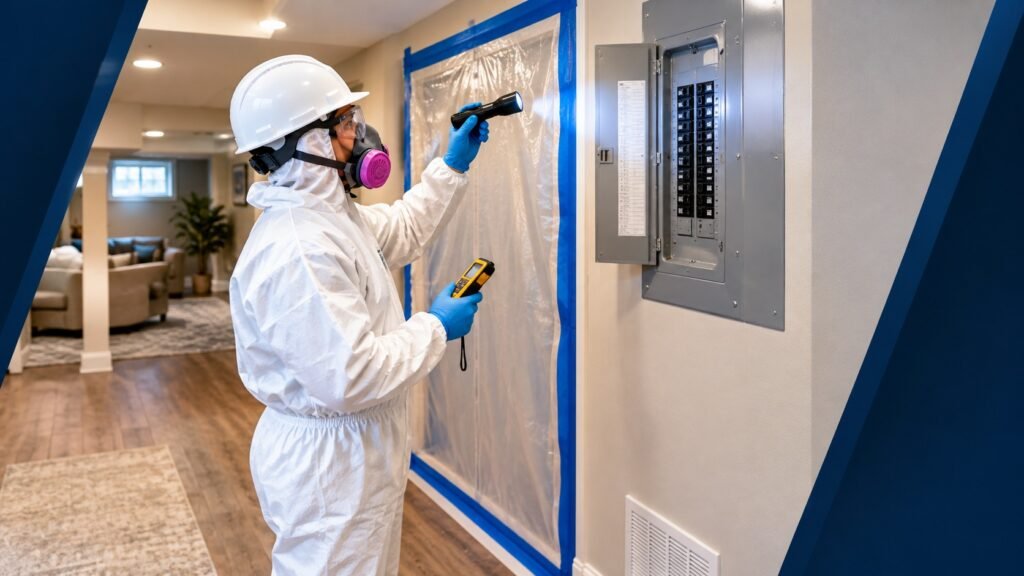
Why the Power Stays Off Until the Area Is Checked
Homeowners often ask why a crew will not just start cleaning while the power question is sorted out. The answer is simple: extraction, removal, and drying all put people into the wet area, and people in a wet area with live electrical points are at risk. No cleanup step is worth that risk.
A qualified electrician checks which circuits are affected, whether the panel itself is safe to touch, and whether any wiring, outlets, or fixed appliances need to stay off. Sometimes the answer is one circuit. Sometimes it is the whole lower floor. Sometimes the panel needs work before anything else can run, including drying fans. That waiting time feels slow, but it is the step that keeps the rest of the job safe.
GFCI outlets help, and they are worth understanding here. A GFCI outlet watches for current leaking where it should not go and shuts the circuit off in a fraction of a second. In wet rooms like bathrooms, kitchens, and basements, that fast shutoff is a real layer of protection.
GFCI protection was found to be 81 to 95 percent effective in preventing electrocution deaths, according to a study by Underwriters Laboratories cited by the United States Consumer Product Safety Commission.
A GFCI outlet is not a guarantee, and it does not make a sewage backup safe to walk through. It is one layer of protection in a system that still needs a professional check after sewage exposure. A tripped GFCI after a backup is information, not an invitation to reset it and carry on.
How Crews Work Around Electrical Hazards
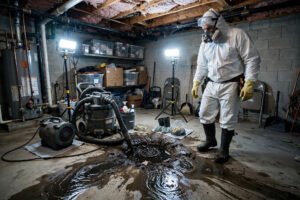
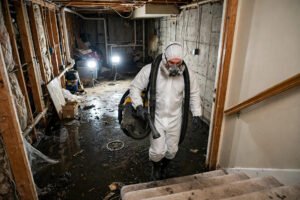
A professional cleanup starts with assessment, and the electrical check is part of that assessment. Crews look at where the water went, how high it reached, and which electrical points sit in or near that path. They work from dry areas where they can, and they keep containment barriers in place so clean rooms stay clean.
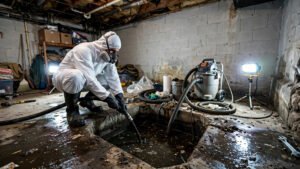
Extraction comes only after the electrical risk is understood. Standing sewage water is pumped out with equipment made for contaminated water, and the crew wears full protective gear throughout. Contaminated porous materials, such as soaked carpet and padding, wet insulation, and drywall that took on sewage water, are removed and bagged, because sewage contamination cannot be dried out of them safely.
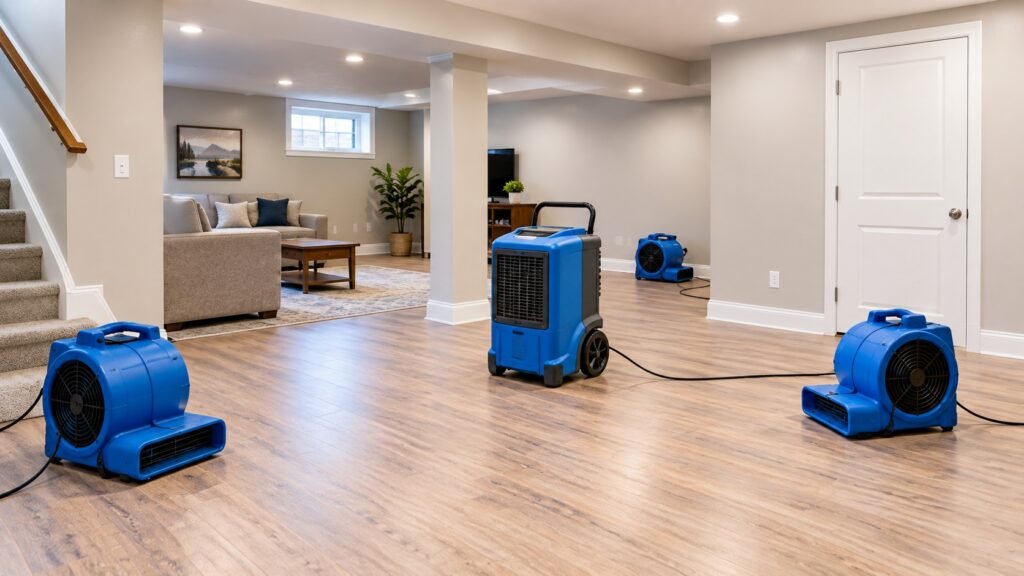
Sanitization follows removal. Hard surfaces that remain are washed and treated, so bacteria and other contaminants are addressed before drying begins. Then structural drying starts, with air movers and dehumidifiers running until moisture readings show the structure is dry, not just dry to the touch. Drying equipment itself needs power, which is another reason the electrical check comes first: fans plugged into a wet circuit would create the very risk the crew is trying to avoid.
Outlets, Panels, and Appliances: What Crews Check
The check is not just the panel. Crews and electricians look at the whole path the water took. Low outlets in the wet room come first, then switches on wet walls, then any outlet in the room next door if water travelled under a wall or through a doorway.
The panel gets its own attention. If water reached the panel, or the room holding it, the panel stays untouched until a qualified electrician clears it. A wet panel can hide corrosion inside, and corrosion can cause heat, arcing, or failure later, even after the room looks dry. That later failure is why a quick visual check is not enough.
Fixed appliances matter too. A furnace, a water heater, or a washer standing in sewage water needs a professional look before it runs again. So do hardwired smoke alarms and any equipment in a utility room that flooded. Anything with a motor, a heating element, or a control board that sat in sewage water is suspect until it is checked, and some of it will need replacing rather than cleaning.
Air ducts deserve a mention here. If sewage water reached a return vent or a duct run, contamination can travel through the system when the fan runs. That is why crews ask about the HVAC system during assessment, and why the fan stays off until the duct question is answered. Running the system early can spread contamination to rooms that were never wet.
What Happens to Wiring and Devices After Sewage Exposure
Water leaves more than a stain behind. Sewage water leaves residue on connections, and residue leads to corrosion. Corroded connections run hotter than clean ones, and hotter connections are a fire risk that can show up weeks after the room looks finished. That delayed risk is the reason electricians take sewage exposure seriously even when everything appears to work again.
Some things can be cleaned and kept. A hard surface outlet cover that was wiped and checked is different from wiring inside a soaked wall. Some things cannot be kept safely. Wiring, outlets, and devices that sat in sewage water for hours, or that show corrosion, are usually replaced. The decision belongs to a qualified electrician, who can open the box and see what the water actually did.
Keep every report and photo from the electrical check. If an insurance claim follows, the claim will ask what was affected, what was replaced, and why. A clear record, with dates and photos, makes that conversation much easier. It also helps the next person who works on the home, because they will know which circuits were exposed and what was done about them.
Drying and Electrical Safety Together
Drying is where patience pays off. A room that looks dry can still hold moisture inside walls, under flooring, and in framing. Moisture meters tell the crew what eyes cannot, and drying continues until readings match dry areas of the home. Rushing this step invites mold and odor, and it can hide damage that shows up later.
Dry water damaged areas and items within 24 to 48 hours to help prevent mold growth, according to guidance from the United States Environmental Protection Agency.
That window starts when the water arrives, not when the crew arrives, which is why calling early matters even when the power question delays the start. The electrical check and the cleanup call should happen in parallel, not one after the other. While the electrician is on the way, the cleanup can be arranged, so no time is lost once the all clear is given.
Drying equipment also needs a safe power source. Air movers and dehumidifiers run for days in a typical job, and they must run on circuits that are dry and cleared. A crew that plugs drying gear into a wet circuit has traded one problem for another. The safe circuit check is a small step that protects the whole drying phase.
What Not to Do When Sewage Reaches Your Electrical System
Do not enter a flooded room to reach a breaker, an outlet, or an appliance. Do not reset a tripped breaker while the room is still wet, and do not keep resetting it if it trips again. A breaker that trips repeatedly is telling you something, and the message is to leave it alone.
Do not use wet appliances, wet power strips, or wet extension cords, even if they look fine after a wipe. Do not run the furnace fan or the air conditioning if sewage water reached a vent or a duct. Do not mix cleaning chemicals, and do not pour anything down a drain that is already backed up. Each of these feels like helping, and each of them adds risk or makes the cleanup harder.
Do not wait for the room to dry on its own before calling. Air drying a sewage affected room without extraction, removal, sanitization, and checked drying leaves contamination and moisture in place. The right sequence is safety first, then professional assessment, then cleanup and drying in order.
Who This Matters For in Arvada, Colorado
Homeowners face this most often, since they own both the home and the decisions about it. A homeowner who knows to stay out of a wet electrical room, and to call an electrician and a cleanup service in parallel, protects both the household and the home.
Rentals, condos, and HOA properties come next, because a backup in one unit can reach shared panels, shared walls, and neighboring units. Early notice to the building manager and to neighbors matters, since one unit’s wet outlet can sit on a circuit that serves more than one home.
Commercial properties matter too. A shop, restaurant, or office with a wet panel or wet equipment room faces the same electrical risk, plus staff and customers who may not know the room is unsafe. Closing the affected area and getting a professional check protects everyone in the building, not just the owner.
Sewage Cleanup Arvada Serving the Village of Five Parks Community and Beyond in Arvada, Colorado
Sewage Cleanup Arvada serves homeowners, rentals, condos, HOA properties, and commercial properties across Arvada, Colorado, including the Village of Five Parks community. The service connects people with independent local technicians for sewage cleanup around the clock, so help can be arranged whenever a backup happens.
Homes in Village of Five Parks sit near Leyden Park, and many are reached from W 86 Pkwy. That local detail matters when a crew is finding the home, and it matters when a homeowner is describing where the problem is. The coordinates for this area are 39.852494595358316, -105.14814486901.
Get Sewage Cleanup Village of Five Parks Service Now
If you want to be ready before the crew arrives, read how to prepare your home before the crew arrives. Stop using water, keep people and pets away, stay out of any room where water has reached outlets or the panel, and let the electrician and the cleanup crew do their checks in order. Safety first is not a delay. It is the job done right.
Navigate from Village of Five Parks to Sewage Cleanup Arvada Now
Frequently Asked Questions About Sewage Cleanup in Arvada, Colorado
Can I reset a tripped breaker after a sewage backup?
Not while the room is still wet, and not repeatedly if it trips again. A breaker that trips after a backup is protecting a circuit that may have water in it. Leave it off and let a qualified electrician check the circuit before it is switched back on.
Why can cleanup not start until the power is checked?
Cleanup puts people into the wet area, and live electrical points in that area put those people at risk. Extraction, removal, sanitization, and drying all need a safe electrical situation first, including safe circuits to run drying equipment on.
What if sewage water reaches my electrical panel?
Stay out of the room and do not touch the panel. Call an electrician or your utility for help with the power, and call a professional cleanup service in parallel, so cleanup can start as soon as the panel is cleared.
Do GFCI outlets make a sewage backup safe to walk through?
No. A GFCI outlet is a valuable layer of protection that shuts a circuit off quickly when current leaks, but it does not make sewage water safe to enter. Stay out of the wet area and let professionals check the circuits.
Who checks the electrical system after sewage cleanup?
A qualified electrician checks panels, circuits, outlets, and fixed appliances that were exposed to sewage water. The cleanup crew handles extraction, removal, sanitization, and drying, and the electrician handles the electrical all clear. Both checks matter before a room returns to normal use.