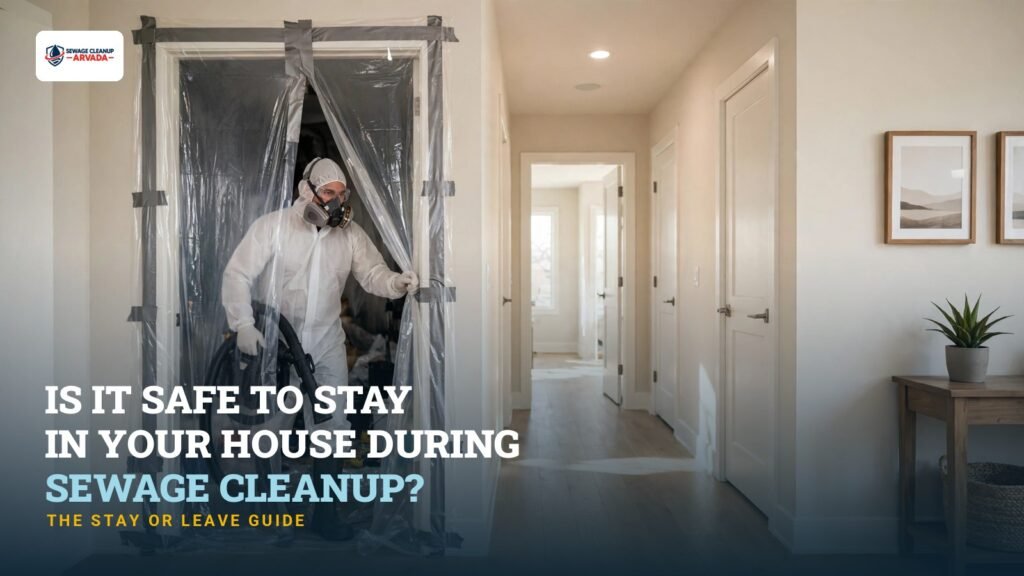
In many cases, yes. When a sewage cleanup is limited to one backed-up area and that area can be sealed off, the rest of the home usually stays safe to live in while the crew works. In other cases, when sewage has spread widely, is still rising, or has reached electrical systems, leaving is the safer choice. This guide explains how that stay or leave decision is made in Arvada, Colorado, and the rules that protect a household either way.
Start With the Water Itself
A sewage backup is not a bigger version of a clean water leak. It is a different category of problem entirely.
Clean water from a supply line is mostly a moisture problem. Sewage is a moisture problem and a contamination problem at the same time, and the contamination is what drives every safety decision in this guide.
What Sewage Carries Into a Home
Sewage water can carry bacteria, viruses, and parasites, along with whatever chemicals and waste went down the drains above it.
Contact with it can irritate skin and make people ill, and the risk is highest for anyone who touches it, walks through it, or breathes the air in a heavily affected room for hours.
That is why the safety question is never just about the room with water in it. It is about contact, air, and who in the household is most vulnerable.
It also explains a point that surprises people: the size of the puddle is not the measure of the risk. A small amount of sewage in the wrong place, near a sleeping area, a play space, or an electrical panel, can matter more than a larger amount sealed inside an unfinished basement corner.
The Rule That Decides Most Cases: Reach and Containment
Most stay or leave decisions come down to two questions.
How far did the sewage reach? And can that area be completely sealed off from the rest of the home?
When the answer is one room, sealed behind plastic containment sheeting with its own boundary, the rest of the house usually stays livable. When a Village of Five Parks homeowner calls about sewage cleanup, this reach and containment check is the first thing the crew works through, because it decides how the family lives for the next several days.
How Containment Actually Protects the Clean Rooms
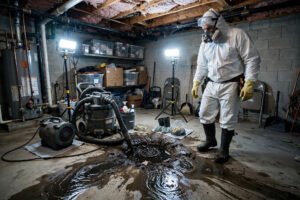
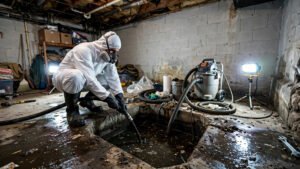
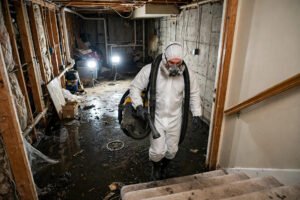
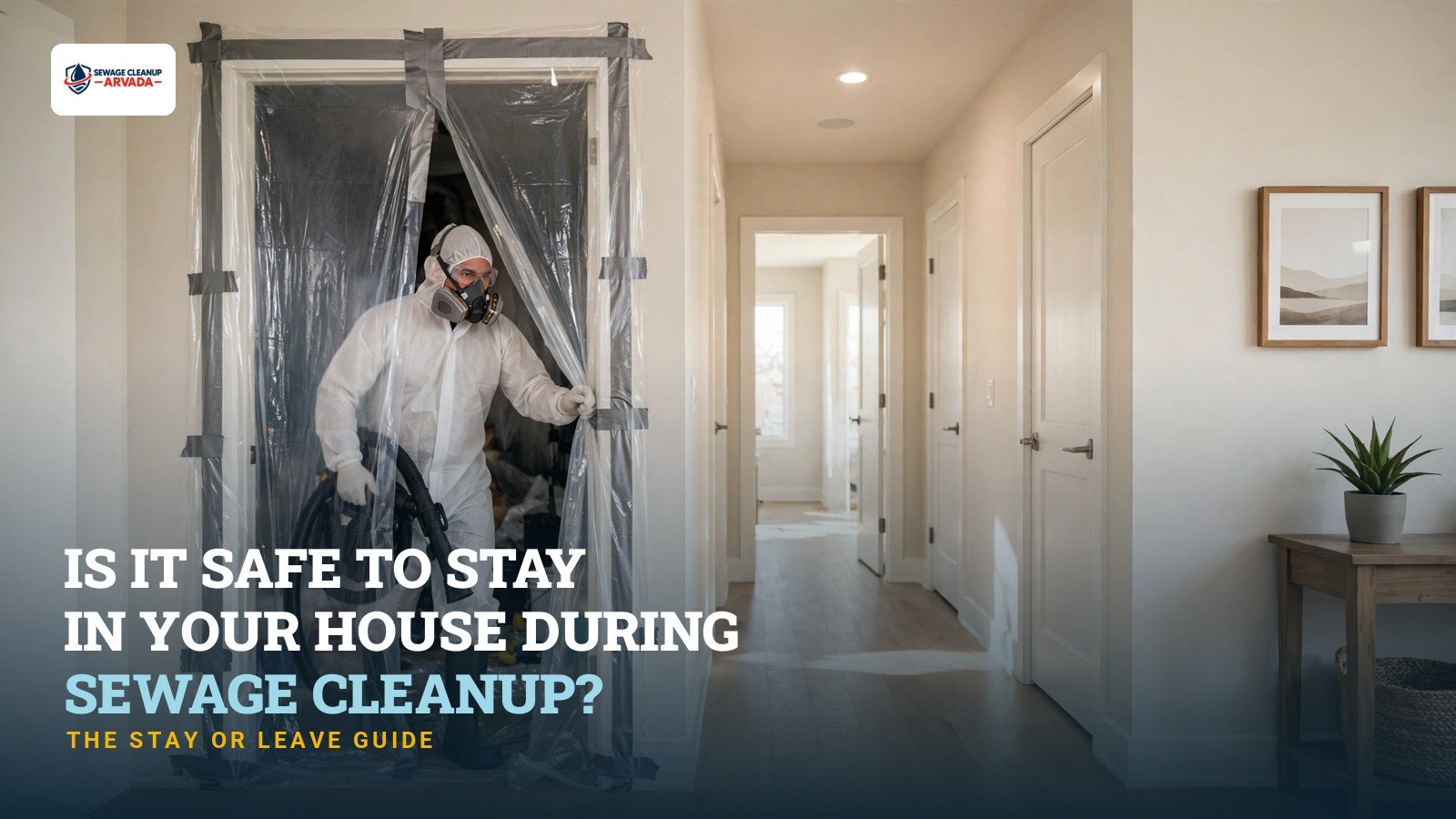
Containment is more than a plastic sheet. The crew seals the work area, controls how air moves across the boundary, and treats the opening as a one-way door: people and equipment pass through it carefully, and contaminated material leaves bagged, not carried loose through the house.
That discipline is what makes the rest of the home genuinely separate from the problem. Without it, foot traffic and air currents would slowly carry the affected area into every room the family uses.
It is also why the rules below matter. Containment only works if the household treats the boundary as real.
Rooms That Stay Off Limits
The affected room itself is off limits, full stop. Nobody sleeps, eats, or spends time in it until the crew has cleaned, sanitized, and verified it.
Rooms the sewage passed through are treated the same way, even if they only held water briefly.
Bathrooms and fixtures connected to the blocked line are also out of use. Every flush or drain on that line can push more sewage into the home, so those fixtures stay unused until the crew says the line is clear.
Rooms That Usually Stay Usable
Unaffected rooms on other floors, or on the far side of the sealed area, usually stay usable.
Kitchens, bedrooms, and living areas the sewage never reached can stay in normal use, with the work zone door kept closed and the containment left untouched.
Knowing what a professional sewage cleanup involves helps here. The sealed doorway is not a warning sign that the whole house is dangerous. It is the system that keeps the rest of the house safe.
When Leaving Is the Safer Choice
Some situations move the answer from stay with rules to leave until it is handled. Three of them come up again and again.
Sewage Near Electricity Is a Hard Boundary
Standing water and electricity do not mix, and this rule has no exceptions.
If sewage has reached outlets, appliances, or the electrical panel, stay out of that area entirely. Do not wade in to reach a switch, and do not touch a panel that water has reached.
When the affected electrical systems serve the whole home, or the water level makes the area impossible to avoid, leaving until an electrician or the utility confirms it is safe is the right call.
A Backup That Is Still Active
A backup that has stopped is a cleanup problem. A backup that is still rising is an ongoing event, and staying in the home while it spreads is a different risk.
Tree roots cause more than 50 percent of sewer blockages, according to research published through the U.S. Forest Service.
A line blocked by roots, grease, or a collapse does not clear itself. Until the blockage is dealt with, every use of water in the home can send more sewage inside, including overnight. If your household cannot realistically stop using water, leaving until the line is addressed is the safer pattern.
When the Backup Takes the Rooms You Live In
Sometimes the question answers itself. If the sewage is in the kitchen, the only bathroom, or the bedrooms, there may be no practical way to live around it.
A home needs working facilities and a clean place to sleep. When the backup removes those, a few nights elsewhere is not an overreaction. It is the plan.
Who Should Leave Even When Others Can Stay
A house can be safe for one person and wrong for another. The crew will usually ask about the household for exactly this reason.
Young children should stay out of the affected area completely, and are often better off staying elsewhere for the first day or two. Children play on floors, touch everything, and put hands in mouths, which is exactly the contact pattern sewage safety rules are built around.
Older adults, anyone who is ill, and anyone with a weakened immune system should also be cautious. The germs in sewage that a healthy adult shrugs off can hit a vulnerable person much harder.
People with asthma or other breathing conditions should weigh the air side of the problem. Odors and airborne particles near a work area can aggravate sensitive lungs even outside the sealed zone.
Pets belong on the cautious list too. A dog or cat that walks through the affected area carries contamination into every clean room it visits afterward.
A Simple Way to Decide for Your Household
If anyone in the home is very young, elderly, ill, or immune compromised, lean toward leaving for the active phase of the work.
If the household is healthy adults, the sewage is contained to one sealed area, and the facilities still work, staying is usually reasonable with the ground rules below.
When in doubt, describe your household on the first call. The crew has this conversation every week and will give you a straight answer.
Mention who lives in the home, who has health conditions, where everyone sleeps, and where the pets stay. Those four facts shape the advice more than the size of the backup does, and they cost nothing to share. A crew that knows a toddler sleeps one room away from the work area will plan the containment and the schedule around that child from the first hour.

Air, Smell, and Sleeping in the House
The overnight question deserves its own section, because it is where most families hesitate.
Why the Smell Is a Safety Signal
A sewage smell is not just unpleasant. It is information.
Sewer gas can irritate the eyes, throat, and stomach, and a smell that is strong in a bedroom means the source is close or the air is traveling. Treat a strong smell in a sleeping area as a reason to sleep elsewhere in the home, or to leave, not as something to push through.
The smell also fades only when the source is removed. If a cleaned home still smells days later, something was missed, and that is worth a call back, not a scented candle.
The Moisture Clock Runs While You Decide
There is one more reason not to spend days deciding. Damp materials do not wait.
The U.S. Environmental Protection Agency advises drying water-damaged areas and items within 24 to 48 hours to prevent mold growth.
A household does not need to panic over that window, because the crew builds drying into the job from the first visit. But a home that sits wet while the family debates is a home where the mold risk quietly grows, and mold in a wall makes the stay or leave question much harder a week later.
One more air rule: never run your own fans in or toward a contaminated area before it is cleaned. Moving air over sewage spreads particles into clean rooms. Drying with fans is the crew’s job, and it starts only after cleaning and sanitization are done.
Ground Rules for Staying During a Sewage Cleanup
Staying is safe when it is done deliberately. These are the rules crews ask households to follow.
Keep everyone, including pets, out of the sealed work area. Do not open the containment to check on progress. Ask the crew at the door instead.
Pause water use, or limit it exactly as the crew advises. The fixtures connected to the blocked line stay off limits until the line is confirmed clear.
Wash hands and change shoes after any time near the work zone, and keep children from playing on floors near the boundary.
Do not move drying equipment, switch it off, or open windows around it unless the crew asks. The layout follows moisture readings, and changing it slows the drying that makes the room safe again.
Document from dry ground. Photos and notes taken from outside the affected area help with every later conversation, and they never require stepping into sewage.
Food, Laundry, and the Daily Routine
Daily life needs a few adjustments while the work runs.
Keep food preparation and eating well away from the work zone, and wash hands before meals, not just after contact. If the kitchen itself is anywhere near the affected area, treat surfaces with extra care and keep food covered and stored away from the boundary.
Do not wash items that touched sewage in the family washing machine, and do not carry them through clean rooms to get there. Bag nothing yourself inside the affected area. Ask the crew what can be saved and how they handle it, because contaminated laundry is part of their process, not a household chore.
Dry belongings near the work area can be moved to a clean room. Wet or touched belongings stay where they are until the crew judges them.
These rules hold across every kind of job, from a single bathroom backup to a full basement. The full range of sewage cleanup services runs on the same containment and safety logic, scaled to the space involved.

Renters, Condos, and Shared Buildings
The same rules apply in shared buildings, with one complication: the line is often shared too.
In a condo or multifamily building, a backup can come from a shared stack, which means your neighbor’s water use can affect your unit. Tell the building manager or HOA contact early, and tell the crew the building shares lines, because the stay or leave answer may depend on water use you do not control.
Renters should call the landlord or property manager at the same time as they call for cleanup help. Stopping water use and keeping people away are safety steps that never need permission. The decisions about the work itself belong to the owner, and early notice keeps that from becoming a delay.
Who This Matters For in Arvada, Colorado
Homeowners come first, because they make the stay or leave call for everyone under their roof, and they carry the health risk if the call is wrong.
Rentals, condos, and HOA-managed properties come next. The tenant usually discovers the backup, while the owner or manager arranges the response, and both sides need the same clear answer about which rooms are usable and for how long.
Commercial properties follow, and they are never left out. Restaurants, retail spaces, offices, and multifamily buildings in Arvada, Colorado face the same reach and containment questions, with staff and customers added to the list of people the decision protects.
Sewage Cleanup Arvada Serving the Village of Five Parks Community and Beyond in Arvada
Sewage Cleanup Arvada serves the Village of Five Parks community in Arvada, Colorado, near local landmarks like Meiklejohn Elementary School, for homes close to the crossing of W 84th Ave and Alkire St, at coordinates 39.84872, -105.14777.
Get Sewage Cleanup Village of Five Parks Service Now
Navigate from Village of Five Parks to Sewage Cleanup Arvada Now

Frequently Asked Questions About Sewage Cleanup in Arvada, Colorado
Is it safe to stay in a house with a sewage backup?
It depends on the reach of the backup. If the sewage is limited to one area that can be sealed off, the rest of the home usually stays safe to live in. If it has spread widely, is still rising, or has reached electrical systems, leaving is the safer choice until the crew has it contained.
Can I sleep in my house after a sewage backup?
Usually yes, if your bedroom is unaffected, the smell there is faint or absent, and you still have a working bathroom on a clear line. If the backup is in or near the sleeping areas, or the odor is strong in the bedroom, sleeping elsewhere for a night or two is the safer pattern. When the affected area is the basement and the bedrooms are upstairs with doors closed, most households sleep at home through the whole job.
Is the smell from a sewage backup harmful?
Sewer gas can irritate the eyes, throat, and stomach, and a strong smell means you are close to the source. Treat a strong smell in a living or sleeping area as a signal to keep your distance and let the crew remove the source, rather than something to get used to.
Do children and pets need to stay away during a sewage cleanup?
Yes, completely out of the affected area. Children touch floors and surfaces constantly, and pets carry contamination into clean rooms on their paws. Vulnerable family members are often better off staying elsewhere during the active phase of the work.
When is it safe to use the cleaned room again?
After the full process is complete: the sewage removed, unsavable materials taken out, surfaces cleaned and sanitized, and the structure dried to verified moisture levels. The crew confirms the room is finished with readings, and that confirmation is your signal the room is back in normal use.
Sewage Cleanup Arvada, 5292 Ward Rd #2, Arvada, CO 80002. (720) 764-0457
Hours: Open 24 hours, 7 days a week for emergency service