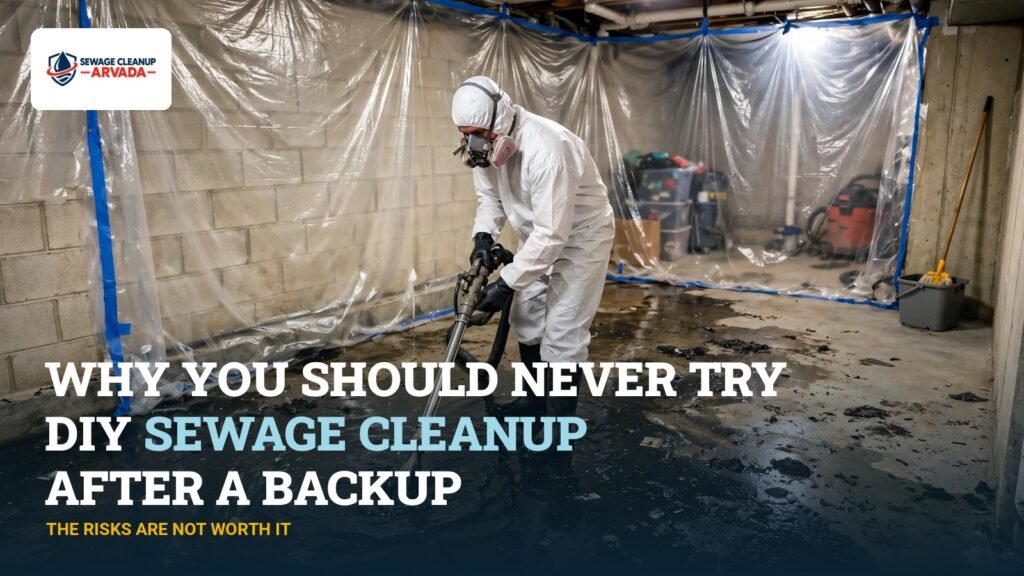
The water is on the floor, the smell is getting worse, and the mop is right there in the closet. That first impulse, to roll up your sleeves and handle it yourself, is understandable. It is also the most dangerous decision in the whole event. Sewage is Category 3 black water, and a backup is a contamination problem wearing the disguise of a cleaning problem. This article walks through the reasons DIY sewage cleanup puts your health, your home, and everyone in it at risk, and what to do instead.
It Happens More Often Than You Think
Backups are not rare freak events. They are a routine failure of an aging, loaded system, and they happen in every kind of neighborhood.
More than 500,000 sewer backups occur each year in the United States, according to the Water Environment Federation.
Common, though, does not mean minor. Every one of those events puts contaminated water inside a home, and the water does not become safer because the situation is familiar.
In Allendale and across Arvada, Colorado, the pattern is the same: a line blocks or fails, wastewater looks for the lowest way out, and it finds a floor drain, a basement toilet, or a shower drain. What happens in the next hour decides how much of the home it touches.
Reason One: You Would Be Working in Category 3 Black Water
The first reason is the water itself.
The restoration industry sorts water damage into categories. Category 1 is clean water. Category 2 is lightly contaminated water. Category 3 is sewage.
Sewage is Category 3 black water, the most contaminated of the three water damage categories defined by the IICRC.
That category exists because of what sewage carries: bacteria, viruses, and parasites from human waste, along with whatever chemicals and residues went down the drains connected to the line.
Contact with it is not a hygiene question. It is an exposure.
The Risk Is Not Just the Smell
The smell is what pushes people to act fast, and it is the least of the problem.
Sewage exposure can cause stomach and intestinal illness, skin infections through cuts and broken skin, and respiratory irritation from the air in a contaminated room. The risk rises for anyone who spends real time in the water, which is exactly what a DIY cleanup asks for: kneeling in it, breathing over it, and carrying it through the house in buckets.
A professional crew treats that exposure as the central fact of the job. A homeowner with a mop treats it as a smell to get rid of. Only one of those starting points matches what is actually in the water.
Children, Pets, and Anyone Already Vulnerable
The exposure math changes again with who is in the house.
Children put hands in mouths. Pets walk through a room and then groom themselves and climb on furniture. Older adults and anyone with a weakened immune system face a higher risk from the same contact.
Keeping them out of the affected area is not caution theater. It is the single most protective step in the first hour, and it is free.
Reason Two: Kitchen Gloves Are Not Protective Gear
Look at what a professional wears to enter a sewage affected room, and the DIY gap becomes physical.
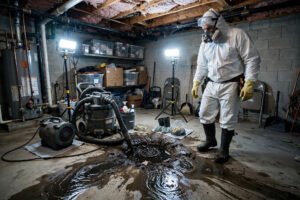
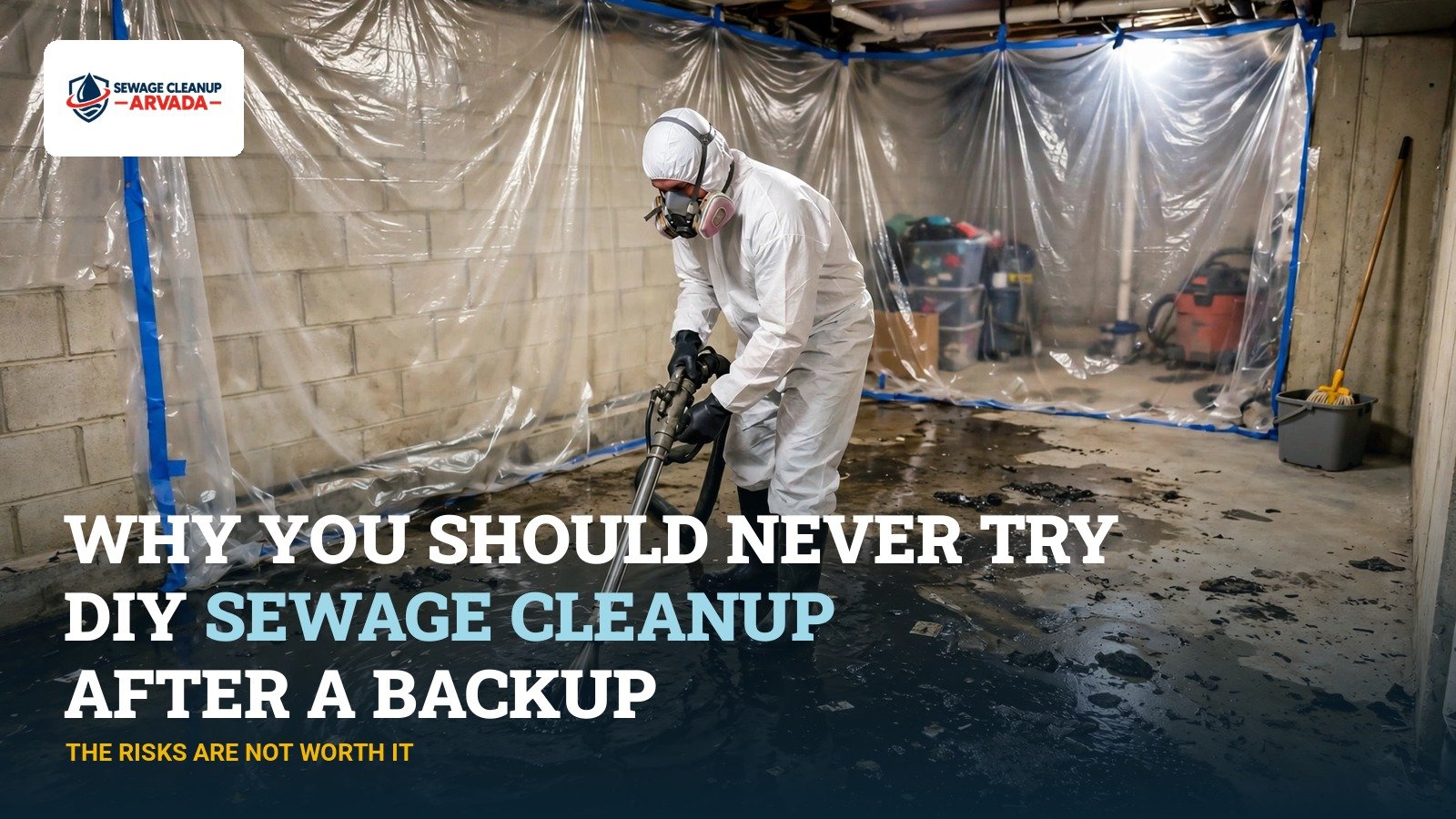
A full protective suit that sewage cannot soak through. A respirator that filters the air, not a dust mask. Heavy gloves that resist tearing. Rubber boots that keep contaminated water off skin for hours.
Household gear fails at every point on that list. Kitchen gloves tear on debris. Cloth and paper masks do not seal. Sneakers and work boots soak through and then carry contamination onto every floor they touch afterward, including the clean ones.
The gear is not a uniform. It is the difference between working in Category 3 water and being exposed to it.
The Suit Is Also About What Happens Afterward
Protective gear has a second job that is easy to miss: it can be removed and bagged as contaminated waste when the work is done.
A homeowner’s clothes and shoes have no such exit. Whatever they picked up in the affected room travels with them: onto the stairs, the hallway carpet, the kitchen floor, and eventually into a washing machine shared with the rest of the household laundry.
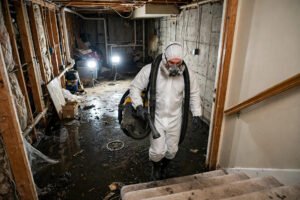
Crews plan the way out of the room as carefully as the way in. DIY cleanup almost never does, because nobody warns the homeowner that they have become part of the contamination path.

Reason Three: Mops, Buckets, and Fans Spread the Problem
Even a careful DIY effort moves contamination around. The tools themselves are the reason.
A mop does not lift sewage out of a room. It pushes contaminated water across the floor, into grout lines, under baseboards, and toward rooms that were clean. The rinse bucket then carries that water to a sink somewhere else in the house.
A household vacuum is worse. It is not built for contaminated water, and it can pull sewage into its motor and push contaminated air out the other side.
Fans pointed at a wet, contaminated room do something similar with air. Before an area is cleaned, moving air carries moisture and particles into clean rooms and into the heating and cooling system.
And the most common DIY test of all, flushing a toilet or running water to see whether the line has cleared, adds more water to a system that has already failed. The backup does not drain. It grows.
None of this is carelessness. It is what household tools do, used exactly as designed, on a problem they were never designed for.
The Bucket Has to Go Somewhere
There is also the question nobody asks at the start: where does the water go?
Every bucket of sewage carried out of a basement gets emptied somewhere, usually a sink or a laundry tub in a clean part of the house. Every mop gets rinsed somewhere. The tools themselves then need to be cleaned, which spreads the same problem to the tools, the sink, and the hands doing the rinsing.
Professional extraction removes the sewage from the home in one direction, out of the sealed work area. DIY cleanup moves it through the home in several directions, one bucket at a time.
Reason Four: The Real Damage Is the Part You Cannot See
A floor can be wiped. A wall cannot.
Sewage wicks upward into drywall and insulation, travels under flooring, and settles into carpet padding, all of it hidden within hours of the backup. The surface a homeowner can reach is the smallest part of the affected area.
That hidden moisture is the long-term problem. Materials that stay wet inside a wall grow mold, and porous materials that absorbed sewage keep the contamination and the odor locked inside them, no matter how the surface smells afterward.
This is why a room can look finished after a DIY effort and still be an active problem. The visible part was never the measure. The inside of the wall was, and it cannot be checked with eyes or a nose. It is checked with moisture readings, after the contaminated materials have been removed.
Reason Five: Cleaning the Floor Does Not Fix the Cause
A backup is a symptom. Something upstream failed, and wiping the floor does nothing about it.
Tree roots cause more than 50 percent of sewer blockages, according to research published through the U.S. Forest Service.
Roots inside a line, a collapsed section of pipe, a grease blockage: each one stays exactly where it was while the floor gets mopped. The next heavy use of water, the next storm, the next load of laundry can push the same sewage back into the same room.
A homeowner who handles the cleanup alone also handles the second backup alone, usually in a room that was never fully dried from the first one.
Reason Six: Sewage and Electricity Do Not Mix
One boundary in a backup is absolute, and it has nothing to do with cleaning.
Standing water and electricity are a dangerous combination. If sewage has reached outlets, cords, appliances, or the electrical panel, the affected area is not a cleaning problem at all until that risk is cleared.
Do not enter standing water to reach a switch, a plug, or a panel. Do not move appliances that are sitting in it. Treat the whole area as off limits and say so plainly when you call for help, and call an electrician or the utility where the situation calls for it.
Professional crews hold the same boundary. The difference is that they plan around it from the first phone call, instead of discovering it with wet feet.
The Savings Argument Does Not Survive a Real Backup
The honest reason most people reach for the mop is simple: calling for help feels like the bigger step, and the DIY route feels like handling it yourself for nothing.
That math ignores what delay and partial work do to the damage itself. Sewage that sits while a homeowner works through it slowly soaks deeper into padding, drywall, and insulation, so more of the room ends up in the removal pile. A backup that returns because the cause was never addressed starts the whole event over in a room that was never fully dry. Contamination spread into clean rooms adds those rooms to the job.
The DIY route is not the same work done the easy way. It is a smaller, riskier piece of the work, and the rest of the damage arrives later, larger than it had to be. The homeowners who come out ahead after a backup are the ones whose first hour protected the rest of the house.
What Professionals Bring That a Garage Shelf Does Not
Set the two approaches side by side and the gap is not effort. It is equipment and method.
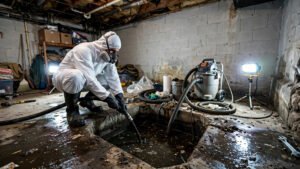
A professional response starts with containment, sealing the work area off from the rest of the home. It uses industrial extraction to remove the sewage itself, not spread it thinner. Contaminated porous materials are removed and leave the house as sealed waste. Surfaces that remain are cleaned, then disinfected, and the structure is dried until moisture readings prove it.
For a full walkthrough of what does sewage cleanup involve, stage by stage, that guide covers the process in order.
None of that lives on a garage shelf, and none of it can be improvised safely in an afternoon. That is the whole argument: DIY sewage cleanup is not a simpler version of the same job. It is a different, riskier activity with the same name.

What To Do Instead in the First Hour
Skipping the DIY route does not mean standing idle. The safe steps are few, and they matter.
Stop using water and drains throughout the home. Every flush and every load of laundry travels through the same line that just failed.
Keep people and pets out of the affected area, and keep the door closed where there is one.
Treat electricity as a hard boundary. If water has reached outlets or appliances, stay out of the area entirely.
Document from dry ground. Photos of the water level, the affected fixtures, and the rooms involved, plus a short note of when the backup was first noticed, help everyone who gets involved later.
Do not throw damaged items away before they are documented. A short list and a few photos protect you in every conversation that follows a backup, and items tossed in the first hour cannot be recorded afterward.
If you rent, call your landlord or property manager in the same first hour. A backup can involve shared lines and neighboring units, and early notice protects everyone in the building, not just your own rooms.
Then make the call for sewage cleanup help. Sewage Cleanup Arvada is locally based in Arvada, Colorado, with 24/7 emergency sewage cleanup available, so the first hour can end with a plan instead of a mop.
Who This Matters For in Arvada, Colorado
Homeowners come first, because the DIY impulse is strongest in the person who owns the home, pays for the damage, and wants the problem gone tonight.
Rentals, condos, and HOA-managed properties come next. A tenant facing a backup may feel pressure to handle it quietly, and a landlord may suggest it from a distance. The Category 3 risk is identical either way, and the safe answer is the same.
Commercial properties follow, and they are never left out. Restaurants, retail spaces, offices, and multifamily buildings across Arvada, Colorado cannot put staff or customers anywhere near a sewage affected area, and the no-DIY rule applies there with even less room for debate.
The full range of sewage cleanup services exists for exactly this situation, scaled to the space involved.
Sewage Cleanup Arvada Serving the Allendale Community and Beyond in Arvada
Sewage Cleanup Arvada serves the Allendale community in Arvada, Colorado, near local landmarks like the Arvada Center for the Arts and Humanities, for homes close to the crossing of Wadsworth Blvd and W 58th Ave, at coordinates 39.802, -105.08147.
Get Sewage Cleanup Allendale Service Now
Navigate from Allendale to Sewage Cleanup Arvada Now

Frequently Asked Questions About Sewage Cleanup in Arvada, Colorado
Can I clean up a small sewage spill myself?
Size does not change the category. Even a small amount of sewage is Category 3 black water, and it soaks into porous materials the same way a larger backup does. Keep people and pets away from it, stop using water and drains, and have it handled with protective gear and proper removal rather than household tools.
What happens if sewage is just left to dry on its own?
Drying is not cleaning. Sewage left in place leaves its bacteria and residue in the materials it soaked into, and moisture inside walls and under floors feeds mold growth. The odor usually gets worse, not better, and the contaminated materials still have to come out in the end.
Is bleach enough to make a room safe after a sewage backup?
No. Bleach on a surface cannot reach contamination soaked inside carpet padding, drywall, or insulation, and chemicals should never be mixed into sewage water. Professional work cleans first and then disinfects the surfaces that remain, after the materials that cannot be disinfected have been removed.
Why does the sewage smell keep coming back?
Because the source is still there. Odor that survives a surface wipe usually means residue remains in a drain, contamination sits inside a wall base, or a porous item that absorbed sewage is still in the room. Removing the source ends the smell. Covering it does not.
What should I do while waiting for professionals after a backup?
Stop using water and drains, keep children and pets away from the affected area, and stay out of standing water, especially near outlets or appliances. Take photos and notes from a dry, safe spot, and do not discard damaged items before they are documented.
Sewage Cleanup Arvada, 5292 Ward Rd #2, Arvada, CO 80002. (720) 764-0457
Hours: Open 24 hours, 7 days a week for emergency service