Local Arvada teamServing neighborhoods across Arvada
Sewage backup cleanup in Arvada, Colorado
Serving Arvada
Toilet overflow cleanup in Arvada, CO
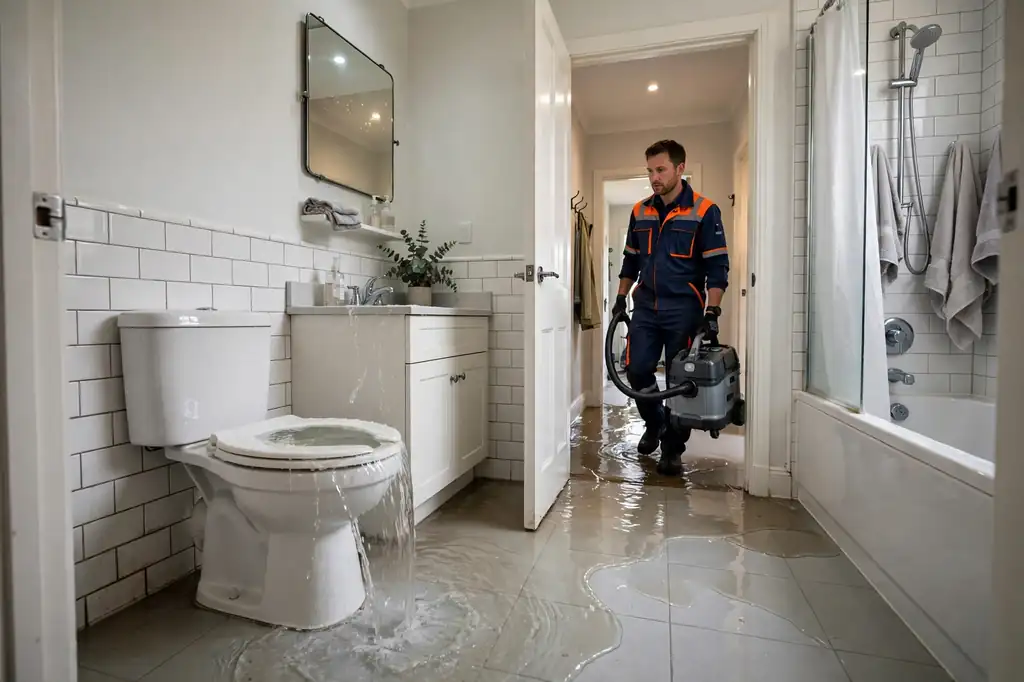
An overflowing toilet is not just a spill — the water carries sewage, and it soaks into floors, baseboards and the ceiling below faster than most people expect. We extract the water, remove what it contaminated, and clean and sanitize the room properly.


Toilet overflow cleanup in Arvada, CO
A toilet overflow looks small next to a flooded basement, which is exactly why it gets underestimated. The bowl holds a few gallons, but an overflow that runs for ten minutes while nobody is home can put far more than that across a bathroom floor — and bathroom floors are built with seams, grout lines and a hole cut for the flange, all of which let water reach the subfloor and the room below. Worse, overflow water is not clean supply water. Once it has passed through the bowl and trap, it is contaminated — and if the overflow is caused by a sewer line blockage rather than a simple clog, it is Category 3 black water with everything that came back up the line.
This page explains the difference between a clean-water overflow and a sewage overflow, what to do in the first minutes, why toilets overflow in Arvada homes, what the water actually damages, and how a proper cleanup works. If your toilet is overflowing right now: turn the shut-off valve behind the toilet clockwise, stop flushing, and call (720) 764-0457.
A clean overflow vs. a contaminated overflow
Not every overflow is a sewage event, and the cleanup follows the category:
When in doubt, treat overflow water as contaminated. The cost of over-treating a small spill is minor; the cost of under-treating sewage is living with the contamination.

What to do before we arrive

Turn the oval valve on the wall behind the toilet clockwise. If it is stuck or missing, lift the tank lid and push the flapper down, then turn off the home's main water valve.
Every additional flush on a clogged or backed-up line adds water to the floor. If the bowl keeps rising on its own, the problem is the sewer line, not the toilet.
Close the door. Overflow water is contaminated, and shoes and paws track it through the house.
If the bathroom is above another room, look for dripping, bubbling paint or a spreading stain on the ceiling underneath — that tells you the water has already gone through the floor, which changes the scope of the cleanup.
Towels at the doorway can stop spread into a hallway. Do not mop the contaminated area around the house, and do not use a household vacuum on the water. Photograph the room for your insurance record before anything is moved.
What the water damages
Bathroom water goes down and out, in that order:
The plywood or OSB under the tile or vinyl swells and softens, especially around the flange cut. A soft, spongy floor around the toilet base usually means the subfloor has been wet more than once.
In bathrooms adjoining carpeted halls or in basement baths with carpet, pad absorbs contaminated water like a sponge and cannot be disinfected through its depth — it comes out.
Water wicks up into baseboard and wall board well above the visible waterline.
Particle-board vanity bases swell and crumble after one good soaking; solid wood fares better but still needs drying and inspection inside the cabinet.
Water through the floor shows up as stains, bubbling paint and, in bad cases, a sagging ceiling in the room underneath — with the joists and drywall in between wet as well.

This is why a “small” overflow deserves a moisture check, not just towels. Our Water Damage Restoration hub explains how bathroom overflows fit into the wider restoration process.
Questions before we arrive

Still unsure? A dispatcher can help identify the safest immediate step and the right appointment type.
Ask dispatch nowTreat it as contaminated. Water that has passed through the bowl carries waste bacteria, and an overflow caused by a sewer line backup is Category 3 sewage. Keep people and pets out of the room and avoid skin contact until it is cleaned.
If it was a small spill caught immediately on a hard floor, possibly. If water reached carpet, baseboards, the vanity base or the ceiling below — or if the floor around the toilet feels soft — contaminated water is likely sitting in material a mop cannot reach. A moisture check settles the question.
Repeat overflows usually mean the problem is not the toilet. A main line blockage — often tree roots in older Arvada lines — makes the lowest fixtures overflow first. A plumber can clear and inspect the line; we handle the cleanup each event leaves behind.
If clean supply water reached it briefly, extraction and drying can often save the carpet (the pad is judged separately). If sewage or bowl water soaked it, carpet and pad in the affected area are removed — they cannot be disinfected through their depth.
Turn the shut-off valve behind the toilet clockwise. If the bowl still rises, close the home's main water valve and do not flush anything. Then keep everyone out of the room and call (720) 764-0457.
Sudden accidental overflows are commonly covered, but the section of the policy depends on the source — a sewer backup usually needs the Water Backup endorsement. We document damage, readings and removals for the claim; the insurer makes the final decision.
Yes — a stain, bubbling paint or sagging below an upstairs bathroom means water passed through the floor assembly. The subfloor, joists and ceiling drywall all need moisture readings, and that room becomes part of the cleanup scope.
Call for toilet overflow cleanup in Arvada
An overflowing toilet does its damage quietly — in the subfloor and the ceiling below — long after the floor looks dry. If your toilet has overflowed, call Sewage Cleanup Arvada at (720) 764-0457 for extraction, cleanup and sanitization.
Sewage Cleanup Arvada · 5292 Ward Rd #2, Arvada, CO 80002 · (720) 764-0457
