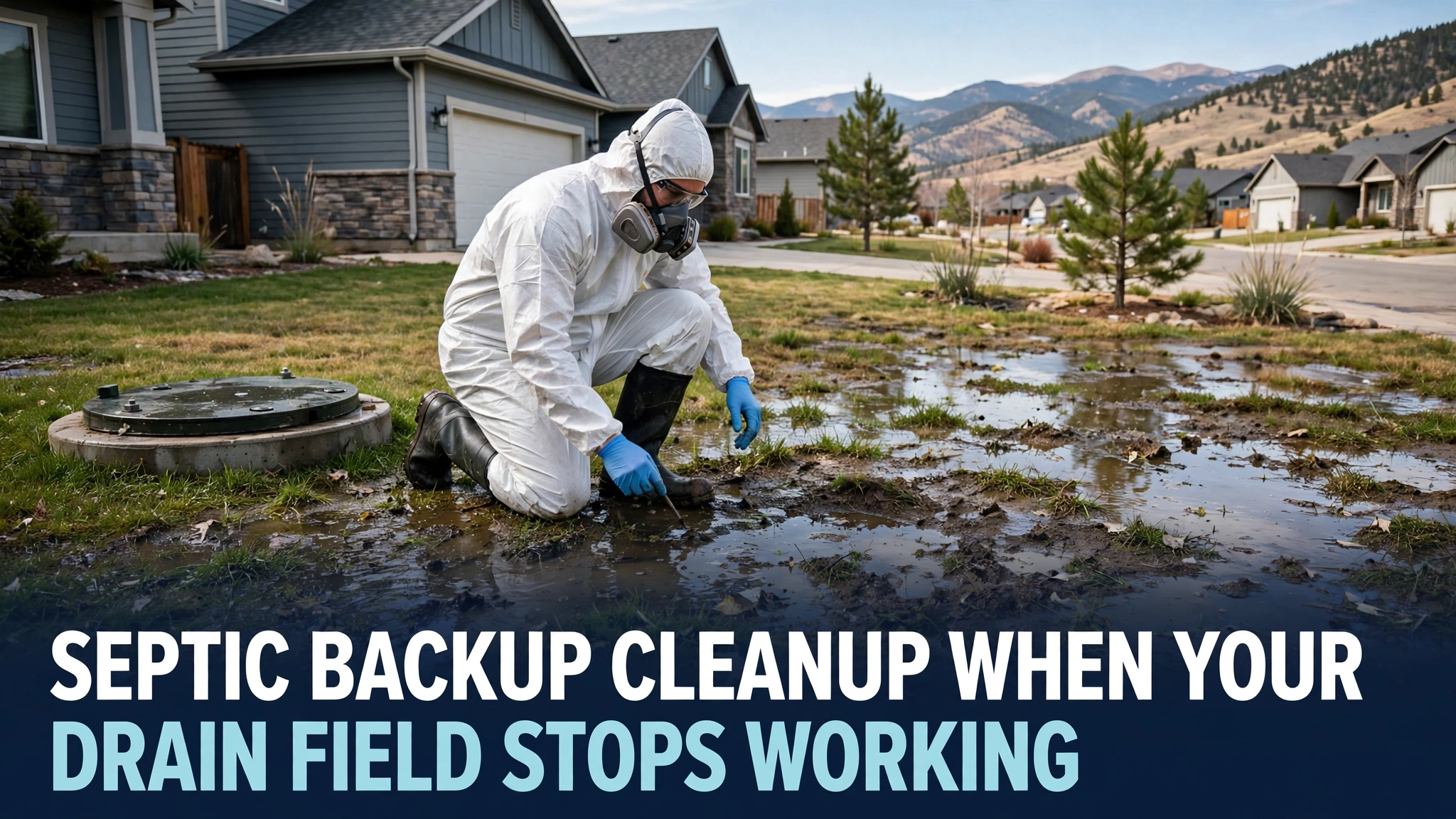
A septic system works quietly underground, and most homeowners never think about it until the day it stops. The drains slow down, the toilets gurgle, and then sewage backs up into the house or surfaces in the yard. When the drain field stops working, the backup is not a small plumbing problem. It is Category 3 black water in your home. This guide explains how a septic system works, why a drain field fails, and what septic backup cleanup actually involves, so you can act safely from the first minute.
Your First Hours After a Septic Backup
A septic backup is slower than a burst pipe, and that is part of the danger. The water creeps in, or the yard turns soggy over days. The right first hours are mostly about stopping the problem from growing. Work through this checklist in order, from dry ground.
Stop All Water Use, Right Now
Do not flush, and do not run the shower, the dishwasher, or the washing machine. Tell everyone in the house, out loud, because one unaware flush is how a slow drain becomes a flooded room.
Water use can resume only after the drains are running clear and the backup has been assessed, not before. If you use water while the drain field cannot take it, that water joins the backup.
Keep Everyone Out of the Affected Area
Sewage is Category 3 black water, and it carries bacteria, viruses, and parasites that can make people sick on contact. Keep children and pets out of affected rooms and away from standing water, inside or outside.
Close the door to the affected area if you can. Do not walk through standing water to rescue belongings. Anyone who touched the water should wash with soap and clean water, away from the affected area.
Stay Out of Water Near Electricity
If standing water has reached an outlet, a power strip, an appliance plug, or a light fixture at floor level, stay out of the water completely. Do not reach into it to unplug something. Do not step into it to flip a breaker. Water and electricity together are a danger you cannot see.
Call Professionals Before You Do Anything Else
Call as soon as the water is stopped and everyone is safe. Do not wait to see whether the backup clears on its own, because a field that clears for a day and backs up again has not fixed itself.
When you call, say where the sewage is, which drains are affected, and whether water is still rising. Say whether the yard is wet over the drain field, and what you have already done: water use stopped, people and pets kept away.
How a Septic System Works, in Plain Words
A septic system is a small wastewater treatment plant buried in your yard. It has two main parts, the tank and the drain field, and each one does a different job.
The Tank: Where Solids Settle
Everything from the house flows into the septic tank, a buried container, usually 750 to 1,500 gallons for a home, where the wastewater sits long enough for solids to settle.
Heavy solids sink to the bottom as sludge. Grease and light solids float to the top as scum. The liquid in the middle, called effluent, flows out of the tank toward the drain field. Bacteria in the tank break down some of the organic matter, but the tank is only the first stage. It separates and stores.
The tank needs regular pumping to remove the sludge and scum before they build up enough to flow out with the effluent. When pumping is skipped for years, solids reach the drain field.
The Drain Field: Where the Soil Finishes the Job
The drain field, also called a leach field, is a network of perforated pipes in gravel trenches under the yard. Effluent flows from the tank into these pipes and trickles down through the gravel and into the soil.
The soil is the real treatment plant. As the effluent moves slowly through the soil, microbes break down the remaining contaminants. By the time the water reaches groundwater, it has been filtered and treated by the earth itself. That is why the drain field needs healthy, unsaturated soil.
What the Soil Does, and Why It Matters
A working drain field depends on the soil being able to breathe. The microbes that treat the effluent need oxygen, and the soil needs time between doses to absorb the water. When the field is flooded, or the soil is sealed off by a thick layer of solids, the microbes cannot do their job.
Septic systems are far more common than most homeowners realize. More than 60 million people in the United States rely on them, according to the U.S. EPA, which is more than one in five households.
More than 60 million people in the United States rely on septic systems, according to the U.S. EPA.
That scale is worth knowing. A septic backup is a normal homeowner problem, not a rare one, and the systems fail in predictable ways when they are not maintained.
Why a Drain Field Stops Working
A drain field rarely fails overnight. It fails slowly, over months or years, and then one day the backup arrives. These are the three causes that do most of the damage.
Too Much Water, Too Fast
A drain field is sized for the normal water use of a household. When a home sends far more water than usual, from extra laundry loads, a running toilet, or guests staying over, the field cannot absorb it fast enough. The soil stays saturated, and the water backs up toward the house.
Heavy rain makes it worse. A field that is already working hard cannot take in effluent when the soil around it is soaked from above. Sewage backup after heavy rain follows the same pattern.
Solids and Grease Reaching the Field
When the tank is not pumped, sludge and scum build up until they flow out with the effluent and into the drain field pipes. The solids settle in the trenches and form a thick, slimy layer called a biomat on the soil surface. A thin biomat is normal. A thick biomat seals the soil shut.
Grease from the kitchen is the worst of it. It hardens in the pipes and coats the soil, and it does not break down the way other solids do. Pouring grease down the drain is one of the most common causes of a field that stops working years early.
Roots, Compaction, and Heavy Loads Over the Field
Tree roots find the moisture in a drain field and grow into the pipes, blocking the flow and catching solids.
Compaction is the quieter cause. Driving or parking vehicles over the drain field crushes the pipes and presses the soil tight, so water cannot move through it. Building a patio, a shed, or a driveway over the field does the same thing.
The Warning Signs Your Drain Field Is Failing
A drain field that is starting to fail sends signals for weeks before the backup arrives.
Slow Drains Across the Whole House
One slow drain is a local clog. Every drain in the house slowing down at once is a system problem. When the whole house slows together, the drain field is the first suspect.
Sewage Smells Inside and Outside
A sewage smell around the drains, in the basement, or over the yard is a warning worth acting on. Inside, it means gases from the system are finding their way back. Outside, it means effluent is surfacing over the field.
Wet, Spongy Ground Over the Field
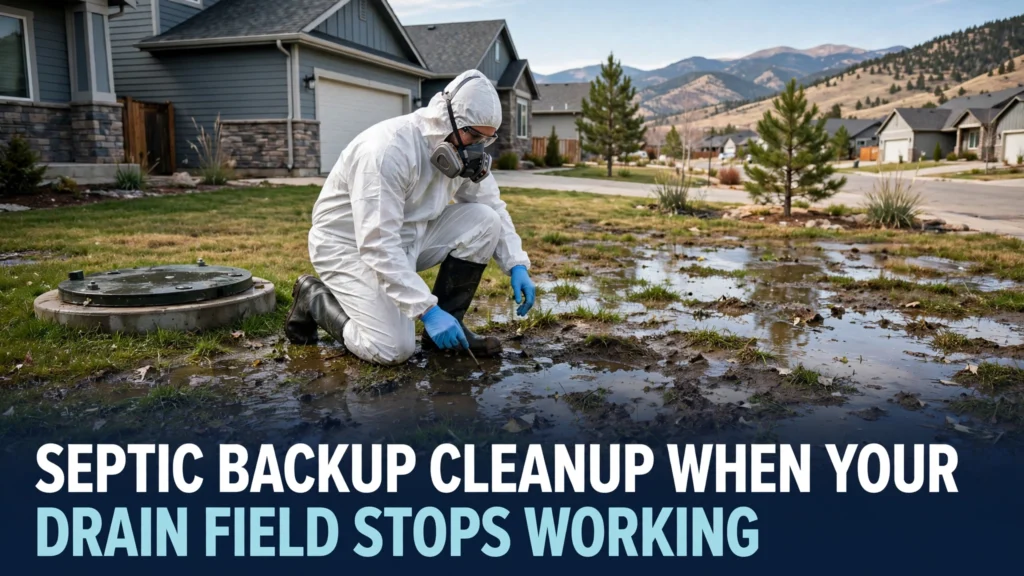
The ground over a working drain field should feel like the rest of the yard. When it turns wet and spongy, or puddles sit over the field long after rain has stopped, the soil is saturated. That water is contaminated, so stay off it.
Septic systems in the United States disperse more than 4 billion gallons of wastewater each day, according to the U.S. EPA.
That volume is the reason a failing drain field matters beyond one house. Every gallon the field cannot absorb has to go somewhere.
What Septic Backup Cleanup Actually Involves
The phrase "septic backup cleanup" sounds like someone arrives and the problem ends. In practice it means a staged job that starts when the crew can work safely. It is not a promise about how quickly anyone arrives, and it is not a promise that the cleanup finishes in one visit.
Stage 1: Stop and Assess
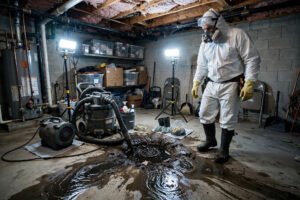
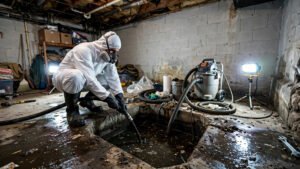
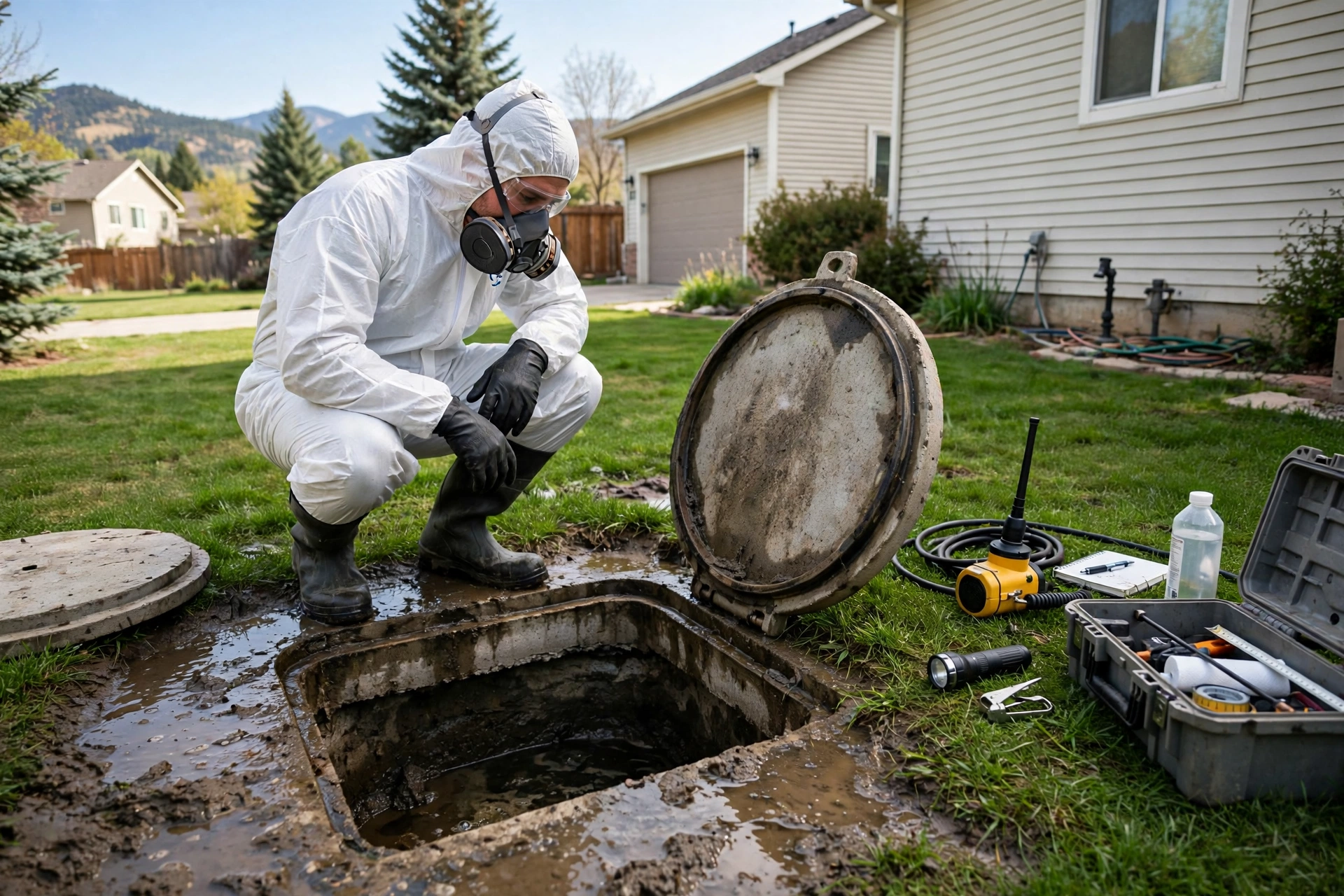
When the crew arrives, they start by confirming the source has stopped and mapping how far the sewage traveled. They check which rooms the water reached, which materials it soaked, and whether water is near any outlet or appliance. They work in full protective gear, suit, gloves, respirator, and boots, because every surface the water touched is treated as contaminated until it is cleaned.
They also look at the yard. A soggy drain field or a sewage smell over the field tells them the failure is in the field, not in the house plumbing. The crew notes where the water came from and which fixtures are still slow.
Stage 2: Extract the Standing Water
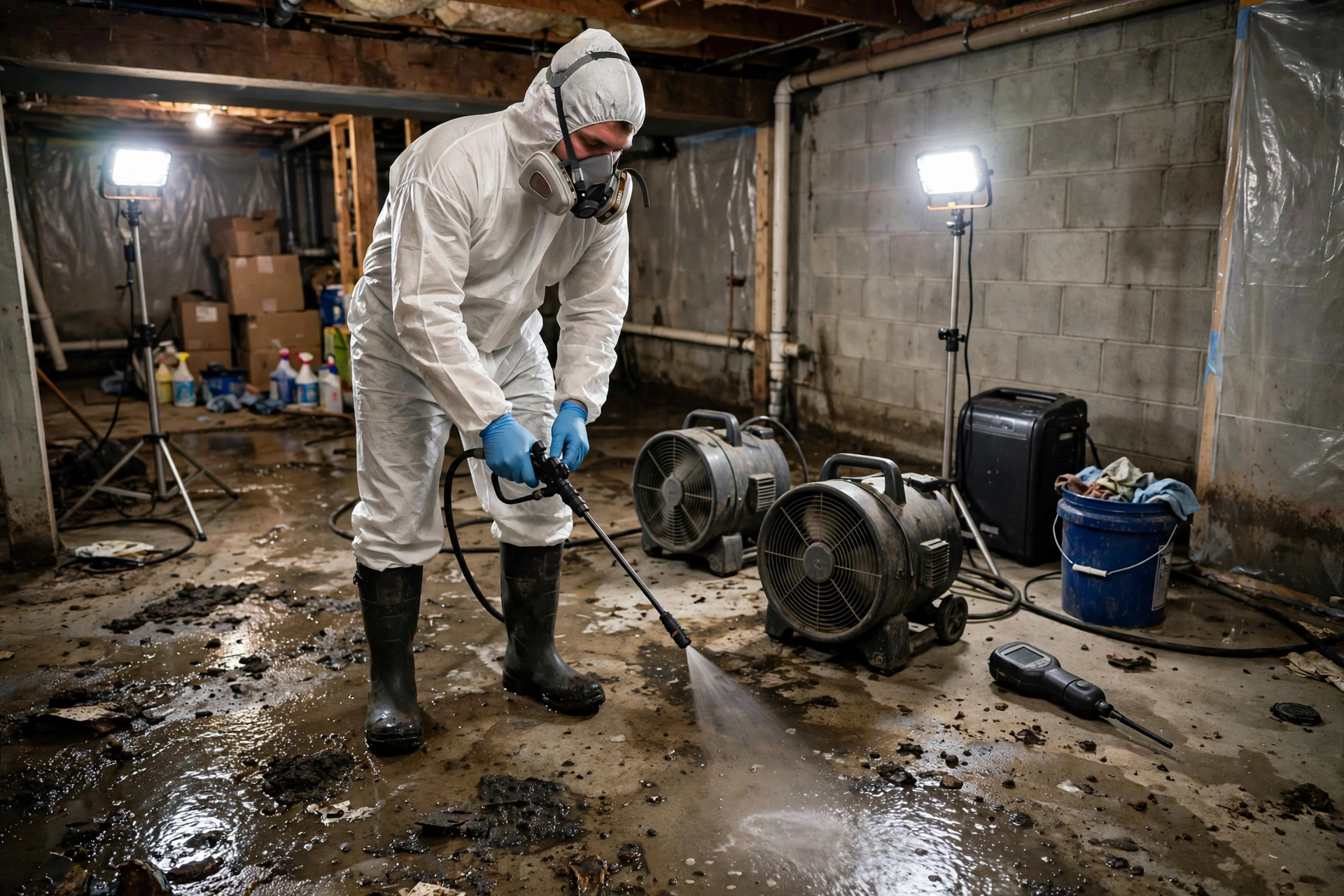
Extraction removes the standing sewage and contaminated water from the floor. Professional extraction equipment moves far more water, far faster, than anything a homeowner has at home. The crew works from the edges inward, keeping clean areas clean.
Do not try to extract sewage yourself. A household wet vacuum spreads contamination through its exhaust and its hose.
That is the practical meaning of U.S. EPA guidance on septic systems: drying must start while the backup is still being cleaned, not after. Skipping ahead to drying while contaminated water is still on the floor does not help, and what happens when sewage cleanup is delayed is mostly a story about moisture left behind.
Stage 3: Remove and Sanitize
Once the standing water is gone, the crew removes porous materials that cannot be saved, carpet and pad, soaked drywall at the base, and soft items that absorbed the water. Then they clean and disinfect the hard surfaces that remain.
Stage 4: Dry and Verify
Drying equipment runs on the floors, wall bases, and any cavities the water entered. It stays in place until moisture readings show the materials are dry. Readings, not appearances, decide when the space returns to normal use.
Sewage Is Category 3 Black Water
Every step in this guide comes back to one fact: sewage is Category 3 black water.
Sewage is Category 3 black water, the most contaminated of the 3 IICRC water damage categories.
That classification is why the safety steps are so plain. Category 3 means the water is treated as contaminated from the first minute. Porous materials the water soaked are treated as unsalvageable in most cases, and hard surfaces are cleaned and disinfected in place, by a crew that knows which products and methods are right for the material.
Five Mistakes That Make a Septic Backup Worse
Most of the damage after a septic backup is not caused by the sewage. It is caused by the homeowner trying to help it along.
Mistake 1: Keep Flushing to See If It Clears
The temptation is strong. The water went down a little, so maybe one more flush will tell you whether the field has cleared.
It will not. While a drain field cannot take water, added water joins the backup, and a test flush is the most common way a slow drain becomes a flooded room.
Mistake 2: Additives and Chemicals Will Fix the Field
Septic additives, enzymes, and chemicals are sold as a quick fix for a failing drain field. They are not. No additive can dissolve a thick biomat, clear roots from a pipe, or restore soil that has lost its ability to absorb.
Do not pour chemicals into the system or bleach into standing sewage. Chemicals do not sanitize it.
Mistake 3: A Fan or a Mop Will Handle It
A mop and a bucket do not remove sewage, and they spread it further. Sewage soaks into porous materials and spreads contamination across surfaces that look clean.
Mistake 4: Clear Water Means It Is Not Sewage
Clear-looking water from a septic backup is still sewage, because the contamination is in what the water carries, not in its color. Sewage is Category 3 black water, the most contaminated IICRC category, and it is treated as contaminated from the first minute, no matter how clear it looks.
Mistake 5: The Backup Was a One-Time Fluke
A single backup can have a simple cause, a heavy weekend of laundry that overloaded the field. But a backup that repeats is a pattern, and patterns point to the field. Solids in the trenches, roots in the pipes, and soil that has lost its ability to absorb do not fix themselves.
What Happens Outside: The Yard After a Septic Backup
A septic backup does not stop at the front door. The yard over the drain field needs the same care as the rooms inside.
Stay Off the Soggy Ground
When effluent surfaces over the drain field, the ground is contaminated. Keep children and pets off it, and do not walk through it to inspect the field. Until the crew says it is safe, it is treated the same as standing water inside the house.
Septic backup cleanup in the yard outdoors follows the same safety rules as the indoor cleanup, because the water is the same Category 3 black water in both places.
Photograph the water line on the wall or floor, the affected drains, and the rooms the water reached. Photograph the yard too, and note the time each photo was taken.
Skip the close-ups that require you to kneel in the water, and skip moving wet items to photograph what is underneath them.
After the Crew Leaves: The First Day After
The first hours end when the crew takes over, but the job does not end when they leave. The first day after a septic backup is when the drying and verification stage proves its value.
Drying and Moisture Readings
After extraction and sanitizing, drying equipment runs on the floors, wall bases, and any cavities the water entered. It stays in place until moisture readings show the materials are dry.
The full range of sewage cleanup services covers septic backups with the same staged approach, and the service page for septic backup cleanup explains the septic service.
What to Watch For
Watch for a return of the smell, or water appearing again at the lowest drain when fixtures run. Either one points to a cause in the field that still needs attention.
Who This Matters For in Arvada, Colorado
Homeowners come first. A septic backup arrives at their drains, on their floors, and in their yards.
Rentals and HOA-managed properties come next. Tenants spot the water first, owners carry the responsibility for the response, and in shared buildings one failing field can report itself in several homes at once.
Commercial properties follow, and they are never left out. Restaurants and offices in Arvada, Colorado face the same backup mechanics at their drains and restrooms. For a home in Village of Five Parks, the local page for septic backup cleanup for Village of Five Parks homes covers the neighborhood. The full picture of sewage cleanup in Arvada, Colorado explains how the pieces fit together for all three.
Sewage Cleanup Arvada Serving the Village of Five Parks Community and Beyond in Arvada
Sewage Cleanup Arvada serves the Village of Five Parks community in Arvada, Colorado, near local landmarks like Beeman Park, for homes close to the crossing of W 83rd Pl & Arbutus St, at coordinates 39.84789, -105.15026.
Get Septic Backup Cleanup Village of Five Parks Service Now
For a septic backup cleanup for Village of Five Parks homes after a drain field failure, call (720) 764-0457.
Navigate from Village of Five Parks to Sewage Cleanup Arvada Now
Frequently Asked Questions About Septic Backup Cleanup in Arvada, Colorado
What should I do first when my septic system backs up?
Stop using water, keep everyone away from the affected area, and stay out of any standing water near electricity. Then call professionals.
How do I know if my drain field is failing?
Slow drains across the whole house, a sewage smell inside or outside, and wet and spongy ground over the field are the clearest signs.
Is septic backup water dangerous?
Yes. Septic backup water is Category 3 black water, carrying bacteria, viruses, and parasites that can make people sick on contact.
Can I clean up a septic backup myself?
No. Sewage is Category 3 black water, carrying bacteria, viruses, and parasites that make cleaning without protective gear and professional equipment unsafe. The safe steps are stopping water use, keeping people away, treating electricity as a hard boundary, and calling professionals.
What should I do if the septic system backs up again after the cleanup?
Stop water use again, keep everyone away, and call right away. A repeat backup usually points to a cause in the field, such as solids in the trenches, roots in the pipes, or soil that cannot absorb.
Sewage Cleanup Arvada, 5292 Ward Rd #2, Arvada, CO 80002. (720) 764-0457
Hours: Open 24 hours, 7 days a week for emergency service