Sewage backup cleanup in Arvada, Colorado
Serving Arvada
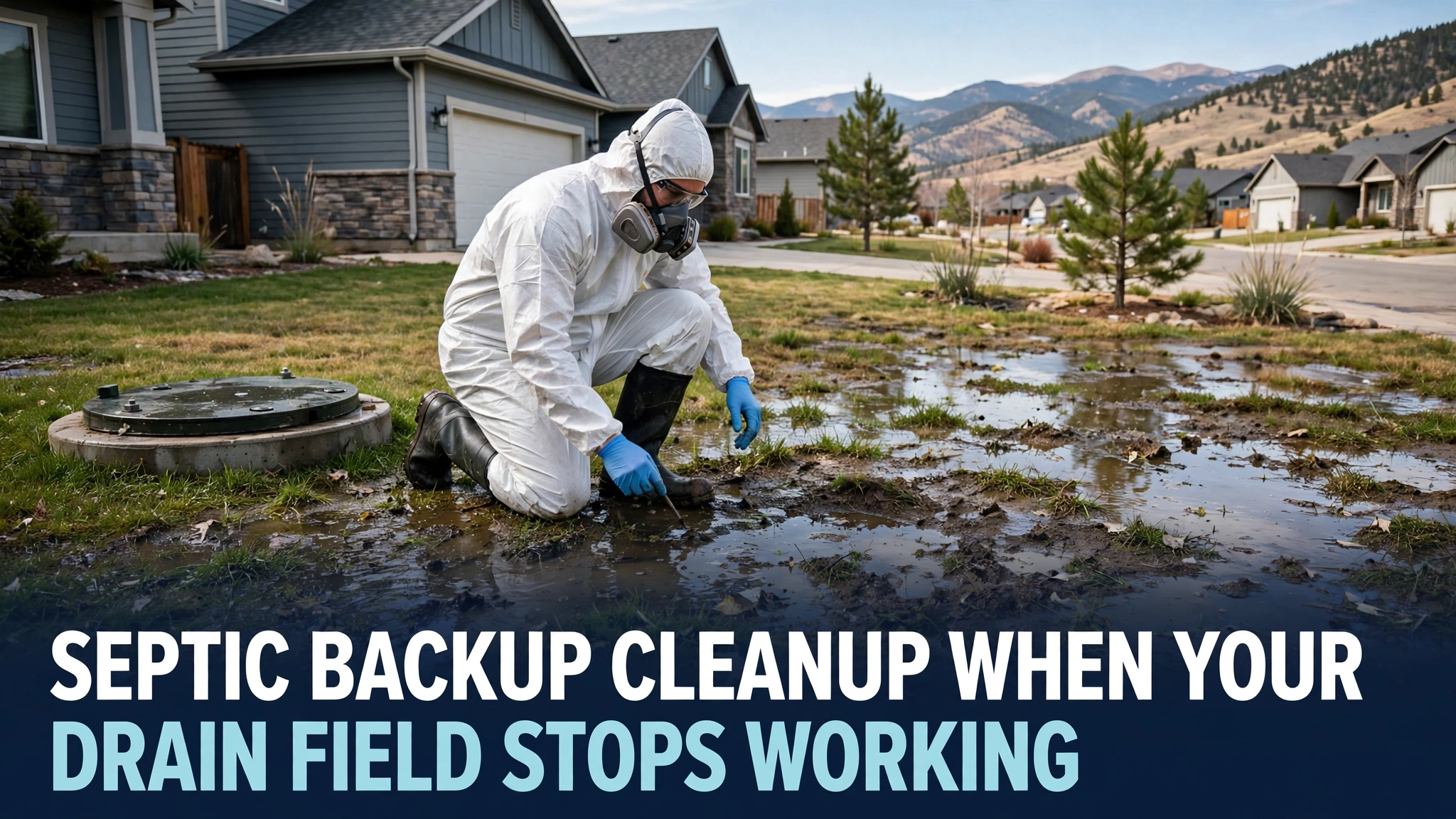
A septic system works quietly underground, and most homeowners never think about it until the day it stops. The drains slow down, the toilets gurgle, and then sewage backs up into the house or surfaces in the yard. When the drain field stops working, the backup is not a small plumbing problem. It is Category 3 black water in your home. This guide explains how a septic system works, why a drain field fails, and what septic backup cleanup actually involves, so you can act safely from the first minute.
A septic backup is slower than a burst pipe, and that is part of the danger. The water creeps in, or the yard turns soggy over days. The right first hours are mostly about stopping the problem from growing. Work through this checklist in order, from dry ground.
Do not flush, and do not run the shower, the dishwasher, or the washing machine. Tell everyone in the house, out loud, because one unaware flush is how a slow drain becomes a flooded room.
Water use can resume only after the drains are running clear and the backup has been assessed, not before. If you use water while the drain field cannot take it, that water joins the backup.
Sewage is Category 3 black water, and it carries bacteria, viruses, and parasites that can make people sick on contact. Keep children and pets out of affected rooms and away from standing water, inside or outside.
Close the door to the affected area if you can. Do not walk through standing water to rescue belongings. Anyone who touched the water should wash with soap and clean water, away from the affected area.
If standing water has reached an outlet, a power strip, an appliance plug, or a light fixture at floor level, stay out of the water completely. Do not reach into it to unplug something. Do not step into it to flip a breaker. Water and electricity together are a danger you cannot see.
Call as soon as the water is stopped and everyone is safe. Do not wait to see whether the backup clears on its own, because a field that clears for a day and backs up again has not fixed itself.
When you call, say where the sewage is, which drains are affected, and whether water is still rising. Say whether the yard is wet over the drain field, and what you have already done: water use stopped, people and pets kept away.
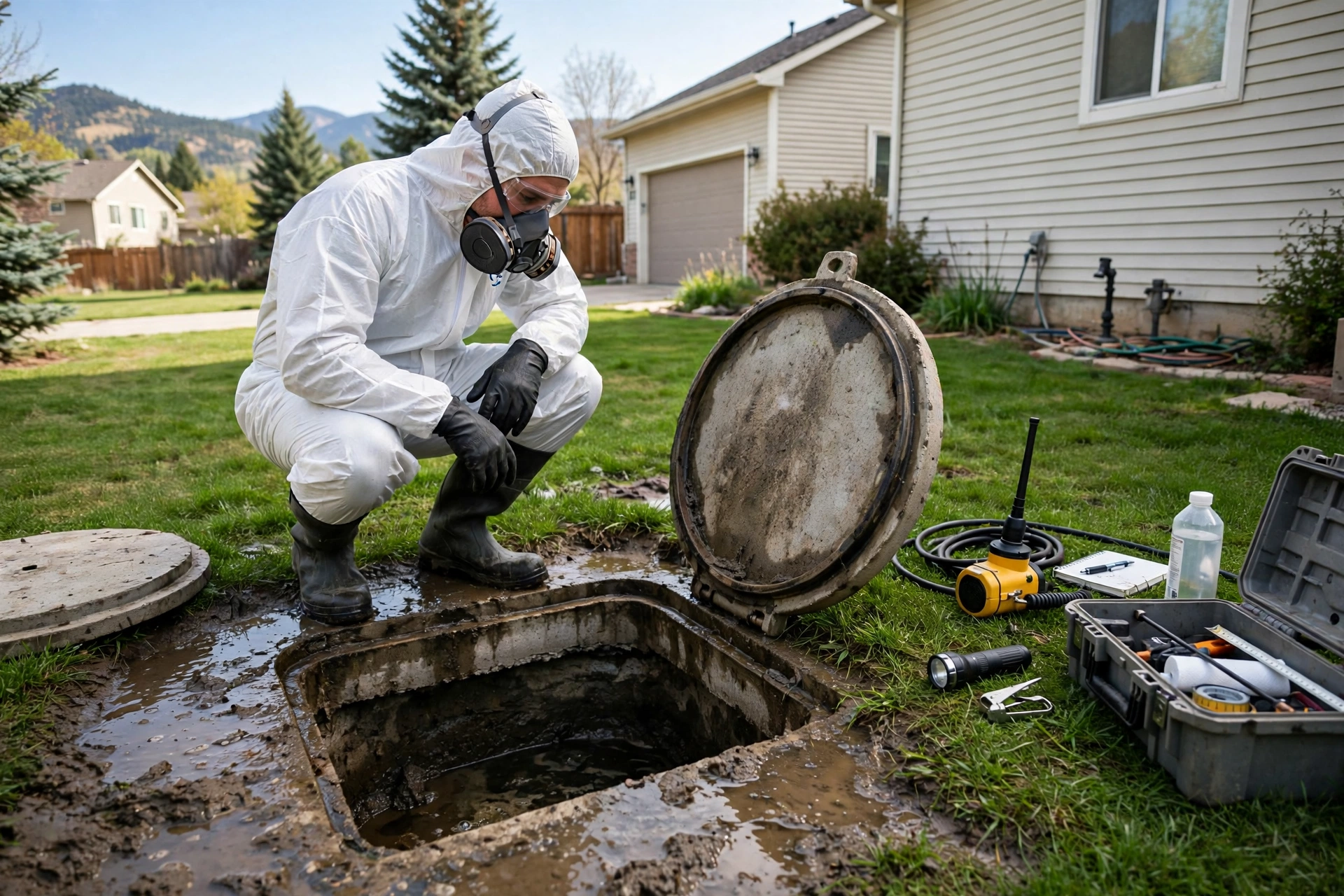
A septic system is a small wastewater treatment plant buried in your yard. It has two main parts, the tank and the drain field, and each one does a different job.
Everything from the house flows into the septic tank, a buried container, usually 750 to 1,500 gallons for a home, where the wastewater sits long enough for solids to settle.
Heavy solids sink to the bottom as sludge. Grease and light solids float to the top as scum. The liquid in the middle, called effluent, flows out of the tank toward the drain field. Bacteria in the tank break down some of the organic matter, but the tank is only the first stage. It separates and stores.
The tank needs regular pumping to remove the sludge and scum before they build up enough to flow out with the effluent. When pumping is skipped for years, solids reach the drain field.
The drain field, also called a leach field, is a network of perforated pipes in gravel trenches under the yard. Effluent flows from the tank into these pipes and trickles down through the gravel and into the soil.
The soil is the real treatment plant. As the effluent moves slowly through the soil, microbes break down the remaining contaminants. By the time the water reaches groundwater, it has been filtered and treated by the earth itself. That is why the drain field needs healthy, unsaturated soil.
A working drain field depends on the soil being able to breathe. The microbes that treat the effluent need oxygen, and the soil needs time between doses to absorb the water. When the field is flooded, or the soil is sealed off by a thick layer of solids, the microbes cannot do their job.
Septic systems are far more common than most homeowners realize. More than 60 million people in the United States rely on them, according to the U.S. EPA, which is more than one in five households.
More than 60 million people in the United States rely on septic systems, according to the U.S. EPA.
That scale is worth knowing. A septic backup is a normal homeowner problem, not a rare one, and the systems fail in predictable ways when they are not maintained.
A drain field rarely fails overnight. It fails slowly, over months or years, and then one day the backup arrives. These are the three causes that do most of the damage.
A drain field is sized for the normal water use of a household. When a home sends far more water than usual, from extra laundry loads, a running toilet, or guests staying over, the field cannot absorb it fast enough. The soil stays saturated, and the water backs up toward the house.
Heavy rain makes it worse. A field that is already working hard cannot take in effluent when the soil around it is soaked from above. Sewage backup after heavy rain follows the same pattern.
When the tank is not pumped, sludge and scum build up until they flow out with the effluent and into the drain field pipes. The solids settle in the trenches and form a thick, slimy layer called a biomat on the soil surface. A thin biomat is normal. A thick biomat seals the soil shut.
Grease from the kitchen is the worst of it. It hardens in the pipes and coats the soil, and it does not break down the way other solids do. Pouring grease down the drain is one of the most common causes of a field that stops working years early.
Tree roots find the moisture in a drain field and grow into the pipes, blocking the flow and catching solids.
Compaction is the quieter cause. Driving or parking vehicles over the drain field crushes the pipes and presses the soil tight, so water cannot move through it. Building a patio, a shed, or a driveway over the field does the same thing.
A drain field that is starting to fail sends signals for weeks before the backup arrives.
One slow drain is a local clog. Every drain in the house slowing down at once is a system problem. When the whole house slows together, the drain field is the first suspect.
A sewage smell around the drains, in the basement, or over the yard is a warning worth acting on. Inside, it means gases from the system are finding their way back. Outside, it means effluent is surfacing over the field.
The ground over a working drain field should feel like the rest of the yard. When it turns wet and spongy, or puddles sit over the field long after rain has stopped, the soil is saturated. That water is contaminated, so stay off it.
Septic systems in the United States disperse more than 4 billion gallons of wastewater each day, according to the U.S. EPA.
That volume is the reason a failing drain field matters beyond one house. Every gallon the field cannot absorb has to go somewhere.
The phrase "septic backup cleanup" sounds like someone arrives and the problem ends. In practice it means a staged job that starts when the crew can work safely. It is not a promise about how quickly anyone arrives, and it is not a promise that the cleanup finishes in one visit.
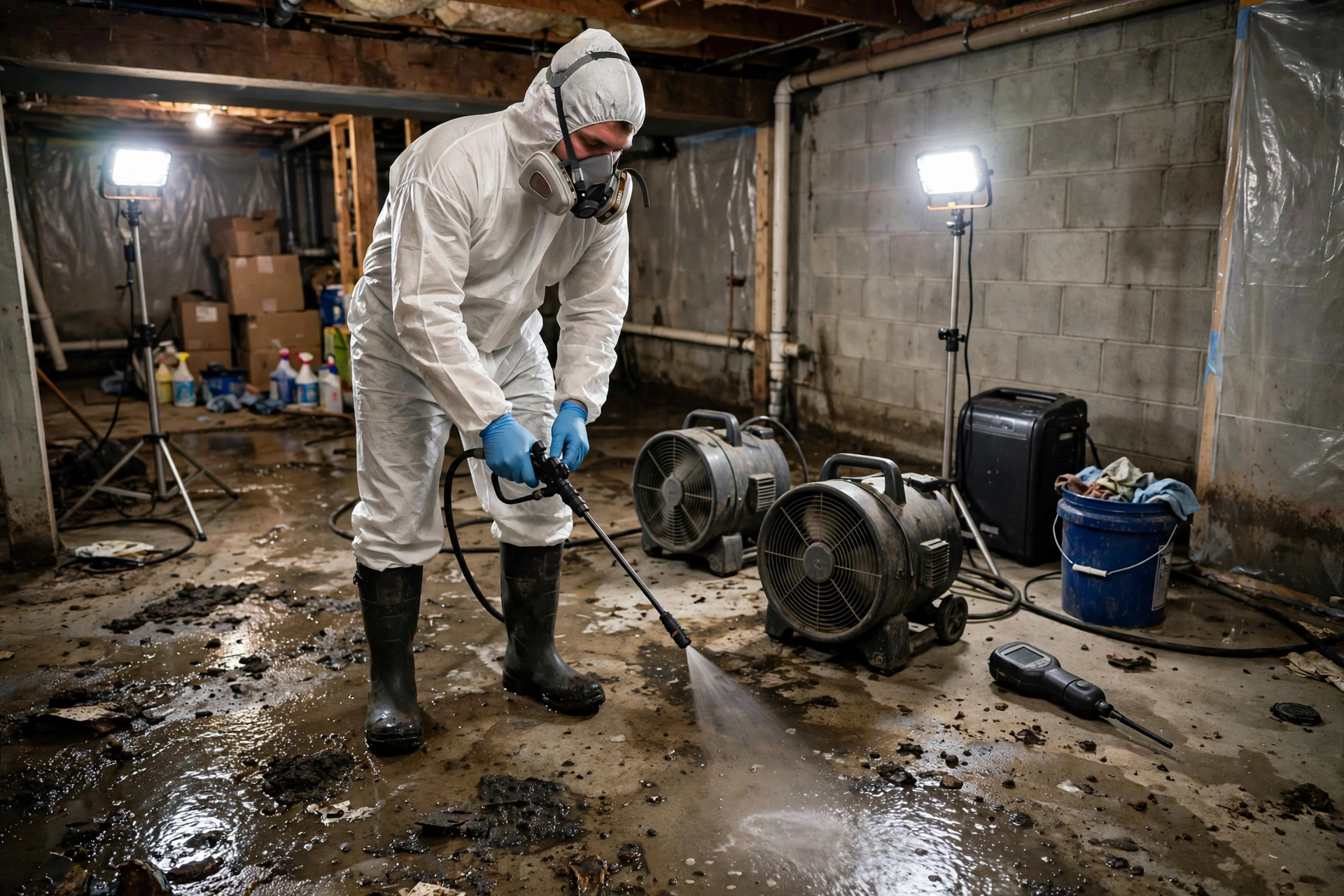
When the crew arrives, they start by confirming the source has stopped and mapping how far the sewage traveled. They check which rooms the water reached, which materials it soaked, and whether water is near any outlet or appliance. They work in full protective gear, suit, gloves, respirator, and boots, because every surface the water touched is treated as contaminated until it is cleaned.
They also look at the yard. A soggy drain field or a sewage smell over the field tells them the failure is in the field, not in the house plumbing. The crew notes where the water came from and which fixtures are still slow.
Extraction removes the standing sewage and contaminated water from the floor. Professional extraction equipment moves far more water, far faster, than anything a homeowner has at home. The crew works from the edges inward, keeping clean areas clean.
Do not try to extract sewage yourself. A household wet vacuum spreads contamination through its exhaust and its hose.
That is the practical meaning of U.S. EPA guidance on septic systems: drying must start while the backup is still being cleaned, not after. Skipping ahead to drying while contaminated water is still on the floor does not help, and what happens when sewage cleanup is delayed is mostly a story about moisture left behind.
Once the standing water is gone, the crew removes porous materials that cannot be saved, carpet and pad, soaked drywall at the base, and soft items that absorbed the water. Then they clean and disinfect the hard surfaces that remain.
Drying equipment runs on the floors, wall bases, and any cavities the water entered. It stays in place until moisture readings show the materials are dry. Readings, not appearances, decide when the space returns to normal use.
Every step in this guide comes back to one fact: sewage is Category 3 black water.
Sewage is Category 3 black water, the most contaminated of the 3 IICRC water damage categories.
That classification is why the safety steps are so plain. Category 3 means the water is treated as contaminated from the first minute. Porous materials the water soaked are treated as unsalvageable in most cases, and hard surfaces are cleaned and disinfected in place, by a crew that knows which products and methods are right for the material.
Most of the damage after a septic backup is not caused by the sewage. It is caused by the homeowner trying to help it along.
The temptation is strong. The water went down a little, so maybe one more flush will tell you whether the field has cleared.
It will not. While a drain field cannot take water, added water joins the backup, and a test flush is the most common way a slow drain becomes a flooded room.
Septic additives, enzymes, and chemicals are sold as a quick fix for a failing drain field. They are not. No additive can dissolve a thick biomat, clear roots from a pipe, or restore soil that has lost its ability to absorb.
Do not pour chemicals into the system or bleach into standing sewage. Chemicals do not sanitize it.
A mop and a bucket do not remove sewage, and they spread it further. Sewage soaks into porous materials and spreads contamination across surfaces that look clean.
Clear-looking water from a septic backup is still sewage, because the contamination is in what the water carries, not in its color. Sewage is Category 3 black water, the most contaminated IICRC category, and it is treated as contaminated from the first minute, no matter how clear it looks.
A single backup can have a simple cause, a heavy weekend of laundry that overloaded the field. But a backup that repeats is a pattern, and patterns point to the field. Solids in the trenches, roots in the pipes, and soil that has lost its ability to absorb do not fix themselves.
A septic backup does not stop at the front door. The yard over the drain field needs the same care as the rooms inside.
When effluent surfaces over the drain field, the ground is contaminated. Keep children and pets off it, and do not walk through it to inspect the field. Until the crew says it is safe, it is treated the same as standing water inside the house.
Septic backup cleanup in the yard outdoors follows the same safety rules as the indoor cleanup, because the water is the same Category 3 black water in both places.
Photograph the water line on the wall or floor, the affected drains, and the rooms the water reached. Photograph the yard too, and note the time each photo was taken.
Skip the close-ups that require you to kneel in the water, and skip moving wet items to photograph what is underneath them.
The first hours end when the crew takes over, but the job does not end when they leave. The first day after a septic backup is when the drying and verification stage proves its value.
After extraction and sanitizing, drying equipment runs on the floors, wall bases, and any cavities the water entered. It stays in place until moisture readings show the materials are dry.
The full range of sewage cleanup services covers septic backups with the same staged approach, and the service page for septic backup cleanup explains the septic service.
Watch for a return of the smell, or water appearing again at the lowest drain when fixtures run. Either one points to a cause in the field that still needs attention.
Homeowners come first. A septic backup arrives at their drains, on their floors, and in their yards.
Rentals and HOA-managed properties come next. Tenants spot the water first, owners carry the responsibility for the response, and in shared buildings one failing field can report itself in several homes at once.
Commercial properties follow, and they are never left out. Restaurants and offices in Arvada, Colorado face the same backup mechanics at their drains and restrooms. For a home in Village of Five Parks, the local page for septic backup cleanup for Village of Five Parks homes covers the neighborhood. The full picture of sewage cleanup in Arvada, Colorado explains how the pieces fit together for all three.
Sewage Cleanup Arvada serves the Village of Five Parks community in Arvada, Colorado, near local landmarks like Beeman Park, for homes close to the crossing of W 83rd Pl & Arbutus St, at coordinates 39.84789, -105.15026.
Get Septic Backup Cleanup Village of Five Parks Service Now
For a septic backup cleanup for Village of Five Parks homes after a drain field failure, call (720) 764-0457.
What should I do first when my septic system backs up?
Stop using water, keep everyone away from the affected area, and stay out of any standing water near electricity. Then call professionals.
How do I know if my drain field is failing?
Slow drains across the whole house, a sewage smell inside or outside, and wet and spongy ground over the field are the clearest signs.
Is septic backup water dangerous?
Yes. Septic backup water is Category 3 black water, carrying bacteria, viruses, and parasites that can make people sick on contact.
Can I clean up a septic backup myself?
No. Sewage is Category 3 black water, carrying bacteria, viruses, and parasites that make cleaning without protective gear and professional equipment unsafe. The safe steps are stopping water use, keeping people away, treating electricity as a hard boundary, and calling professionals.
What should I do if the septic system backs up again after the cleanup?
Stop water use again, keep everyone away, and call right away. A repeat backup usually points to a cause in the field, such as solids in the trenches, roots in the pipes, or soil that cannot absorb.
Sewage Cleanup Arvada, 5292 Ward Rd #2, Arvada, CO 80002. (720) 764-0457
Hours: Open 24 hours, 7 days a week for emergency service
A washing machine drain overflow is one of the messiest surprises a laundry room can deliver. The washer finishes its cycle, the drain cannot keep up, and dirty water spreads across the floor before anyone notices. When that water carries sewage, the job changes from a wet floor to a health hazard. This guide walks through the first steps in order, explains what sewage cleanup after a washing machine drain overflow actually involves, and clears up the mistakes that turn a bad laundry day into a much bigger cleanup.
The washer has just stopped, and water is on the floor. The urge is to grab towels and start mopping. The right first minutes are slower than that urge, and they are mostly about stopping the problem from growing. Work through this checklist in order, from dry ground.
Turn the washer off first, then turn off the water supply valves behind it if you can reach them without stepping in the water. Do not start another load, and do not run the dishwasher, the shower, or any tap while the drain is backing up.
Tell everyone in the house, out loud, because one unaware flush or one more load during a backup is how a wet laundry room becomes a flooded floor. Water use can resume only after the drains are running clear and the backup has been assessed.
Sewage is Category 3 black water, and it carries bacteria, viruses, and parasites that can make people sick on contact. Keep children and pets out of the laundry room and away from standing water.
Close the laundry room door if you can. Do not walk through standing water to rescue laundry or belongings. Anyone who touched the water should wash with soap and clean water, away from the affected area, and change out of wet clothing.
A laundry room is full of electricity: the washer plug, the dryer plug, outlets at counter height, and sometimes a water heater in the same room. If standing water has reached an outlet, a power cord, or an appliance plug, stay out of the water completely.
Do not reach into the water to unplug the washer. Do not step into it to flip a breaker. Water and electricity together are a danger you cannot see. If water is near the electrical panel itself, or near any outlet that is sparking or buzzing, leave the area and say so when you call.
Call as soon as the water is stopped and everyone is safe. Do not wait to see whether the drain clears on its own, because a line that clears for an hour and backs up again during the next load has not fixed itself.
When you call, say where the water is, which drains are affected, and whether water is still rising. Say what you have already done: washer stopped, water use stopped, people and pets kept away.
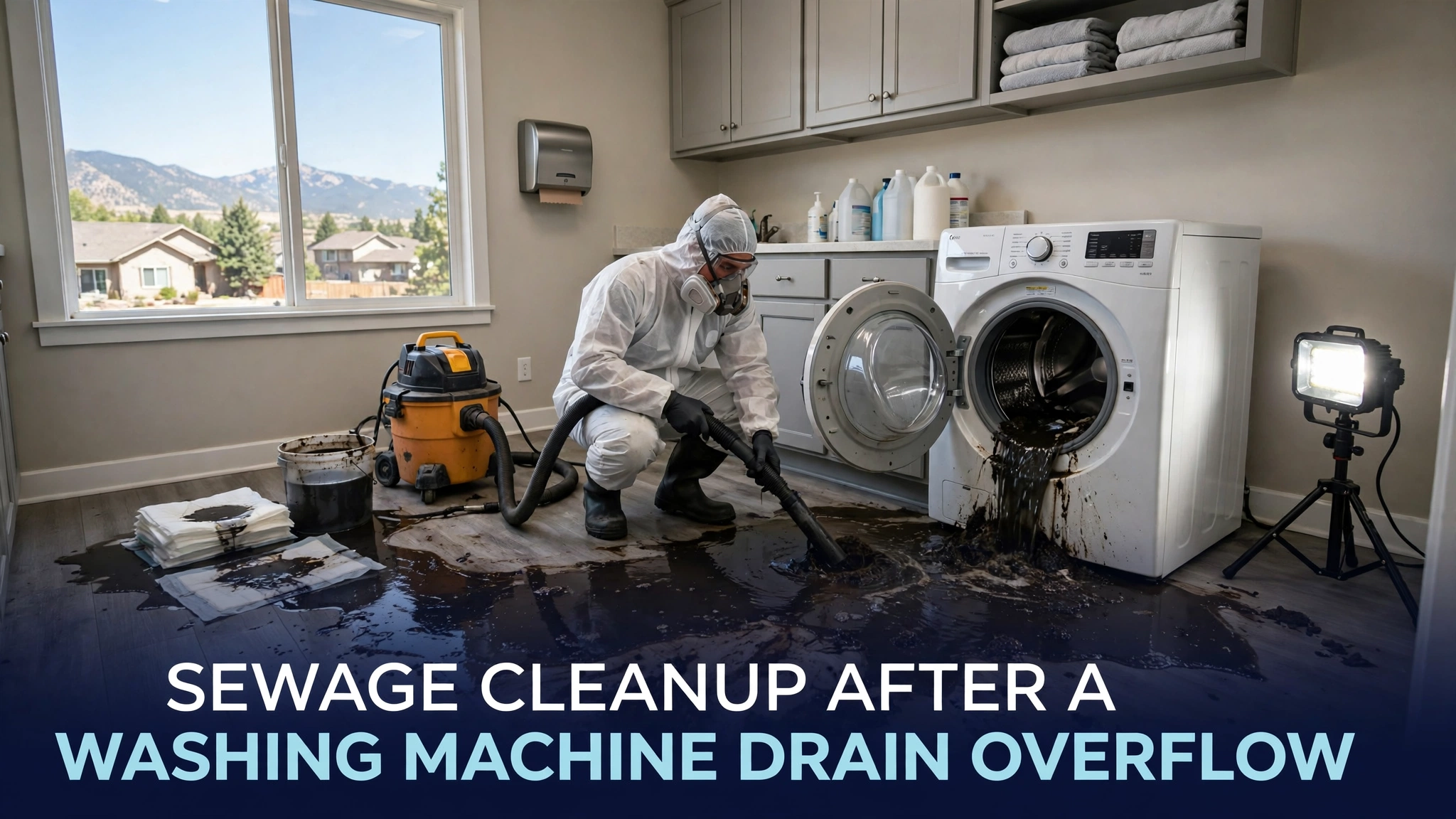
A washing machine drain overflow looks like a washer problem, but the washer is usually the messenger. Understanding why the drain cannot keep up helps you read the rest of the house correctly.
The washer drains through a hose that drops into a standpipe, a vertical pipe that carries the discharge water down into the drain line. The washer pump pushes water out faster than a slow drain can carry it away.
If the hose has slipped out of the standpipe, the water goes straight onto the floor. If the hose is pushed too far down, it can siphon or block the flow. If lint, detergent residue, and small items have narrowed the standpipe over the years, the water has nowhere to go at the speed the washer sends it.
Most overflows trace back to a clog further down the line, past the laundry room. Grease, lint, and soap residue build up in the drain pipe over time, narrowing it until one full wash cycle is enough to overwhelm it.
That is why the overflow often appears during the drain cycle rather than the fill cycle. The washer pumps a large volume of water in a short burst, and a narrowed line cannot move it fast enough. The water rises in the standpipe and spills over the top. The same clog can also show up at other fixtures, and sewage coming up through the bathtub drain is the same story at a different fixture.
A washing machine moves a surprising amount of water in a single cycle. A standard machine sends about 20 gallons down the drain in one load, while an ENERGY STAR model sends about 14 gallons, according to the U.S. EPA.
An ENERGY STAR clothes washer uses 14 gallons of water per load, compared with 20 gallons for a standard machine, according to the U.S. EPA.
That volume explains why a laundry room floor can be covered in minutes. Fourteen to twenty gallons is a lot of water to mop, and when the drain is backing up, that water is not clean wash water. It is water that has mixed with the contents of a blocked sewer line, and it is treated as contaminated from the first minute.
When the overflow keeps happening load after load, the cause is usually deeper than the laundry room. Tree roots find their way into older sewer pipes and grow into a mat that catches lint and grease, and a main line problem shows up at more than one fixture at once. Sewage cleanup after a main sewer line clog follows the same staged approach, because the cause is the same line.
The phrase "sewage cleanup" sounds like someone arrives and the problem ends. In practice it means a staged job that starts when the crew can work safely. It is not a promise about how quickly anyone arrives, and it is not a promise that the cleanup finishes in one visit.
When the crew arrives, they start by confirming the source has stopped and mapping how far the water traveled. They check which rooms the water reached, which materials it soaked, and whether water is near any outlet, appliance, or the electrical panel. They work in full protective gear, suit, gloves, respirator, and boots, because every surface the water touched is treated as contaminated until it is cleaned.
They also look for the cause. A hose that slipped out of the standpipe is a different story from a clogged main line, and the crew notes where the water came from and which fixtures are still slow.
Extraction removes the standing sewage and contaminated water from the floor. Professional extraction equipment moves far more water, far faster, than anything a homeowner has at home. The crew works from the edges inward, keeping clean areas clean.
Do not try to extract sewage yourself. A household wet vacuum spreads contamination through its exhaust and its hose, and the person using it is standing in Category 3 water without protective gear.
The U.S. EPA advises drying water-damaged areas and materials within 24 to 48 hours to prevent mold growth.
That is the practical meaning of U.S. EPA guidance on drying wet materials: the drying clock starts while the overflow is still being cleaned, not after. Skipping ahead to drying while contaminated water is still on the floor does not help, and what happens when sewage cleanup is delayed is mostly a story about moisture left behind.
Once the standing water is gone, the crew removes porous materials that cannot be saved, soaked drywall at the base, and soft items that absorbed the water. Then they clean and disinfect the hard surfaces that remain, including the standpipe, the drain, and the floor around the washer.
Drying equipment runs on the floors, wall bases, and any cavities the water entered. It stays in place until moisture readings show the materials are dry, because a room that looks dry can hold wet material behind a baseboard. Readings, not appearances, decide when the space returns to normal use.
Most of the damage after a washing machine drain overflow is not caused by the water. It is caused by the homeowner trying to help it along.
The temptation is strong. The water went down a little, so maybe one more cycle will tell you whether the drain has cleared.
It will not. While a blockage lasts, added water joins the overflow, and a test cycle is the most common way a wet laundry room becomes a flooded floor.
A mop and a bucket do not remove sewage, and they spread it further. Sewage soaks into porous materials, spreads across floors, and hides in places you cannot see. Even a small overflow soaks porous materials and spreads contamination across surfaces that look clean.
Clear-looking water from a washing machine overflow is still sewage when the drain is backing up, because the contamination is in what the water carries, not in its color. Sewage is Category 3 black water, the most contaminated IICRC category, and it is treated as contaminated from the first minute, no matter how clear it looks.
Do not pour bleach or other chemicals into standing sewage. Chemicals do not sanitize it, and they add risk for everyone who handles the water afterward. The water needs to be extracted first, then the surfaces cleaned and disinfected.
A single overflow can have a simple cause, a hose that slipped out of the standpipe. But an overflow that repeats, even weeks apart, is a pattern, and patterns point to the line. Roots, grease, and a narrowing pipe do not fix themselves, and the next load is usually the one that floods the room again.

Every step in this guide comes back to one fact: sewage is Category 3 black water. It carries bacteria, viruses, and parasites, it soaks into porous materials, and it keeps doing damage the longer materials stay wet.
Sewage is Category 3 black water, the most contaminated of the 3 IICRC water damage categories.
That classification is why the safety steps are so plain. Category 3 means the water is treated as contaminated from the first minute. It means porous materials the water soaked are treated as unsalvageable in most cases, because they cannot be cleaned deeply enough to be safe. It means hard surfaces are cleaned and disinfected in place, by a crew that knows which products and methods are right for the material.
Not every washing machine overflow is a sewage backup, and telling the two apart matters, because the response is different. Here is how to read what the laundry room is telling you.
The overflow happens on every load, or it happens when other fixtures run too. The lowest toilet gurgles when the washer drains. The tub or shower fills a little when the washer runs. The water is dark, it smells like sewage, and it keeps coming back even after the washer is off.
Those signs point to the drain line, not the washer. The washer pushes the most water the fastest, so it reports a failing line first. Sewage cleanup after a toilet overflow is the same story at a different fixture, and the rule is the same in both places: stop water use, keep people away, and let the crew handle it.
A washing machine overflow leaves wet laundry in the washer and wet clothes on the floor. Sorting them out is part of the job, and it is worth doing in the right order.
Laundry that was in the washer when the overflow happened should be handled with care. Do not carry wet, contaminated laundry through clean rooms to reach another washer. Bag it where it is, from dry ground, and ask the crew what can be washed.
Items that sat in standing sewage water, soft toys, cloth bins, and anything porous that soaked it up, are treated as unsalvageable in most cases. Hard items can be cleaned and disinfected in place, and the crew decides what can be saved.
Photos taken in the first minutes help the crew judge how the event unfolded, and they give you a record of what the water reached.
Photograph the water line on the wall or floor, the standpipe and the drain hose, and the rooms the water reached. Note the time each photo was taken.
Skip the close-ups that require you to kneel in the water, and skip moving wet items to photograph what is underneath them.

The first minutes end when the crew takes over, but the job does not end when they leave. The first day after an overflow is when the drying and verification stage proves its value.
After extraction and sanitizing, drying equipment runs on the floors, wall bases, and any cavities the water entered. It stays in place until moisture readings show the materials are dry.
The full range of sewage cleanup services covers washing machine overflows with the same staged approach, and the service page for basement sewage cleanup explains the same approach where the laundry room sits below grade.
Watch for a return of the smell, or water appearing again at the standpipe when the washer runs. Either one points to a cause in the line that still needs attention.
Homeowners come first. A washing machine overflow arrives at their drains and on their laundry room floors, and the safe first steps start with them.
Rentals and HOA-managed properties come next. Tenants spot the water first, owners carry the responsibility for the response, and in shared buildings one backed-up line can report itself in several homes at once.
Commercial properties follow, and they are never left out. Laundromats and apartment laundry rooms in Arvada, Colorado face the same overflow mechanics. For a home in Candelas, the local page for sewage cleanup for Candelas homes covers the neighborhood. The full picture of sewage cleanup in Arvada, Colorado explains how the pieces fit together for all three.
Sewage Cleanup Arvada serves the Candelas community in Arvada, Colorado, near local landmarks like Maverick Mesa Park, for homes close to the crossing of W 94th Ave & Candelas Pkwy, at coordinates 39.86794, -105.19056.
Get Sewage Cleanup Candelas Service Now
For a sewage cleanup for Candelas homes after a washing machine drain overflow, call (720) 764-0457.
What should I do first when my washing machine drain overflows?
Turn the washer off, stop all water use in the house, keep everyone and every pet out of the laundry room, and stay out of any standing water near outlets or appliances. Then call professionals.
Why does my washing machine drain overflow only during the drain cycle?
The washer pump pushes a large volume of water in a short burst, about 14 gallons in an ENERGY STAR model and about 20 gallons in a standard one, and a narrowed drain line cannot move it fast enough. A clog downstream, roots, or grease in the main line is usually the cause.
Is washing machine overflow water sewage?
It can be. When the drain line is backing up, the water from the standpipe has mixed with the contents of a blocked sewer line, and it is treated as Category 3 black water. Clear-looking water is still treated as contaminated, because the contamination is in what the water carries, not in its color.
Can I clean up a washing machine overflow myself?
No, not when the drain is backing up. Sewage is Category 3 black water, carrying bacteria, viruses, and parasites that make cleaning without protective gear and professional equipment unsafe. Even a small overflow soaks porous materials and spreads contamination across surfaces that look clean. The safe steps are stopping water use, keeping people away, treating electricity as a hard boundary, and calling professionals.
What should I do if the washing machine drain overflows again after the cleanup?
Stop water use again, keep everyone away, and call right away. A repeat overflow usually points to a cause in the line, such as roots, a crack, or an offset joint.
Sewage Cleanup Arvada, 5292 Ward Rd #2, Arvada, CO 80002. (720) 764-0457
Hours: Open 24 hours, 7 days a week for emergency service
The floor drain is the lowest point in your home, so it is the first place a sewage backup shows itself. One minute the basement floor is dry. The next, dark water is rising around the drain, and every fixture you use upstairs seems to make it worse. The first steps you take in those minutes matter more than anything you do later, because they decide whether the backup stays in one room or spreads through the whole basement. This guide walks through those first steps in order, explains what emergency sewage removal actually involves, and clears up the myths that turn a bad morning into a much bigger cleanup.
When sewage is coming up through a floor drain, the urge is to act fast and fix it. The right first ten minutes are slower than that urge, and they are mostly about stopping the problem from growing. Work through this checklist in order, from dry ground.
Do not flush. Do not run the shower, the dishwasher, or the washing machine. Tell everyone in the house, out loud, because one unaware flush during a backup is how a slow floor drain becomes a flooded room.
Water use can resume only after the drains are running clear and the backup has been assessed, not before. Until then, the house runs on a simple rule: nothing down any drain. If you use water while the line is blocked, that water joins the backup, and the floor drain is where it comes out.
Sewage is Category 3 black water, and it carries bacteria, viruses, and parasites that can make people sick on contact. Keep children out of affected rooms entirely. Keep pets out too, and keep them from drinking or walking through standing water.
Close the door to the affected area if you can. Do not walk through standing water to rescue belongings. Belongings can be assessed later, by a crew in protective gear. Anyone who touched the water should wash with soap and clean water, away from the affected area, and change out of wet clothing.
Call as soon as the water is stopped and everyone is safe. Do not wait to see whether the backup clears on its own, because a line that clears for an hour and backs up again at midnight has not fixed itself.
When you call, say where the sewage is, which drains are affected, and whether water is still rising. Say whether anyone has had contact with the water, and whether water has reached any outlets or the electrical panel. Say what you have already done: water use stopped, people and pets kept away, photos taken from dry ground.
If standing water has reached an outlet, a power strip, an appliance plug, or a light fixture at floor level, stay out of the water completely. Do not reach into it to unplug something. Do not step into it to flip a breaker. Water and electricity together are a danger you cannot see, and wet floors hide it well.
If the water is near the electrical panel itself, or near any outlet that is sparking or buzzing, leave the area and say so when you call. The crew and the utility can decide what happens next, from dry ground.
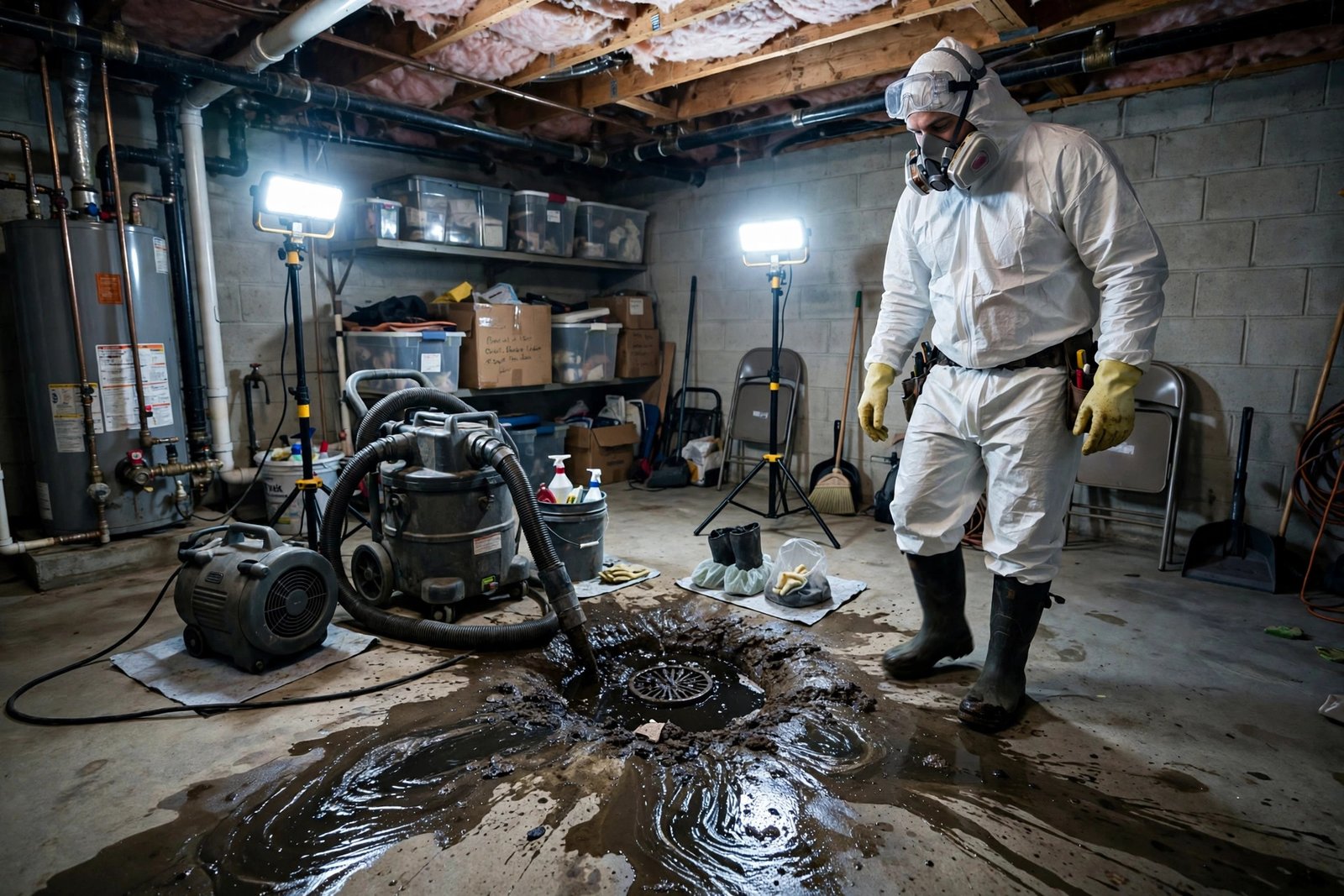
The floor drain is not the cause of the backup. It is the messenger. Understanding why it reports first helps you read the rest of the house correctly, instead of blaming the drain itself.
Sewage enters through the lowest opening it can find, and in most Arvada, Colorado homes that opening is the basement floor drain. When pressure builds in the sanitary sewer line, from a blockage downstream, from roots narrowing the pipe, or from heavy rain surcharging the system, the water looks for relief. The floor drain is the lowest relief point in the house, so it is where the water appears.
That is also why a backup often shows up in more than one fixture. The tub and the shower sit low too, and the lowest toilet can gurgle, bubble, or fill on its own. Each of those fixtures is reporting the same pressure in the same line. Fixing one fixture never fixes the line.
Water around the floor drain, a dark ring on the concrete, or a gurgling sound when a fixture runs upstairs all point to the same thing: pressure in the line is looking for relief, and it found the basement. sewage coming up through the bathtub drain is the same story at a different fixture, and the rule is the same in both places: stop water use, keep people away, and let the crew handle it.
The phrase "emergency sewage removal" sounds like someone arrives and the problem ends. In practice it means a staged job that starts when the crew can work safely, and the emergency part is that the service is available around the clock. It is not a promise about how quickly anyone arrives, and it is not a promise that the removal finishes in one visit.
When the crew arrives, they start by confirming the source has stopped and mapping how far the sewage traveled. They check which rooms the water reached, which materials it soaked, and whether water is near any electrical outlet, panel, or appliance. They work in full protective gear, suit, gloves, respirator, and boots, because every surface the water touched is treated as contaminated until it is cleaned.
Extraction removes the standing sewage and contaminated water from the floor. Professional extraction equipment moves far more water, far faster, than anything a homeowner has at home, and it does it without spreading the water further. The crew works from the edges inward, keeping clean areas clean.
Do not try to extract sewage yourself. A household wet vacuum spreads contamination through its exhaust and its hose, and the person using it is standing in Category 3 water without protective gear.
Combined sewer overflows release about 850 billion gallons of untreated wastewater each year in the United States, according to the U.S. EPA.
That figure is about the system, not your home, but it explains why sewage is treated as a health hazard rather than a plumbing nuisance. The water that backs up through a floor drain comes from a system that carries everything a neighborhood sends it, and it deserves the same respect at your floor drain as it does at a treatment plant.
Once the standing water is gone, the crew removes porous materials that cannot be saved, carpet and pad, soaked drywall at the base, and soft items that absorbed the water. Then they clean and disinfect the hard surfaces that remain, using products and methods suited to each material. The floor drain itself gets attention at this stage, cleaned and disinfected like any other contaminated surface.
Drying equipment runs on the structure, floors, wall bases, and any cavities the water entered. It stays in place until moisture readings show the materials are dry, because a room that looks dry can hold wet material behind a baseboard. Readings, not appearances, decide when the space returns to normal use.
The U.S. EPA advises drying water-damaged areas and materials within 24 to 48 hours to prevent mold growth.
That is the practical meaning of U.S. EPA guidance on drying wet materials: the drying clock starts while the backup is still being cleaned, not after. Skipping ahead to drying while contaminated water is still on the floor does not help, and what happens when sewage cleanup is delayed is mostly a story about moisture left behind.
Most of the damage after a floor drain backup is not caused by the sewage. It is caused by the homeowner trying to help it along. These five myths are the ones that do the most harm.
The temptation is strong. The water went down a little, so maybe one flush will tell you whether the line has cleared.
It will not. While a blockage or a surcharge lasts, added water joins the backup, and a test flush is the most common way a slow floor drain becomes a flooded room. The line will tell you it has cleared when the drains run normally on their own, after the cause has been found and addressed, not before.
The cleanout is the capped pipe outside the home that gives access to the sewer line, and opening it during a backup feels like opening a release valve.
Do not open it. Opening a cleanout while the line is pressurized moves sewage onto the soil and toward storm drains, and it puts you in direct contact with the water you are trying to avoid. It also removes the pressure reading the crew uses to judge where the blockage sits. Leave the cleanout capped and intact. Knowing where it is, and being able to point the crew to it, is the useful version of this move.
A fan feels like the right tool for wet floors. Before cleaning, it is the wrong one.
Air moving over sewage before it is cleaned spreads contamination onto clean surfaces, into the air, and across rooms that were dry. Drying comes later, after extraction and sanitizing, when the crew brings drying equipment and moisture readings to do it properly.
Do not pour bleach or other chemicals into standing sewage. Chemicals do not sanitize it, and they add risk for everyone who handles the water afterward.
Clear-looking water from a backup is still sewage, because the contamination is in what it carries, not in its color. Sewage is Category 3 black water, the most contaminated category in the IICRC water damage classifications, and it is treated as contaminated from the first minute, with no exceptions for how clear it looks.
A mop and a bucket do not remove sewage, and they spread it further. Sewage soaks into porous materials, spreads across floors, and hides in places you cannot see. Even a small backup soaks porous materials and spreads contamination across surfaces that look clean. The safe steps are stopping water use, keeping people away, treating electricity as a hard boundary, documenting from dry ground, and calling professionals.
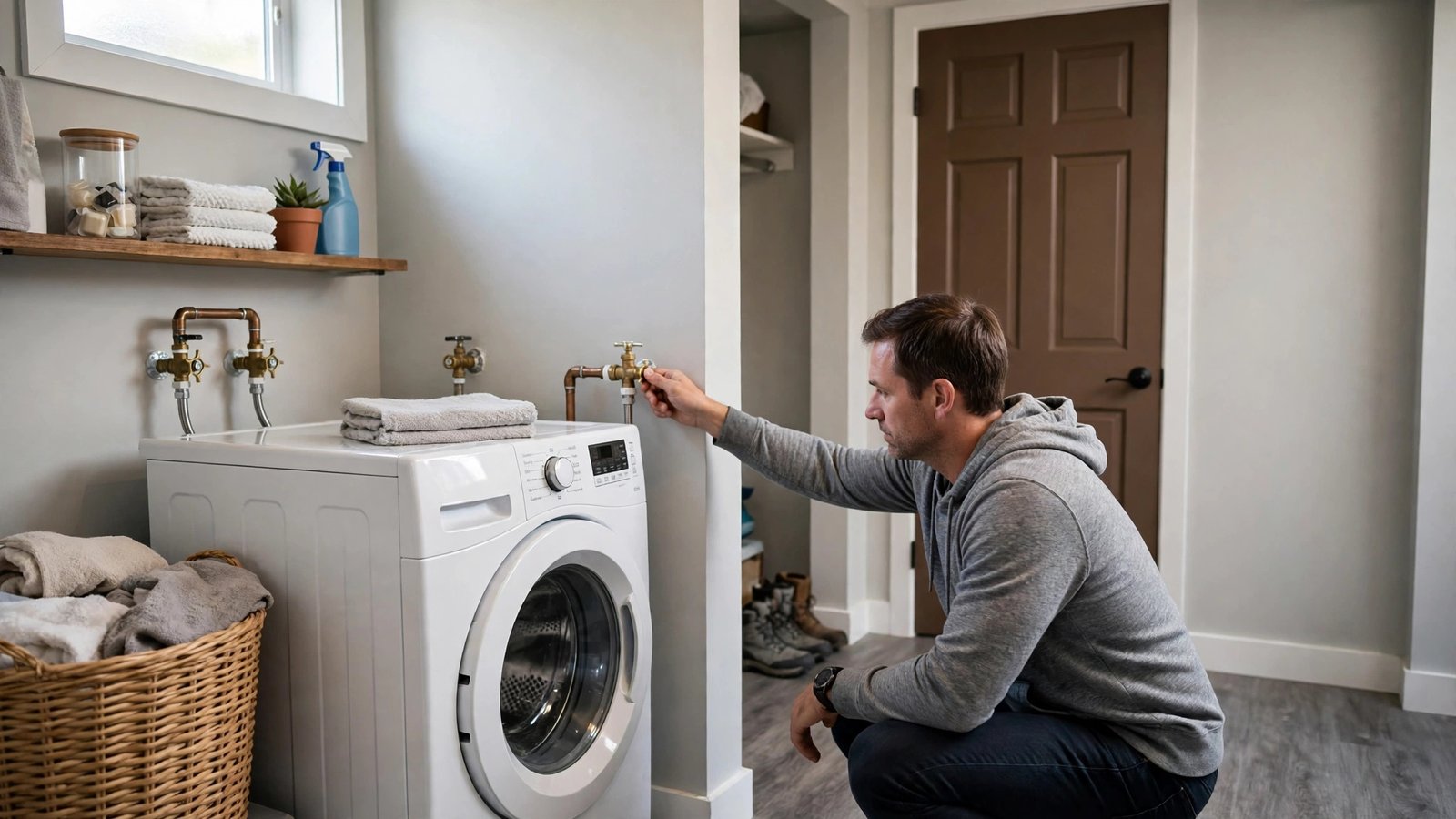
Every step in this guide comes back to one fact: sewage is Category 3 black water. It carries bacteria, viruses, and parasites, it soaks into porous materials, and it keeps doing damage the longer materials stay wet.
Sewage is Category 3 black water, the most contaminated of the 3 IICRC water damage categories.
That classification is why the safety steps are so plain, and why they are repeated in every guide. Category 3 means the water is treated as contaminated from the first minute. It means porous materials the water soaked, carpet and pad, drywall at the base, soft furnishings, are treated as unsalvageable in most cases, because they cannot be cleaned deeply enough to be safe. It means hard surfaces are cleaned and disinfected in place, by a crew that knows which products and methods are right for the material.
Photos taken in the first minutes are useful twice: they help the crew judge how the event unfolded, and they give you a record of what the water reached before anything was moved.
Photograph the water line on the wall or floor, the affected drains, and the rooms the water reached. Photograph the outside too, if sewage is visible at a cleanout or in the yard, and note the time each photo was taken.
Skip the close-ups that require you to kneel in the water or reach across it. Skip opening the cleanout to get a better angle. Skip moving wet items to photograph what is underneath them, because moving them spreads the contamination.
One useful photo is the floor drain or the lowest fixture, taken from the doorway with the light on. That single image tells the crew where the sewage entered, how deep it got, and which rooms it reached.

The first ten minutes end when the crew takes over, but the job does not end when they leave. The first day after a backup is when the drying and verification stage proves its value, and it is worth knowing what to expect.
After extraction and sanitizing, drying equipment runs on the structure: floors, wall bases, and any cavities the water entered. It stays in place until moisture readings show the materials are dry, because a room that looks dry can hold wet material behind a baseboard.
The full range of sewage cleanup services covers floor drain backups with the same staged approach, and the service page for emergency sewage removal explains the emergency service itself.
Watch for a return of the smell, or water appearing again at the floor drain when fixtures run upstairs. Either one points to a cause in the line that still needs attention, such as roots, a crack, or an offset joint. Say that it has happened before when you call, so the crew looks for the cause rather than only cleaning the result.
Homeowners come first. A floor drain backup arrives at their drains, on their basement floors, and the safe first steps and the removal decision start with them.
Rentals and HOA-managed properties come next. Tenants spot the water first, owners carry the responsibility for the response, and in shared buildings one backed-up line can report itself in several homes at once, which makes fast, clear reporting worth a great deal.
Commercial properties follow, and they are never left out. Restaurants, retail sites, and offices in Arvada, Colorado face the same backup mechanics at their floor drains and restrooms. For a home in West Woods, the local page for emergency sewage removal for West Woods homes covers the neighborhood. The full picture of sewage cleanup in Arvada, Colorado explains how the pieces fit together for all three.
Sewage Cleanup Arvada serves the West Woods community in Arvada, Colorado, near local landmarks like West Woods Elementary School, for homes close to the crossing of W 72nd Ave & Quaker St, at coordinates 39.82618, -105.1869.
Get Emergency Sewage Removal West Woods Service Now
For a emergency sewage removal for West Woods homes after a floor drain backup, call (720) 764-0457.
What should I do first when sewage backs up through my floor drain?
Stop using water, keep everyone and every pet away from the affected area, and stay out of any standing water near electricity. Then call professionals. Do not flush to test the line, do not open the cleanout, and do not try to extract the water yourself.
Why does sewage come up through the floor drain first?
The floor drain is the lowest opening in most homes, so when pressure builds in the sanitary sewer line, from a blockage downstream, from roots, or from heavy rain, the water looks for relief at the lowest point. The drain is not the cause. It is where the pressure reports first.
Is it safe to stay in the house during a floor drain backup?
It depends on how far the sewage has spread. If the backup is contained in the basement with the door closed, the rest of the house can usually be used while you wait. If sewage has reached living areas, or water is near outlets or the electrical panel, leave the affected area and follow the crew guidance.
Can I clean up a small floor drain backup myself?
No. Sewage is Category 3 black water, carrying bacteria, viruses, and parasites that make cleaning without protective gear and professional equipment unsafe. Even a small backup soaks porous materials and spreads contamination across surfaces that look clean. The safe steps are stopping water use, keeping people away, treating electricity as a hard boundary, documenting from dry ground, and calling professionals.
What should I do if the floor drain backs up again after the cleanup?
Stop water use again, keep everyone away, and call right away. A repeat backup usually points to a cause in the line, such as roots, a crack, or an offset joint. Say that it has happened before when you call, so the crew looks for the cause rather than only cleaning the result.
Sewage Cleanup Arvada, 5292 Ward Rd #2, Arvada, CO 80002. (720) 764-0457
Hours: Open 24 hours, 7 days a week for emergency service
You walk down to the basement and the floor is wet. The sump pump is silent, or it is humming without moving any water, and the smell tells you this is not a clean water leak. A failed sump pump does not just leave a puddle behind. It lets water rise until it finds the lowest opening in your home, and when the sewer line is under pressure, that opening can bring sewage with it. This guide explains what a sump pump failure does, what to do first, and how sewage cleanup works after one, so you can make safe decisions while the basement is still wet.
A sump pump has one job, and it does it quietly for years. It sits in a pit at the lowest point of the basement floor, collects groundwater that seeps in around the foundation, and pushes that water out through a discharge line, away from the house. You rarely think about it until the day it stops.
Most homeowners in Arvada, Colorado first meet their sump pump during a heavy rain or a spring snowmelt, when the pit fills faster than usual. The pump kicks on, the water level drops, and the basement stays dry. That cycle repeats for years, and it is easy to forget the pump is there at all.
Here is the part that surprises people. A sump pump handles groundwater, not sewage, so a failed pump should mean a wet basement, not a sewage backup. In practice the two meet in the basement.
When the pit overflows, water spreads across the basement floor and reaches the floor drain, the lowest fixture in the home. If the sanitary sewer line is also under pressure, from a blockage downstream or from heavy rain surcharging the system, sewage can push up through that same floor drain into the water already on the floor. The two mix, and from that point the whole basement floor is treated as contaminated.
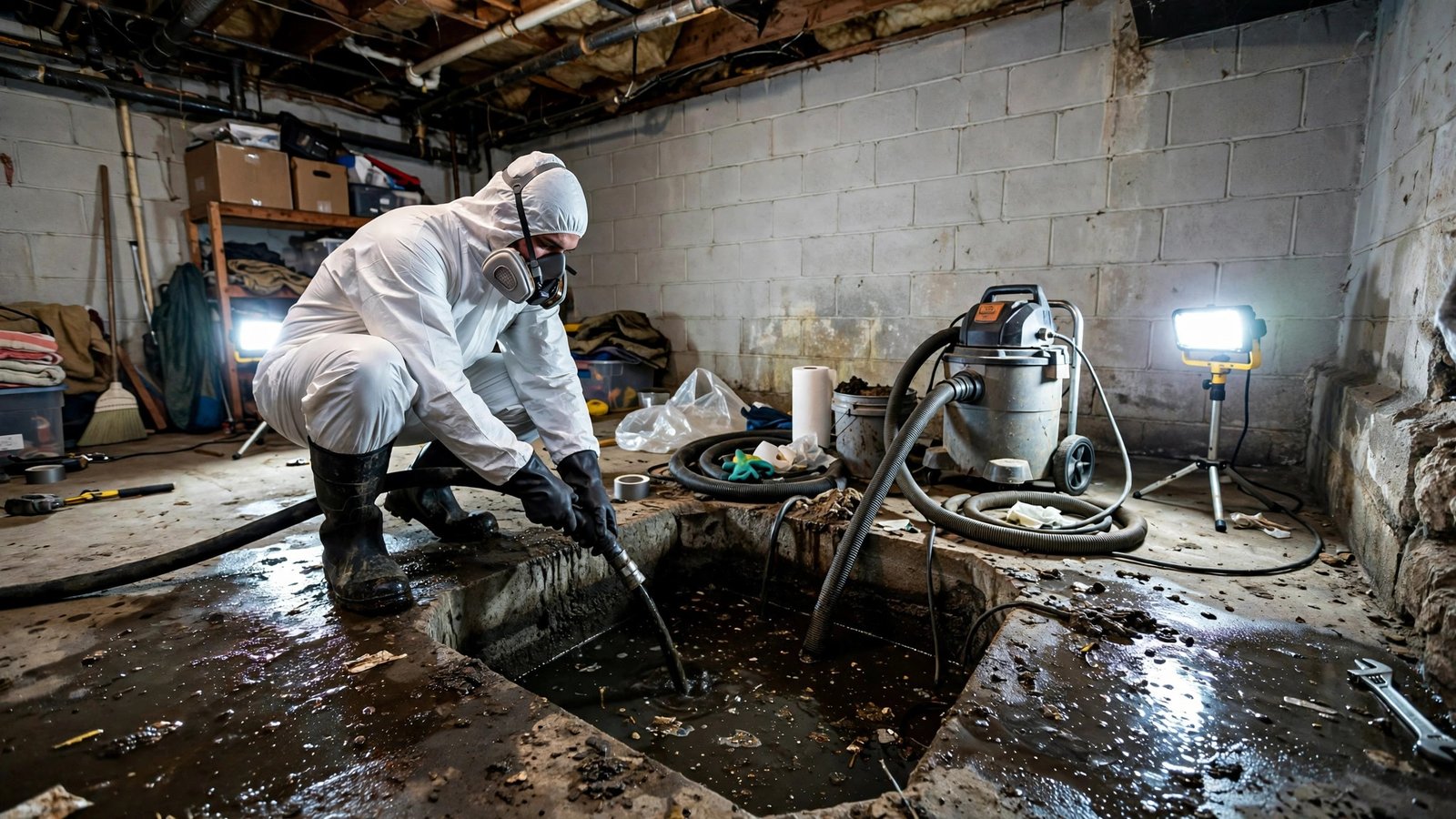
A pump rarely fails without warning. It usually leaves clues for days or weeks first, and the homeowners who notice them early are the ones who catch the problem before the basement floods.
This is the most common sign. You hear the pump running, but the water level in the pit does not drop, or it drops slowly and climbs back. Something is wrong between the pump and the outside: a blocked discharge line, a failed check valve letting water flow back, or an impeller that can no longer move enough volume.
Do not keep letting it run and hoping. A pump running dry or against a blockage can burn out, and then you have two problems instead of one. Note what you hear and see, from dry ground, and pass that on when you call.
A pump that stays silent while the pit fills is a different failure. The float switch may be stuck, the power may be out at that outlet, or the motor may have failed. A tripped breaker or a tripped ground fault outlet is a common cause, and it is one of the few things you can check safely, from dry ground, without touching the water.
A healthy pump makes a steady sound when it runs, then goes quiet. Grinding, rattling, or a loud clunk at startup all point to wear inside the pump, a loose impeller, or debris caught in the intake. A pump that cycles on and off every few seconds is often a float switch or check valve problem.
In Arvada, Colorado, winter brings a failure mode that warmer places never see. A discharge line that ends too close to the house, or runs through an unheated space, can freeze solid. The pump runs, the water has nowhere to go, and the pit overflows indoors. The same thing happens when the outside end of the line is buried under soil, mulch, or snow.
A musty smell after rain points to groundwater. A sewage smell, sharp and unmistakable, points to the sanitary line. If the basement smells like sewage after the pump stops, treat the water as sewage, even if it looks clear.
The first hours after a pump failure decide how large the cleanup becomes. Water does not stay where it started. It spreads, it soaks, and it keeps working on your basement long after the rain stops.
Water on a basement floor follows gravity and the slope of the slab. It runs toward the floor drain, under the baseboards, into the next room, and down into any crack or joint it can find. In an older home in Olde Town Arvada, the water can travel further than you expect, into storage rooms and finished areas that looked dry from the stairs.
Carpet and pad, drywall at the base, stored cardboard boxes, and soft furnishings all soak up contaminated water fast. Once they are soaked, they are treated as unsalvageable in most cases, because they cannot be cleaned deeply enough to be safe. Hard surfaces, concrete, tile, sealed wood, can be cleaned and disinfected in place by a crew that knows which methods fit the material.
The U.S. EPA advises drying water-damaged areas and materials within 24 to 48 hours to prevent mold growth.
The drying clock starts while the backup is still being cleaned, not after. That is why the cleanup order matters: extract first, then remove what cannot be saved, then sanitize, then dry with moisture readings. Skipping ahead to drying while contaminated water is still on the floor does not help, and it spreads contamination through the air.
Professional sewage cleanup follows the same four stages every time, whether the cause was a sump pump failure, a clogged main line, or a heavy storm. Knowing the stages helps you understand what the crew is doing, and why it takes the time it takes.
The crew starts by confirming the source has stopped and mapping how far the water traveled. They check which rooms the water reached, which materials it soaked, and whether water is near any electrical outlet, panel, or appliance. They work in full protective gear, suit, gloves, respirator, and boots, because every surface the water touched is treated as contaminated until it is cleaned.
Extraction removes the standing water and sewage from the floor. Professional extraction equipment moves far more water, far faster, than anything a homeowner has at home, and it does it without spreading the water further. The crew works from the edges inward, keeping clean areas clean.
Do not try to extract sewage yourself. A household wet vacuum spreads contamination through its exhaust and its hose, and the person using it is standing in Category 3 water without protective gear.
Once the standing water is gone, the crew removes porous materials that cannot be saved, carpet and pad, soaked drywall at the base, and soft items that absorbed the water. Then they clean and disinfect the hard surfaces that remain, using products and methods suited to each material.
Drying equipment runs on the structure, floors, wall bases, and any cavities the water entered. It stays in place until moisture readings show the materials are dry, because a room that looks dry can hold wet material behind a baseboard. Readings, not appearances, decide when the space returns to normal use.
The full range of sewage cleanup services covers this staged approach, and the page for basement sewage cleanup explains the basement version of the same job.
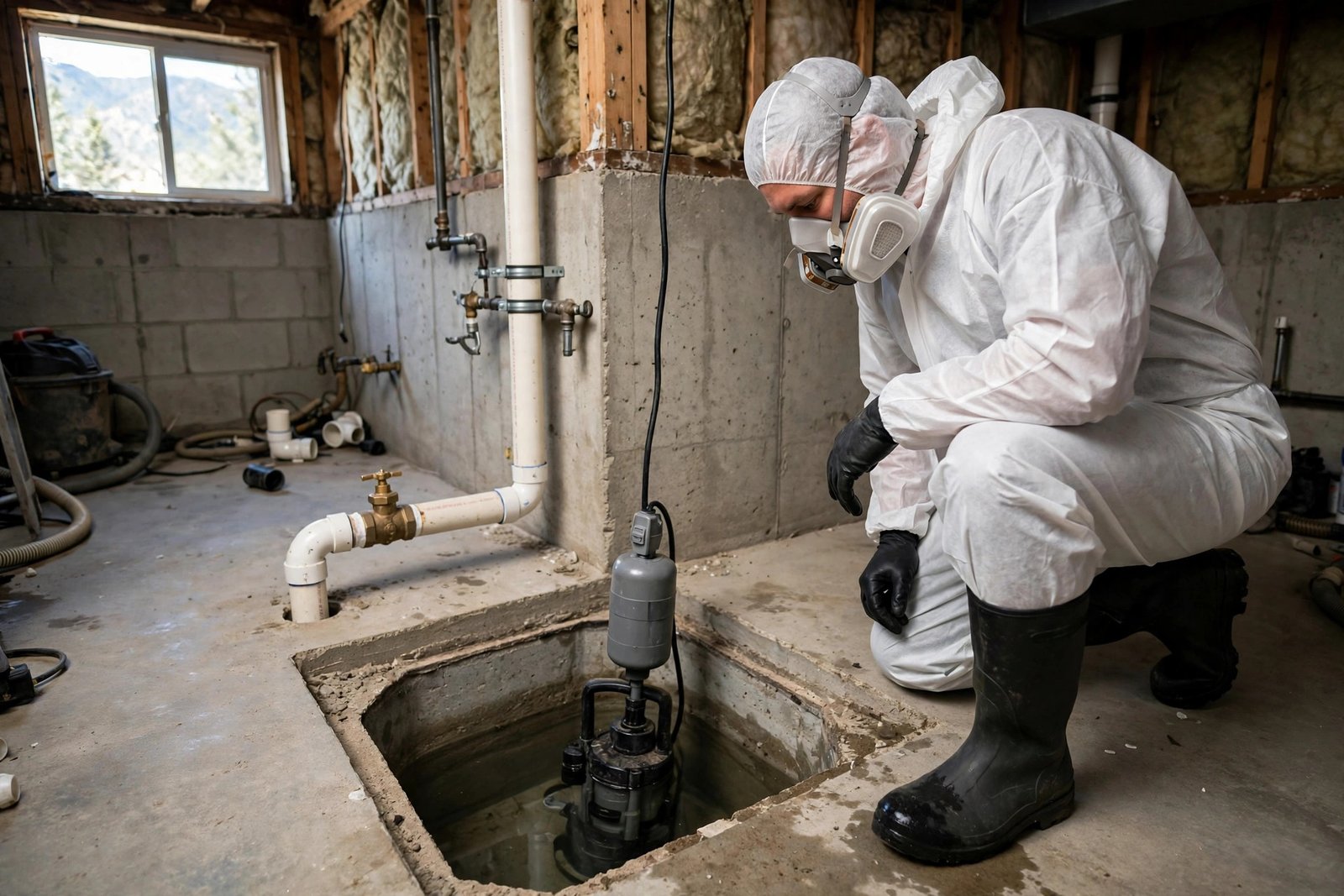
A sump pump failure leaves you with a wet basement and a strong urge to act. The safe moves are few and simple, and they are the same ones that apply to any sewage backup. Everything else belongs to the crew.
Stop adding water to a system that is already failing. Do not flush, do not run the shower, the dishwasher, or the washing machine. Tell everyone in the house, out loud, because one unaware flush during a backup is how a slow floor drain becomes a flooded room.
Water use can resume only after the drains are running clear and the backup has been assessed, not before.
Sewage is Category 3 black water, and it carries bacteria, viruses, and parasites that can make people sick on contact. Keep children out of affected rooms entirely. Keep pets out too, and keep them from drinking or walking through standing water.
Close the door to the affected area if you can. Do not walk through standing water to rescue belongings. Belongings can be assessed later, by a crew in protective gear.
If standing water has reached an outlet, a power strip, an appliance plug, or the sump pump outlet itself, stay out of the water completely. Do not reach into it to unplug the pump. Do not step into it to flip a breaker. Water and electricity together are a danger you cannot see.
If the water is near the electrical panel itself, or near any outlet that is sparking or buzzing, leave the area and say so when you call.
Photos taken before anything is moved are useful twice: they help the crew judge how the event unfolded, and they give you a record of what the water reached. Photograph the water line on the wall or floor, the sump pit, the affected drains, and the rooms the water reached, from the doorway, without stepping into the water.
Note the time each photo was taken. Note whether the pump was running, silent, or humming. Those two details, the water level and the pump sound, tell the crew more than a long description.
Tree roots are linked to more than 50 percent of sewer blockages, according to research published through the U.S. Forest Service.
Roots matter here because a sump pump failure is often not the only problem. A line narrowed by roots backs up more easily when the system is under pressure, and a pump failure at the same time removes the basement’s last line of defense. When you call, say whether backups have happened before, so the crew looks for the cause in the line as well as the pump.
Every step in this guide comes back to one fact: sewage is Category 3 black water, the most contaminated category in the IICRC water damage classifications. It carries bacteria, viruses, and parasites, it soaks into porous materials, and it keeps doing damage the longer materials stay wet.
Category 3 means the water is treated as contaminated from the first minute, with no exceptions for how clear it looks. Clear-looking water from a backup is still sewage, because the contamination is in what it carries, not in its color.
It means porous materials the water soaked are treated as unsalvageable in most cases. It means hard surfaces are cleaned and disinfected in place, by a crew that knows which products and methods are right for the material. And it means nobody without protective gear should be in the water, for any reason, at any stage. Anyone who touched the water should wash with soap and clean water, away from the affected area, and change out of wet clothing.

A pump failure cannot be ruled out forever, but a few plain habits make it much less likely to catch you by surprise. None of these involve handling sewage, and all of them are checks you can do in dry weather, when nothing is at stake.
Many homeowners do not know where their sump pit is until the day it fails. Find it now, while the basement is dry. Note where the discharge line leaves the house and where it ends outside. Knowing those two places saves time when something goes wrong, and it lets you point the crew straight to the problem.
Before the heavy rain season, listen to the pump run through one cycle. Does it start when the water rises, move the water out, and stop when the pit is low? Does the discharge line run clear outside? If anything sounds different from last year, say so when you call a professional.
When a professional looks at the pump, the useful questions are simple ones. Is the float switch moving freely? Is the check valve holding, so water does not run back into the pit? Is the discharge line clear to its outlet? Is there a backup power arrangement for the pump when the power goes out?
More than 500,000 sewer backups occur each year in the United States, according to the Water Environment Federation.
That number is why a pump check is worth doing before the storm, not after it. Backups are common, they happen in ordinary homes, and the homes that come through them best are the ones where the pump was working, the line was clear, and the first hour after a failure was spent on safety rather than on improvising a cleanup. The practical meaning of U.S. EPA guidance on drying wet materials is the same: the drying clock starts early, so the cleanup should start early too, and what happens when sewage cleanup is delayed is mostly a story about moisture left behind.
Homeowners come first. A sump pump failure arrives at their drains, on their basement floors, and the safe first steps and the cleanup decision start with them.
Rentals and HOA-managed properties come next. Tenants spot the water first, owners carry the responsibility for the response, and in shared buildings one failed pump can report itself in several homes at once, which makes clear reporting worth a great deal.
Commercial properties follow, and they are never left out. Restaurants, retail sites, and offices in Arvada, Colorado face the same pump and sewer mechanics at their floor drains and restrooms. The full picture of sewage cleanup in Arvada, Colorado explains how the pieces fit together for all three.
Sewage Cleanup Arvada serves the Olde Town Arvada community in Arvada, Colorado, near local landmarks like Arvada Flour Mill Museum, for homes close to the crossing of W 56th Ave & Wadsworth Blvd, at coordinates 39.7985, -105.08073.
Get Sewage Cleanup Olde Town Arvada Service Now
For a sewage cleanup for Olde Town Arvada homes after a sump pump failure, call (720) 764-0457.
What should I do first after a sump pump failure causes a sewage backup?
Stop using water, keep everyone and every pet away from the affected area, and stay out of any standing water near electricity. Then call professionals. Do not reach into the sump pit to move the float, and do not try to extract the water yourself.
Can a failed sump pump cause sewage to back up into my basement?
Yes. When the pump fails, water rises and spreads across the basement floor, and if the sanitary sewer line is under pressure from a blockage or heavy rain, sewage can push up through the floor drain into the water already on the floor. From that point the whole area is treated as Category 3 black water.
Is it safe to stay in the house after a sump pump failure with sewage?
It depends on how far the sewage has spread. If the backup is contained in the basement with the door closed, the rest of the house can usually be used while you wait. If sewage has reached living areas, or water is near outlets or the electrical panel, leave the affected area and follow the crew guidance.
How long does sewage cleanup take after a sump pump failure?
It depends on how far the sewage traveled, which materials it soaked, and how long the materials stay wet. Extraction and cleaning come first, then drying and verification with moisture readings decide when the space is ready to use again. The U.S. EPA advises drying wet materials within 24 to 48 hours to prevent mold growth.
Should I replace the sump pump before or after the cleanup?
The cleanup comes first, because the crew needs a safe, dry space to work in, and the pump pit itself needs cleaning and disinfecting like any other contaminated surface. Once the space is clean and dry, a professional can assess the pump, the float switch, the check valve, and the discharge line, and advise on what needs attention before the next storm.
Sewage Cleanup Arvada, 5292 Ward Rd #2, Arvada, CO 80002. (720) 764-0457
Hours: Open 24 hours, 7 days a week for emergency service
Sewage is backing up in your home, and help is on the way. The hour between the first sign and the crew arriving is not for cleaning. It is for stopping the water, keeping everyone away from the sewage, and protecting the parts of your home that are still dry. This guide walks through those first-hour steps in the order that matters, so the emergency sewage cleanup that follows starts from the safest possible place.
A sewage backup feels like a race. Water is rising, or a drain is gurgling, or a smell has filled the hallway, and every instinct says to do something right now.
The first hour is not a race against the water. It is a short window for safe, simple decisions that keep the problem from growing. Nothing you do in this hour should put you in the water, near electricity, or in contact with sewage.
The single most useful thing you can do is stop adding water to a system that is already failing.
Do not flush. Do not run the shower, the dishwasher, or the washing machine. Tell everyone in the house, out loud, because one unaware flush during a backup is how a slow floor drain becomes a flooded room.
Water use can resume only after the drains are running clear and the backup has been assessed, not before. Until then, the house runs on a simple rule: nothing down any drain.
Sewage is not dirty water. It is Category 3 black water, and it carries bacteria, viruses, and parasites that can make people sick on contact.
Keep children out of affected rooms entirely. Keep pets out too, and keep them from drinking or walking through standing water. A pet that wades through sewage tracks it across clean floors and into bedding, and a child who touches a wet toy from a flooded room carries the same risk.
Close the door to the affected area if you can. Do not walk through standing water to rescue belongings. Belongings can be assessed later, by a crew in protective gear.
Anyone who touched the water should wash with soap and clean water, away from the affected area, and change out of wet clothing.
This is the rule that matters most in the first hour, because it is the one people break without thinking.
If standing water has reached an outlet, a power strip, an appliance plug, or a light fixture at floor level, stay out of the water completely. Do not reach into it to unplug something. Do not step into it to flip a breaker. Water and electricity together are a danger you cannot see, and wet floors hide it well.
If the water is near the electrical panel itself, or near any outlet that is sparking or buzzing, leave the area and say so when you call. The crew and the utility can decide what happens next, from dry ground.
A safe test is simple. If you would have to stand in water, or reach across water, to touch anything electrical, do not touch it.
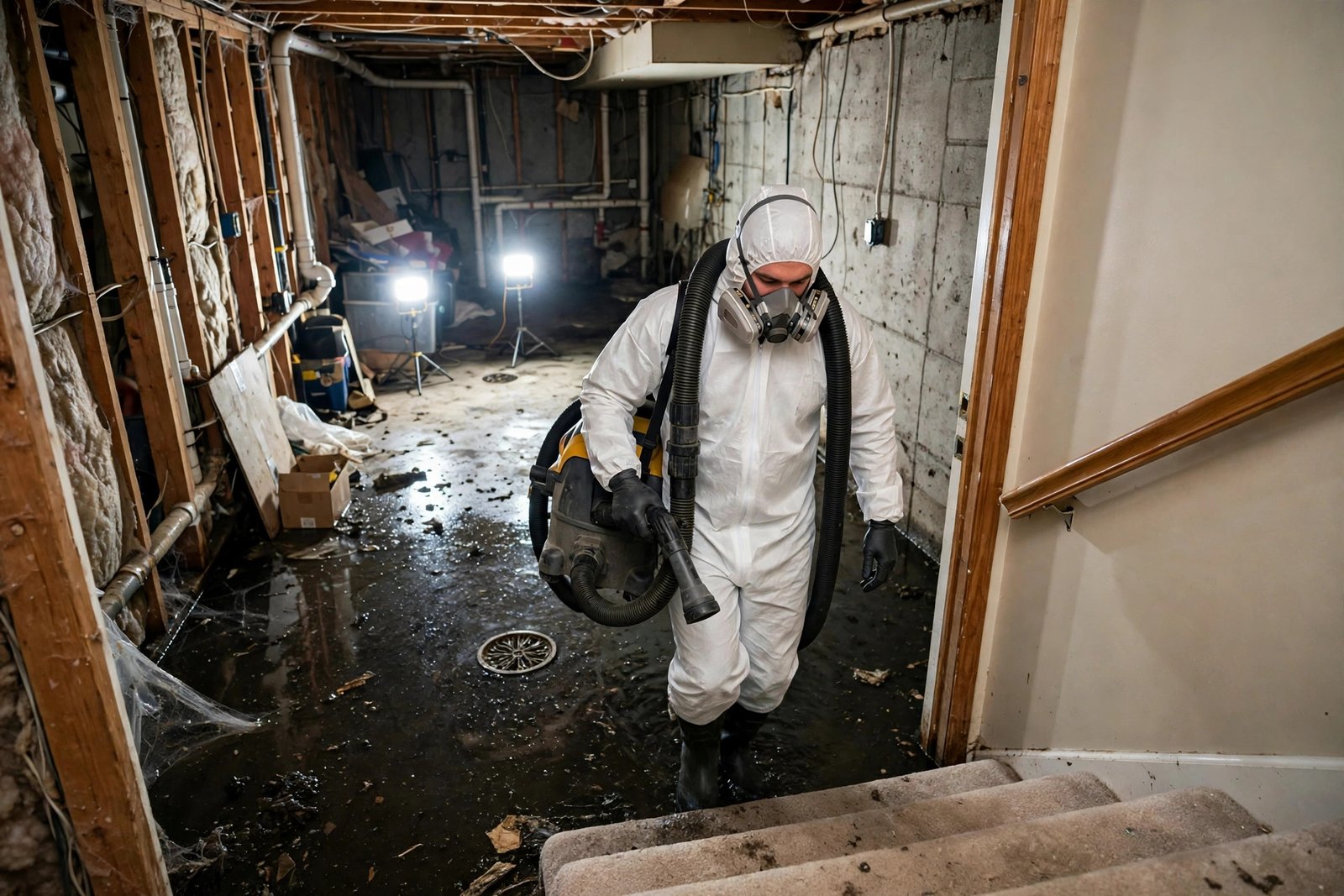
The phrase “emergency sewage cleanup” sounds like someone arrives and the problem ends. In practice it means a staged job that starts when the crew can work safely, and the first hour belongs to you.
Emergency sewage cleanup in Arvada, Colorado follows the same staged process as any other backup: stop and assess, extract, remove and sanitize, then dry and verify. The emergency part is that the service is available around the clock. It is not a promise about how quickly anyone arrives, and it is not a promise that the cleanup finishes in one visit.
That distinction matters in the first hour. If you expect the crew to solve everything the moment they walk in, the waiting feels unbearable. If you know the first hour is yours to manage, and the crew takes over from there, the waiting has a purpose.
Cleaning sewage without protective gear is how a bad day becomes a health problem. Sewage soaks into porous materials, spreads across floors, and hides in places you cannot see. A mop and a bucket do not remove it, and they spread it further.
The first hour is also the wrong time to open drains, pull up flooring, or move wet furniture through clean rooms. Each of those moves spreads contamination to places that were dry a few minutes earlier, and the crew then has a larger area to clean.
When the crew arrives, they start by confirming the source has stopped and mapping how far the sewage traveled. They work in full protective gear, suit, gloves, respirator, and boots, because every surface the water touched is treated as contaminated until it is cleaned.
More than 500,000 sewer backups occur each year in the United States, according to the Water Environment Federation.
That number is why the first hour matters so much. Backups are common, they happen in ordinary homes, and the homes that come through them best are the ones where the first hour was spent on safety rather than on improvising a cleanup.
Call professionals as soon as the water is stopped and everyone is safe. Do not wait to see whether the backup clears on its own, because a line that clears for an hour and backs up again at midnight has not fixed itself.
For a home in Hills at Standley Lake, the local page for emergency sewage cleanup covers the neighborhood, and the service page for emergency sewage removal explains the emergency service itself.
A short, clear call helps the crew more than a long one. Say where the sewage is, which drains are affected, and whether water is still rising. Say whether anyone has had contact with the water, and whether water has reached any outlets or the electrical panel.
Say what you have already done: water use stopped, people and pets kept away, photos taken from dry ground. That tells the crew the first hour is handled, and it lets them plan the work instead of starting with questions.
Waiting is the hardest part, because the affected room is right there and doing nothing feels wrong. Doing nothing in the affected room is exactly right.
Stay out of the room. Keep the door closed. Do not keep checking the water level by walking in, because each visit tracks contamination out on your shoes and risks contact you cannot see.
If you rent, or you live in an HOA-managed property, tell the owner or the property manager now, not after the cleanup. They carry the responsibility for the response, and an early call gives them time to act while the crew is on the way.
Photos taken in the first hour are useful twice: they help the crew judge how the event unfolded, and they give you a record of what the water reached before anything was moved.
The rule is simple. Document from dry ground, from the doorway, without stepping into the water.
Photograph the water line on the wall or floor, the affected drains, and the rooms the water reached. Photograph the outside too, if sewage is visible at a cleanout or in the yard, and note the time each photo was taken.
Skip the close-ups that require you to kneel in the water or reach across it. Skip opening the cleanout to get a better angle. Skip moving wet items to photograph what is underneath them, because moving them spreads the contamination.
One useful photo is the floor drain or the lowest fixture, taken from the doorway with the light on. That single image tells the crew where the sewage entered, how deep it got, and which rooms it reached, and it costs you nothing in risk.

Most first-hour damage is not caused by the sewage. It is caused by the homeowner trying to help it along. Three moves in particular turn a contained backup into a bigger cleanup.
The temptation is strong. The water went down a little, so maybe one flush will tell you whether the line has cleared.
It will not. While a blockage or a surcharge lasts, added water joins the backup, and a test flush is the most common way a slow floor drain becomes a flooded room. The line will tell you it has cleared when the drains run normally on their own, after the cause has been found and addressed, not before.
The cleanout is the capped pipe outside the home that gives access to the sewer line, and opening it during a backup feels like opening a release valve.
Do not open it. Opening a cleanout while the line is pressurized moves sewage onto the soil and toward storm drains, and it puts you in direct contact with the water you are trying to avoid. It also removes the pressure reading the crew uses to judge where the blockage sits.
Leave the cleanout capped and intact. Knowing where it is, and being able to point the crew to it, is the useful version of this move.
A fan feels like the right tool for wet floors. Before cleaning, it is the wrong one.
Air moving over sewage before it is cleaned spreads contamination onto clean surfaces, into the air, and across rooms that were dry. Drying comes later, after extraction and sanitizing, when the crew brings drying equipment and moisture readings to do it properly.
Do not pour bleach or other chemicals into standing sewage. Chemicals do not sanitize it, and they add risk for everyone who handles the water afterward.
Every step in this guide comes back to one fact: sewage is Category 3 black water, the most contaminated category in the IICRC water damage classifications. It carries bacteria, viruses, and parasites, it soaks into porous materials, and it keeps doing damage the longer materials stay wet.
Combined sewer overflows release about 850 billion gallons of untreated wastewater each year in the United States, according to the U.S. EPA.
That figure is about the system, not your home, but it explains why sewage is treated as a health hazard rather than a plumbing nuisance. The water that backs up into a home comes from a system that carries everything a neighborhood sends it, and it deserves the same respect at your floor drain as it does at a treatment plant.
Category 3 means the water is treated as contaminated from the first minute, with no exceptions for how clear it looks. Clear-looking water from a backup is still sewage, because the contamination is in what it carries, not in its color.
It means porous materials the water soaked, carpet and pad, drywall at the base, soft furnishings, are treated as unsalvageable in most cases, because they cannot be cleaned deeply enough to be safe. It means hard surfaces are cleaned and disinfected in place, by a crew that knows which products and methods are right for the material.
Sewage enters through the lowest opening it can find, and in most Arvada, Colorado homes that opening is in the basement. Knowing where to look saves time, because you can check the right places from dry ground.
The floor drain is the lowest point in most homes, so it is usually the first to report a backup. Water around it, a dark ring on the concrete, or a gurgling sound when a fixture runs upstairs all point to the same thing: pressure in the line is looking for relief, and it found the basement.
If you see water at the floor drain, note the level, photograph it from the doorway, and keep everyone out of the room.
The tub and the shower sit low too, and they are the fixtures people notice first, because sewage in a bathtub is impossible to ignore.
sewage coming up through the bathtub drain is a common first sign, and the tub is the fixture people are most tempted to clean themselves. The rule is the same: stop water use, keep people away, and let the crew handle it.
A toilet on the lowest level that gurgles, bubbles, or fills on its own is reporting the same pressure as the floor drain. A toilet that overflows when another fixture runs is not a toilet problem, it is a line problem, and flushing it again only adds to the backup.

The first hour ends when the crew takes over, but the job does not end when they leave. The first day after a backup is when the drying and verification stage proves its value, and it is worth knowing what to expect.
After extraction and sanitizing, drying equipment runs on the structure: floors, wall bases, and any cavities the water entered. It stays in place until moisture readings show the materials are dry, because a room that looks dry can hold wet material behind a baseboard.
The U.S. EPA advises drying water-damaged areas and materials within 24 to 48 hours to prevent mold growth.
That is the practical meaning of U.S. EPA guidance on drying wet materials: the drying clock starts while the backup is still being cleaned, not after. Readings, not appearances, decide when the space returns to normal use, because what happens when sewage cleanup is delayed is mostly a story about moisture left behind.
The full range of sewage cleanup services covers emergency backups with the same staged approach, and sewage cleanup in Arvada, Colorado explains how the pieces fit together.
Homeowners come first. A sewage backup arrives at their drains, on their floors, and the safe first steps and the cleanup decision start with them.
Rentals and HOA-managed properties come next. Tenants spot the water first, owners carry the responsibility for the response, and in shared buildings one backed-up line can report itself in several homes at once, which makes fast, clear reporting worth a great deal.
Commercial properties follow, and they are never left out. Restaurants, retail sites, and offices in Arvada, Colorado face the same backup mechanics at their floor drains and restrooms.
Sewage Cleanup Arvada serves the Hills at Standley Lake community in Arvada, Colorado, near local landmarks like Standley Lake Library (Jefferson County Public Library), 8485 Kipling St, for homes close to the crossing of W 86th Pkwy & Kipling St, at coordinates 39.85044, -105.11117.
Get Emergency Sewage Cleanup Hills at Standley Lake Service Now
For a emergency sewage cleanup for Hills at Standley Lake homes after a backup, call (720) 764-0457.
What should I do first when sewage backs up in my home?
Stop using water, keep everyone and every pet away from the affected area, and stay out of any standing water near electricity. Then call professionals. Those first moves keep the problem from growing while help is on the way.
Is it safe to stay in the house during a sewage backup?
It depends on how far the sewage has spread. If the backup is contained in one room with the door closed, the rest of the house can usually be used while you wait. If sewage has reached living areas, or water is near outlets or the electrical panel, leave the affected area and follow the crew guidance.
Can I clean up a small sewage backup myself?
No. Sewage is Category 3 black water, carrying bacteria, viruses, and parasites that make cleaning without protective gear and professional equipment unsafe. Even a small backup soaks porous materials and spreads contamination across surfaces that look clean. The safe steps are stopping water use, keeping people away, treating electricity as a hard boundary, documenting from dry ground, and calling professionals.
How long does emergency sewage cleanup take?
It depends on how far the sewage traveled, which materials it soaked, and how long the materials stay wet. Extraction and cleaning come first, then drying and verification with moisture readings decide when the space is ready to use again.
What should I do if the backup happens again after the cleanup?
Stop water use again, keep everyone away, and call right away. A repeat backup usually points to a cause in the line, such as roots, a crack, or an offset joint. Say that it has happened before when you call, so the crew looks for the cause rather than only cleaning the result.
Sewage Cleanup Arvada, 5292 Ward Rd #2, Arvada, CO 80002. (720) 764-0457
Hours: Open 24 hours, 7 days a week for emergency service
A main sewer line clog turns an ordinary drain problem into a house-wide event. One blockage in the line that carries everything away from your home can push sewage back through the lowest drains, and the cleanup that follows has a clear order to it. First the source is stopped and the spread is mapped, then the standing sewage is extracted, the clog is found and cleared, contaminated materials are removed, surfaces are sanitized, and the structure is dried and checked. Knowing those stages before the crew arrives takes the mystery out of a stressful day.
The minutes after you find sewage in your home matter, and the right moves are simple ones.
A main line clog means nothing leaving your home can get past the blockage.
Every flush, shower, and laundry load adds water behind the clog, and that water has only one place to go: back through the lowest drains in the house. Stop all water use at once, and tell everyone in the house out loud, because one unaware flush during a clog is how a small backup becomes a flooded room.
Water use stays paused until the crew confirms the line is clear.
Sewage from a main line clog is Category 3 black water.
It carries bacteria, viruses, and parasites, and it soaks into everything it touches. Keep children and pets out of affected rooms entirely, and do not walk through standing sewage to rescue belongings. Items in the affected area can wait for the crew, who cross it in protective gear.
If sewage has reached a rug or a piece of furniture, leave it where it is.
Water and electricity do not mix, and sewage water is no exception.
If sewage has reached outlets, a power strip, a furnace, a water heater, or anything plugged in, stay out of the water and do not touch switches or appliances in the affected area. Say so clearly when you call, so the crew knows the electrical situation before they step in.
Document from dry ground. A photo from the doorway records the water line, the affected drains, and the time, which helps the crew judge how the event unfolded and how far the sewage traveled.

The phrase gets used for a lot of different problems, so it helps to pin down what it means.
A main sewer line clog is a blockage in the single pipe that carries all of a home’s wastewater away to the city sewer. It is the shared exit for every fixture in the house, and when it closes, every fixture feels it.
Three pieces of pipe connect your home to the city system, and each one has its own job.
Inside the house, branch lines from each fixture join into the main house drain. That drain leaves the house and becomes the lateral, the buried pipe that runs from your home to the street. The lateral meets the city main under the street, and the city main carries everything onward.
A clog can sit in any of those three places. A blockage in the lateral is the homeowner side of the problem in most cases, while a blockage in the city main belongs to the utility, so the crew works out which one it is early.
Main line clogs build slowly, then announce themselves all at once.
Tree roots are the most common cause in older neighborhoods. A root finds a hairline crack or a loose joint, slips inside for the moisture, and grows into a thick mat that catches everything passing by. Grease is the second regular offender: poured down a kitchen drain, it cools and hardens on the pipe wall, layer after layer, until the opening narrows.
Research published through the U.S. Forest Service links tree roots to more than 50 percent of sewer blockages.
Other causes fill out the list. Wipes and hygiene products that do not break down catch on rough pipe walls and build into a mass. Older clay and cast iron lines corrode and scale inside, narrowing the passage year by year, and soil shifts can drop a section of pipe out of alignment so solids collect at the offset joint.
In Allendale and across Arvada, Colorado, homes of different ages carry different versions of this list, which is why the crew inspects before they assume.
This is the detail that confuses most homeowners, and it is also the clearest sign of a main line clog.
When a single fixture clogs, only that fixture misbehaves. When the main line clogs, the whole system backs up together, because every fixture shares the same exit. Water from an upstairs shower has nowhere to go, so it looks for the lowest opening in the house, and that is usually a basement floor drain, a basement shower, or a ground floor tub.
That is why a main line clog often shows up in a room nobody was using: the water traveled there, pushed by everything the house sent down the drains after the blockage formed.
A main line clog rarely arrives without warning. The signs show up days or weeks before the backup.
One slow drain is a local problem. Several slow drains at once is a main line problem.
Watch for the pattern: the kitchen sink drains slowly, the upstairs shower pools at your feet, and the basement toilet flushes weakly, all in the same week. Together, they describe a single narrowing point downstream of all of them.
A gurgling drain is air trapped behind a blockage, looking for a way out.
You hear it when a toilet flushes and the tub gurgles in reply, or when the washing machine drains and a nearby sink bubbles. Sewer odors that come and go are the same story from a different sense: gas from the blocked line finding its way back through a dry trap or a low drain.
Both together mean the line is asking to be looked at before it closes completely.
This is the sign that turns a warning into an event.
Run the washing machine and watch the basement shower, or flush an upstairs toilet and watch the floor drain. If water rises in a fixture nobody used, the main line is blocked and the house is already sending water back to its lowest point.
Stop using water the moment you see this. Every additional gallon joins the backup, and the cleanup grows with it.
More than 500,000 sewer backups occur each year in the United States, according to the Water Environment Federation.
A professional sewage cleanup after a main sewer line clog follows the same staged process as any other backup: stop and assess, extract, remove and sanitize, then dry and verify.
The clog adds one stage in the middle, finding and clearing the blockage, and the order matters: the clog is dealt with before the deep cleaning begins.
The crew starts by confirming the source is stopped.
Water use stays paused while they walk the home and map the footprint: every room the sewage reached, the materials it soaked, and the path it took through floor drains, tubs, and low openings. They check which fixtures backed up and which stayed clear, because that pattern points to where the clog sits.
The assessment also sets the safety picture, since sewage near outlets or appliances changes how the crew moves through the room.
Guessing at a clog wastes time and risks the wrong fix, so the crew locates it before they clear it.
The cleanout is the usual starting point: a capped pipe, often outside the home or in the basement, that gives direct access to the main line. From there, a sewer camera travels down the line and shows the blockage on a screen, along with its distance from the house and what it is made of: roots look like a tangled mat, grease like a smooth narrowing, and a collapsed section like a wall where the pipe should continue.
The camera also records the condition of the rest of the line, which matters after the cleanup: one root intrusion and joints failing along the whole length are different problems.

With the source stopped and the clog located, the standing sewage comes out.
Professional extraction equipment removes the water across the whole affected area, not just the deepest puddle. The crew works from the lowest point outward, because sewage that sits in a room keeps soaking into floors and wall bases while it waits.
Extraction is the stage homeowners notice most, because the room visibly changes. It is only the beginning: the water is gone, but everything it touched is still contaminated.
Clearing the clog is what keeps the backup from returning the moment water use resumes.
The method depends on what the camera found. A cable machine with a cutting head breaks up roots and clears soft blockages from the cleanout, and a hydro jet uses pressurized water to scour grease and scale from the pipe walls. A collapsed or badly offset section cannot be cleared this way, and that finding changes the conversation toward repair.
Once the line runs clear, the crew confirms it with flow and, where it fits, a second camera pass. Water use resumes only after that confirmation.
Sewage soaks into porous materials, and some of those materials cannot be cleaned back to safe use.
Soaked carpet and pad, swollen baseboards, saturated drywall at the water line, and soft goods that sat in the water are removed and bagged for disposal. Hard surfaces that can be cleaned and disinfected in place are separated from porous materials that cannot, item by item and room by room.
This stage feels wasteful, and it is the stage most worth trusting: a rug that looks fine after a rinse still holds contamination in its fibers.
Once the unsalvageable material is out, the remaining surfaces are cleaned and disinfected.
The crew works across every surface the sewage reached, including floors, wall bases, and the sides of fixtures, using disinfectants suited to Category 3 contamination. The goal is not a fresh smell. The goal is surfaces that no longer carry the bacteria, viruses, and parasites the sewage brought in.
Sanitizing comes after removal for a reason: disinfectant over soaked carpet treats the surface and leaves the contamination underneath untouched.
Drying equipment goes to work on the floors, wall bases, and any cavities the sewage entered.
The U.S. EPA advises drying water-damaged areas and materials within 24 to 48 hours to prevent mold growth.
That is the practical meaning of U.S. EPA guidance on drying wet materials: after a main line clog, the drying clock is already running while the line is being cleared.
The job closes with moisture readings across the affected area. Sewage water travels further than it shows, and a room that looks dry can hold wet material behind a baseboard. Readings, not appearances, decide when the space returns to normal use, because what happens when sewage cleanup is delayed is mostly a story about moisture left behind.

How long the work takes depends on what the crew finds.
The spread of the sewage is the first factor. One room with a shallow backup is a different job from a finished basement where water reached several rooms and the wall bases. The materials are the second factor: hard floors and tile clean faster than carpet and drywall, which hold water and often have to come out. The clog itself is the third factor: a soft grease blockage clears quickly, while a root mat or a damaged section takes longer to find and deal with.
Drying sets the pace at the end, and moisture readings decide when the structure is dry. For a fuller picture of the timing factors, how long sewage cleanup takes walks through the same stages from the clock side.
Do not keep flushing or running water to see whether the line has cleared. While a clog lasts, added water joins the backup.
Do not open the cleanout or a drain cover to let the sewage out into the yard. That moves contamination onto soil and toward storm drains, and it puts you in direct contact with sewage.
Do not pour bleach or chemicals into standing sewage, and do not mix cleaning products in it. Chemicals do not sanitize sewage, and they add risk for everyone who handles the water afterward.
Do not run fans across a contaminated area to start drying early. Air moving over sewage before cleaning spreads contamination onto clean surfaces.
Do not snake the main line yourself with a rented machine. A cable in a damaged line can break or get stuck, and it puts you in direct contact with Category 3 water.
The cleanup ends the event. What the crew found in the line decides whether it happens again.
Roots in the line mean the trees near the lateral are feeding on it, and the intrusion grows back unless the entry point is addressed. Grease buildup means the kitchen drain needs a change in habit, because grease poured down the drain hardens on the pipe wall and the next layer starts forming at once. Scale and corrosion in an older line mean the pipe itself is narrowing, and no amount of clearing restores its original diameter.
Ask what the camera showed. The answer turns a stressful day into a plan: what to watch for, what to change, and what to have looked at before the line closes again.
The full range of sewage cleanup services covers main line clogs with the same staged approach, and sewage cleanup in Arvada, Colorado explains how the pieces fit together.
Homeowners come first. A main line clog arrives at their drains, on their floors, and the safe first steps and the cleanup decision start with them.
Rentals and HOA-managed properties come next. Tenants spot the water first, owners carry the responsibility for the response, and in shared buildings one blocked lateral can report itself in several homes at once, which makes fast, clear reporting worth a great deal.
Commercial properties follow, and they are never left out. Restaurants, retail sites, and offices in Arvada, Colorado face the same main line mechanics at their floor drains and restrooms.
Sewage Cleanup Arvada serves the Allendale community in Arvada, Colorado, near local landmarks like Arvada West High School, 11595 Allendale Dr, for homes close to the crossing of W 64th Ave & Allendale Dr, at coordinates 39.81049, -105.12708.
Get Sewage Cleanup Allendale Service Now
For a sewage cleanup for Allendale homes after a main sewer line clog, call (720) 764-0457.
How do I know the clog is in the main sewer line and not one drain?
When several fixtures misbehave at once, the main line is the suspect. A single slow sink points to that sink, but a slow kitchen sink, a pooling shower, and a weak toilet in the same week point downstream of all of them. Water rising in a fixture nobody used, like a basement shower filling while the washing machine runs, confirms it.
Can I still use water while the main line is clogged?
No. With the main line blocked, every gallon you send down a drain has nowhere to go except back through the lowest drains. Pause all water use, including toilets, showers, laundry, and dishwashers, until the crew confirms the line is clear.
Does the clog have to be cleared before the cleanup starts?
The standing sewage is extracted first so the rooms stop soaking, but the deep cleaning waits until the line is clear, because cleaning a room that is still receiving sewage solves nothing. Finding and clearing the clog sits between extraction and sanitizing for exactly that reason.
Will the crew have to dig up my yard to clear a main line clog?
Usually not. Most clogs are cleared from the cleanout with a cable machine or a hydro jet, and the sewer camera locates the blockage without digging. Digging only enters the picture when the camera shows a collapsed or badly offset section that clearing cannot fix, and that is a repair decision, not a cleanup step.
What should I do after the cleanup so the clog does not come back?
Ask what the camera found, because the cause decides the next step. Roots call for the entry point to be addressed, grease calls for keeping it out of the kitchen drain, and scale or corrosion in an older line calls for a plan before the pipe narrows further. Watch for the early signs too: several drains slowing together, gurgling, and odors.
Sewage Cleanup Arvada, 5292 Ward Rd #2, Arvada, CO 80002. (720) 764-0457
Hours: Open 24 hours, 7 days a week for emergency service
A sewage backup after heavy rain is a capacity event. The storm pushes rainwater into sewer lines that are already carrying everything the neighborhood sends them, and older lines with cracks, offset joints, and roots have no spare room when the load spikes. When the line cannot move the volume forward, it moves it backward, into the lowest drains of the homes connected to it. The sewage cleanup that follows starts with the same rules as any backup: stop using water, keep everyone away from the affected area, and treat every drop as Category 3 black water.
A storm backup has one feature other backups do not: the cause is still arriving.
While rain is falling and the line is surcharged, the situation can worsen on its own. The steps below are about holding the line, literally, until the storm passes and help can work.
Every flush and shower adds your home water on top of the storm load the line is already failing to carry.
Pause it all. Tell everyone in the house, out loud, because one unaware laundry load during a surcharge is how a slow floor drain becomes a flooded basement.
Water use can resume once the drains are running clear and the backup has been assessed, not before.
Sewage that arrives with stormwater looks diluted. It is not safer.
It carries the same bacteria, viruses, and parasites as any other sewage, now spread wider by the extra water. Keep children and pets out of affected rooms entirely, and do not walk through standing water to rescue belongings. Items in the affected area can wait for the crew, who cross it in protective gear.
If water has reached outlets, a power strip, or anything plugged in, treat electricity as a hard boundary: stay out of the water and say so when you call.
Document from dry ground. A photo from the doorway records the water line, the affected drains, and the time, which helps the crew judge how the event unfolded.
A storm backup has two possible owners, and the street tells you which one you are dealing with.
If sewage is bubbling from a manhole, standing in the street, or your neighbors on the same line have the same problem at the same time, the city main is surcharging. Call the city utility as well as a cleanup crew, because the main is theirs to relieve.
If the street is quiet and the problem is only inside your home, the cause sits in your line or at your connection, and the cleanup crew is the first call. Either way, the contamination already inside your home is yours to have cleaned, and it needs professionals.

Sewer lines are sized for sewage, not for storms. Heavy rain attacks that sizing from two directions at once.
More than 500,000 sewer backups occur each year in the United States, according to the Water Environment Federation.
Storm days account for a heavy share of those events, and the mechanics are simple once they are laid out.
Rainwater is not supposed to enter a sanitary sewer at all. In a hard Front Range storm, it finds the openings anyway.
Cracked cleanout caps, damaged manhole covers, and illegal or aging connections all let stormwater pour in. Groundwater adds a second route, seeping through cracked pipe walls and loose joints along the whole length of a line, a process engineers call infiltration.
Each route is small on its own. Multiplied across every street in a neighborhood during an hour of heavy rain, the extra volume is enormous, and it arrives all at once.
A surcharge is what happens when the incoming volume passes what the pipe can carry.
The line fills completely, then pressurizes. Flow that should move downhill toward the treatment plant stalls, and pressure looks for relief at the lowest connected points. Those points are the floor drains, tubs, and showers of the homes along the line.
That is why several homes can back up in the same storm while a house one street over, on a different line, stays dry. It is also why a rain backup often eases as the storm ends: the surcharge drains down, even though the contamination it left behind does not.
Rain is not the only weather that loads a sewer line in Arvada, Colorado.
Spring snowmelt and long soaking rains saturate the ground for days, and saturated soil feeds groundwater into every crack and loose joint along a buried line, hour after hour. The volume arrives more slowly than a storm surge, but it can last far longer, and a marginal line that survives a cloudburst may give up on the third day of melt.
The signs are the same: slow drains, gurgling, and finally sewage at the lowest opening. The calendar changes, the mechanics do not, and neither does the response.
A new, sound line rides out a storm with capacity to spare. An older line starts the storm already compromised, and the rain simply collects the debt.
Age works on a sewer line from inside and outside at once.
Soil shifts and settles over decades, opening joints and dropping sections out of alignment. Pipe walls crack and corrode. Every opening is both a leak on dry days and an entry point for groundwater and roots on wet ones.
Research published through the U.S. Forest Service links tree roots to more than 50 percent of sewer blockages.
Roots thicken inside the line year after year, narrowing the passage and catching solids. On a dry day the line still copes, barely. In a storm, the narrowed section becomes the choke point where the surcharge turns around and heads back into the house.
Neighborhoods like Leyden Rock in Arvada, Colorado are newer, and their household lines are modern. That helps, and it does not settle the question.
A newer home still connects to shared lines that carry the whole street, and those lines collect inflow from every crack and connection along their length. When the shared line surcharges, the pressure does not ask how old the house is. It asks which drains sit lowest, and it finds them.
This is why a Leyden Rock homeowner can do everything right and still meet sewage at the basement floor drain during an exceptional storm. The failure is a system event, and the response has to match that scale.
Rain dilutes the look of sewage, not its contents.
What comes up through a floor drain during a storm is wastewater mixed with storm inflow, and it carries the same bacteria, viruses, and parasites as a dry weather backup. It is handled as Category 3 black water from the first minute, by a crew in full protective gear, with the same removal and sanitizing standards.
The storm setting adds two complications rather than removing risk. The extra water spreads contamination across a wider area than a fixture backup would, and it pushes moisture into wall bases, flooring edges, and stored items that a smaller event would never reach.
Speed matters for a second reason as well.
The U.S. EPA advises drying water-damaged areas and materials within 24 to 48 hours to prevent mold growth.
That is the practical meaning of U.S. EPA guidance on drying wet materials: after a storm, the drying clock is already running while the rain is still falling.
A professional sewage cleanup after a storm follows the same staged process as any other backup: stop and assess, extract, remove and sanitize, then dry and verify.
The storm changes the timing and the footprint, not the standards. For spaces where the water travels under floors and into walls, how sewage cleanup in a crawl space is different shows how much of the work happens in places the homeowner never sees.
Storm work starts when the surcharge settles. Extracting water while the line is still pressurized means cleaning a room that is still receiving sewage, so the crew confirms the inflow has stopped and water use stays paused until it has.
Then the assessment maps the full footprint: every room the water reached, the materials it soaked, and the path it took through floor drains, tubs, and low openings. Storm events spread wide, and the map has to be wider than the visible puddles.
Standing water is extracted first, across the whole affected area.
Then the removal stage takes out what the water ruined or contaminated beyond cleaning: soaked carpet and pad, swollen baseboards, saturated soft goods, and debris the storm carried in. Hard surfaces that can be cleaned and disinfected in place are separated from porous materials that cannot, item by item and room by room.

Cleaned surfaces are disinfected, and drying equipment goes to work on the structure: floors, wall bases, and any cavities the water entered.
The job closes with moisture readings across the affected area. Storm water travels further than it shows, and a room that looks dry can hold wet material behind a baseboard or under a floor edge. Readings, not appearances, decide when the space returns to normal use, because what happens when sewage cleanup is delayed is mostly a story about moisture left behind.

Do not keep flushing or running water to see whether the line has cleared. While a surcharge lasts, added water joins the backup.
Do not open the cleanout or a drain cover to let the water out into the yard. That moves contamination onto soil and toward storm drains, and it puts you in direct contact with sewage.
Do not pour bleach or chemicals into standing water, and do not mix cleaning products in it. Chemicals do not sanitize sewage, and they add risk for everyone who handles the water afterward.
Do not run fans across a contaminated area to start drying early. Air moving over sewage before cleaning spreads contamination onto clean surfaces.
Do not assume the event is over because the water went down when the rain stopped. The surcharge draining away is the line recovering, not the room. The contamination it left is unchanged.
Some storm risk lives in the shared system and cannot be removed from one house. The part that belongs to your line can be looked after.
Keep the cleanout cap secure and intact, because a cracked cap is a direct door for stormwater. Know where your cleanout and floor drains are before you need them in the dark. Take slow drains, gurgling, and sewer odors seriously in dry weather, because those are the warnings a narrowing line gives while there is still time to act on them, and a line inspection in a calm season is a quieter job than a cleanup in a wet one.
After any backup, ask what the crew found about the cause. A storm explains the timing, but roots, cracks, and offsets explain why your house was the one that reported it, and those causes can be addressed before the next storm tests them again.
The full range of sewage cleanup services covers storm backups with the same staged approach, and sewage cleanup in Arvada, Colorado explains how the pieces fit together.
Homeowners come first. A storm backup arrives at their drains, on their floors, and the safe first steps and the cleanup decision start with them.
Rentals and HOA-managed properties come next. Tenants spot the water first, owners carry the responsibility for the response, and in shared buildings one surcharged line can report itself in several homes at once, which makes fast, clear reporting worth a great deal.
Commercial properties follow, and they are never left out. Restaurants, retail sites, and offices in Arvada, Colorado face the same storm mechanics at their floor drains and restrooms, with staff and customers to keep clear of affected areas until the space is cleaned and verified.
Sewage Cleanup Arvada serves the Leyden Rock community in Arvada, Colorado, near local landmarks like Leyden Rock, the sandstone formation the community is named for, for homes close to the crossing of W 82nd Ave & Quaker St, at coordinates 39.84472, -105.18411.
Get Sewage Cleanup Leyden Rock Service Now
For a sewage cleanup for Leyden Rock homes after a storm, call (720) 764-0457.
Why did my sewer back up in the rain when it worked fine yesterday?
Because a storm changes the load, not just the weather. Rainwater enters sewer lines through cracks, joints, and damaged caps, the shared line surcharges, and a line that copes on a dry day has no spare capacity left. The backup is the moment the extra volume meets a narrowing or a full line.
Is a rain backup the city problem or mine?
It depends on where the failure sits. Sewage in the street, a bubbling manhole, or several neighbors backing up at once points to the city main, which is the utility responsibility. A quiet street with sewage only in your home points to your line or your connection. The contamination inside your home needs a professional cleanup either way.
Should I run the washing machine during a storm if the drains seem slow?
No. Slow drains during a storm are the line asking for relief, and a laundry load adds a large volume of water at exactly the wrong moment. Pause all water use until the storm passes and the drains run clear.
Does a backup after rain mean my sewer line is broken?
Not always. Some storm backups are pure capacity events in a sound line. Others expose cracks, offset joints, or root growth that dry weather hides. A camera inspection after the cleanup separates the two, which is why the cause matters as much as the cleanup.
What can I do before the next storm to lower the risk?
Keep the cleanout cap secure and intact, know where your cleanout and floor drains are, and act on dry weather warnings like slow drains, gurgling, and sewer odors instead of waiting. If a previous backup pointed to roots or damage in your line, having that addressed in a calm season is the strongest step available.
Sewage Cleanup Arvada, 5292 Ward Rd #2, Arvada, CO 80002. (720) 764-0457
Hours: Open 24 hours, 7 days a week for emergency service
Sewage rising in a bathtub or shower drain is almost never a bathroom problem. It means the main sewer line leaving the house is blocked or failing, and wastewater that cannot move forward is surfacing at the lowest opening it can find. Treat it as a sewage backup cleanup from the first minute: stop using water, keep everyone out of that bathroom, and let professionals handle the water, because what is coming up is Category 3 black water.
The first hour is about distance and restraint, not fixing anything.
Close the bathroom door and keep it closed. Note what you saw, when you saw it, and whether the level in the tub is rising, holding, or slowly falling. Then make the call for help.
Everything else on this list supports those two moves.
A backup at the tub means the whole house drains into the same blocked line.
Every flush, every shower in the other bathroom, every laundry load adds water that has nowhere to go. Some of it will join what is already in the tub, and some may surface at a floor drain or a downstairs toilet next.
Tell everyone in the house, out loud. Backups grow one unaware flush at a time.
A bathtub of sewage does not look dangerous to a child, and a dog will investigate it without hesitation.
Keep both out of the room entirely. If a pet has already walked through splashed water on the bathroom floor, keep it off furniture and wash its paws with soap and clean water at a clean sink.
Anything that was sitting in the tub or on the wet floor, like bath toys, bottles, or a bath mat, stays where it is. The crew will handle those items as contaminated material, which is what they now are.
Bathrooms mix water and electricity in a small space: outlets, exhaust fans, heated floors, and plugged-in appliances all sit close to the tub.
If sewage or splashed water has reached an outlet, a power strip, or anything plugged in, do not enter the water and do not reach for the device. Stay out and say so when you call, because the crew needs to know the electrical picture before work starts.
Document from the doorway, on dry ground. A photo taken from the hall carries the same information as one taken standing at the tub.
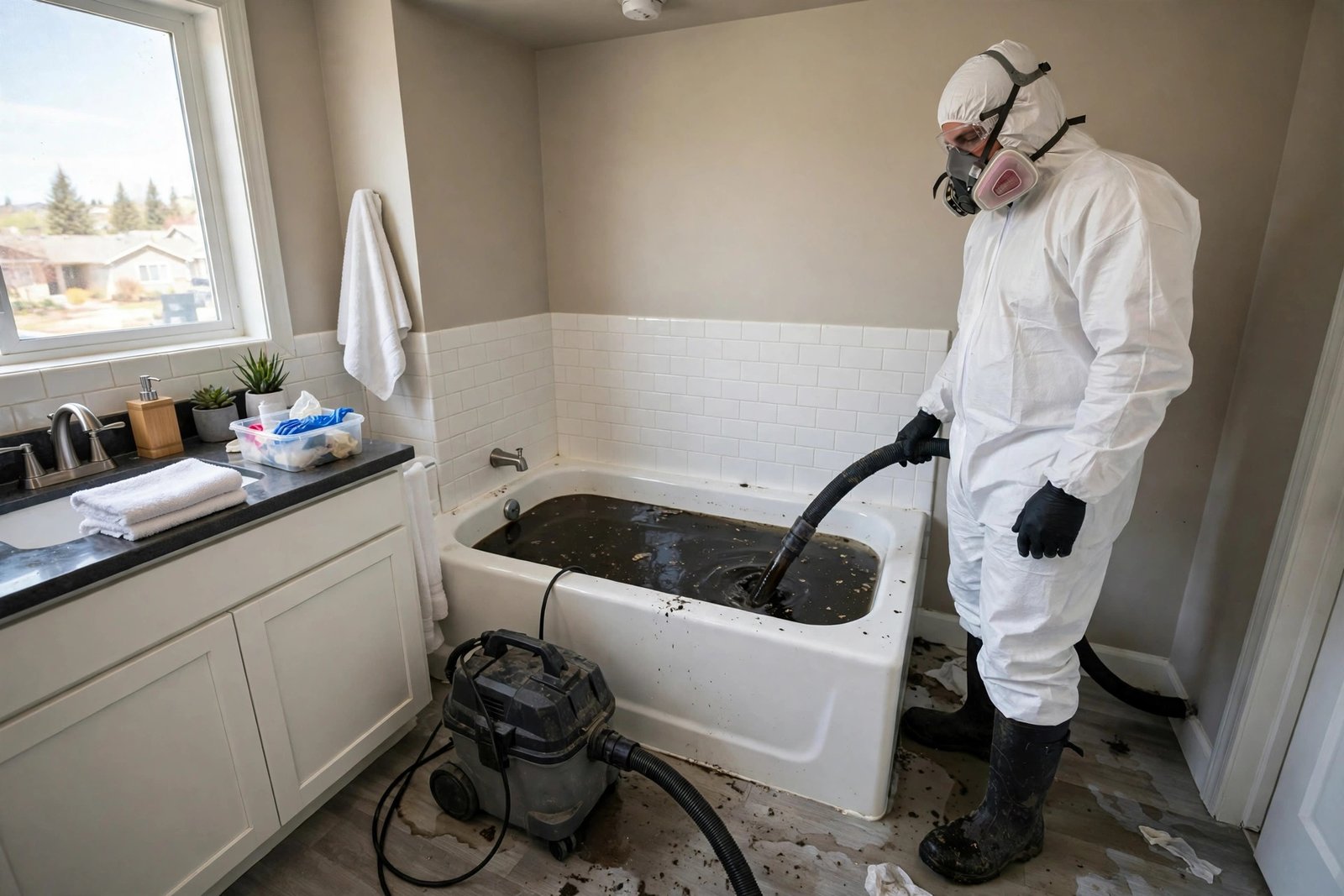
Homeowners often ask why the toilet upstairs flushed fine an hour ago while the tub downstairs is full of sewage.
The answer is plumbing geometry, not luck.
Bathtub and shower drains sit at the lowest points of the home drainage system. A tub drain is barely above the floor it is set into, and a shower drain is flush with it.
When the main line blocks, wastewater pushed back toward the house follows the path of least resistance. It rises at the lowest available opening, which is why the tub and the shower almost always report a main line problem before a sink or a toilet does.
A floor drain in the basement plays the same role one level down. Whichever opening sits lowest speaks first.
A clog inside one fixture drain stays local. The tub drains slowly, the sink beside it works fine, and nothing appears anywhere else in the house.
A main line blockage is a system event. The signs travel: gurgling sounds in drains when another fixture runs, a toilet that bubbles when the washing machine drains, slow drainage in several rooms at once, and finally sewage at the lowest drain.
If more than one fixture is misbehaving, think line, not fixture. The warning signs you need professional sewage cleanup usually appear days before sewage reaches the tub, and recognizing them early is what keeps a blockage from becoming a bathroom full of black water.
Long before sewage reaches the tub, the line usually talks.
A toilet that gurgles when the washing machine drains is pushing air back through the system because water cannot move freely below. A shower drain that bubbles during a flush is reporting the same pressure problem from another room.
These sounds are easy to dismiss because everything still drains, eventually. Treat them as the early edition of the tub backup. A line that gurgles is a line that is narrowing, and the day it closes completely is the day the lowest drain delivers the news in person.
Homeowners in Ralston Valley sometimes hear these sounds for weeks before anything surfaces, because the blockage sits far down the line toward the street. Distance hides the problem, not the risk.
Sewage in the tub is the end of a story the line has been telling quietly for a while.
The blockage below is rarely sudden. It builds, narrows the pipe, and finally closes it, and the tub is simply where the closure becomes impossible to ignore.
Grease, wipes, hair, and scale collect on pipe walls over months and years. Flow slows a little at a time, too gradually for anyone to notice in daily use.
Then one ordinary evening, a shower, a flush, and a running dishwasher ask for more capacity than the narrowed line has left. The water reverses, and the lowest drain reports it.
This is also why a backup that seems to clear itself is not good news. A partial blockage lets water seep past slowly, so the tub empties overnight and looks solved. The narrowing is still there, still growing, and the next full load will announce it again, usually with more water behind it.
Sewage is Category 3 black water, the most contaminated of the three water damage categories defined by the IICRC.
Roots are the other slow builder, and they work from outside the pipe.
Research published through the U.S. Forest Service links tree roots to more than 50 percent of sewer blockages.
Roots enter at joints and hairline cracks, thicken inside the line, and catch everything that flows past. Older clay and cast iron lines give them the most openings. In neighborhoods like Ralston Valley in Arvada, Colorado, where homes built across several decades sit under mature trees, a tub backup is very often the first visible sign of a root problem that has been growing underground for years.
The cleanup handles the water in the house. The line itself still needs its own diagnosis afterward, usually with a camera, so the cause is fixed rather than merely cleaned up after.
It is tempting to treat tub water as a lesser problem because it arrived in a room built for water.
Resist that reading. The water in the tub came from the sewer line, and it carries the same bacteria, viruses, and parasites as a basement backup. The porcelain around it changes nothing about what is in it.
That classification drives the whole response. Porous items the sewage touched, like bath mats, wooden stools, and the grout lines it soaked into, are treated differently from hard surfaces that can be cleaned and disinfected in place. It is also why drying speed matters once the water is out.
It also decides how the bathroom is used in the meantime. Until the room has been cleaned, sanitized, and verified dry, it stays closed, even after the standing water is extracted and the surfaces look presentable again.
Looks are not the standard here, and neither is smell. A bathroom can look clean and smell neutral while grout lines, caulk joints, and the flooring beneath the tub still hold contamination and moisture. The standard is a room the crew has checked and cleared, material by material, with readings to back the decision.
The U.S. EPA advises drying water-damaged areas and materials within 24 to 48 hours to prevent mold growth.
That is the practical meaning of U.S. EPA guidance on drying wet materials: the clock starts when the water arrives, not when the schedule opens up.
A professional sewage backup cleanup for a tub or shower backup follows the same staged process as any other backup in the house: stop and assess, extract, remove and sanitize, then dry and verify.
The bathroom setting changes the details, not the logic. This overview of what professional sewage cleanup involves covers the same stages for the whole house.
The crew first confirms the backup has stopped or is controlled. Cleaning a tub that is still receiving sewage wastes the entire effort, so water use stays off until the source is settled.
Then the assessment maps how far the contamination traveled: the tub and shower base, the floor around them, the baseboards, and any adjoining room the water reached. What the sewage touched decides what happens next, room by room and material by material.
Standing sewage is extracted from the tub, the shower base, and any floor area it covered.
The crew works in full protective gear for this, exactly as it would in a basement: suit, respirator, gloves, and boots. Sewage in a clean white bathroom is still sewage, and it is handled that way at every stage.

Hard, non-porous surfaces are cleaned and disinfected in place: the tub, the shower base and walls, tile, and sealed fixtures.
Porous materials that sewage soaked into are removed: bath mats, shower curtains that sat in the water, swollen baseboards, and any soft items stored in the tub area. Grout and caulk lines that sewage penetrated are evaluated individually, because they hold contamination below the surface where disinfectant cannot reliably reach.
Nothing from the affected area goes back into use on a guess. The crew decides item by item, and contaminated material leaves as contaminated waste.
With the sewage out and surfaces sanitized, drying equipment brings the bathroom and any affected wall cavities or flooring back to dry.
The job closes with moisture readings, not appearances. A bathroom can look and smell clean while the subfloor or the wall behind the tub is still wet, and that hidden moisture is where mold starts. Readings confirm the materials are dry before the room returns to normal use.

Well-meant reactions cause most of the avoidable damage in a tub backup.
Do not run the shower or tub to test whether it drains now. Testing a backed-up system by adding water is how a tub problem becomes a floor problem.
Do not pour bleach or drain chemicals into the standing sewage. Chemicals mixed into sewage do not sanitize it, they can react with what is already in the line, and they put whoever handles the water next at greater risk.
Do not bail the tub out with household buckets and towels and call it cleaned. The visible water is the smallest part of the event. What soaked into grout, caulk, and flooring is the part that matters, and it is still there after the tub looks empty.
Do not run a fan across the wet bathroom to dry it faster. Moving air over a contaminated area before it is cleaned spreads contamination to surfaces that were clean.
And do not pull the items out of the tub barehanded to save them. If something matters, tell the crew. They will retrieve and assess it in protective gear.
Homeowners come first. The tub backup is happening in their home, on the line they are responsible for, and the safe first steps start with them.
Rentals and HOA-managed properties come next. A tenant is usually the first to see sewage in the tub, while the owner carries the responsibility for the response, and a fast, clear report from tenant to owner protects the whole building the line serves.
Commercial properties follow, and they are never left out. A backup in a gym, salon, or restaurant restroom in Arvada, Colorado closes that room on the spot, and the same stop, assess, and clean sequence applies before it reopens.
When the backup is active and water is still rising, emergency sewage removal is the service built for that moment, and the wider picture of sewage backup cleanup in Arvada, Colorado explains how the staged process fits together.
Sewage Cleanup Arvada serves the Ralston Valley community in Arvada, Colorado, near local landmarks like Apex Center, for homes close to the crossing of W 72nd Ave & Indiana St, at coordinates 39.82701, -105.16516.
Get Sewage Backup Cleanup Ralston Valley Service Now
For a professional sewage backup cleanup response in Ralston Valley, call (720) 764-0457.
Why does sewage come up in the bathtub before it shows anywhere else?
Because the bathtub and shower drains are the lowest openings on the home drainage system. When the main line blocks, wastewater reverses toward the house and rises at the lowest point first, which is almost always the tub, the shower, or a basement floor drain.
Is it safe to use the other bathroom while one has sewage in the tub?
No. Every fixture in the house drains into the same main line, so flushing or showering anywhere adds water to a line that is already backing up. Pause all water use until the backup is assessed, or the second bathroom may report the problem next.
Does sewage in the tub mean the clog is in the bathroom drain?
Usually not. A clog inside one fixture drain stays local to that fixture. Sewage rising through the tub points to the main line, especially when other fixtures are gurgling, bubbling, or draining slowly at the same time.
Can sewage damage the tub itself or the bathroom around it?
The tub and tile can be cleaned and disinfected in place, but sewage that soaks into grout, caulk, bath mats, baseboards, or flooring is a different matter. Porous materials that absorbed sewage are removed, and moisture readings confirm the structure is dry before the room reopens.
The water in the tub drained away overnight. Is the problem gone?
No. A partial blockage lets water seep past slowly, so the tub can empty while the narrowing in the line stays and keeps growing. Treat a self-clearing backup as an early warning, and have the line and the bathroom checked before the next full load of water announces it again.
Sewage Cleanup Arvada, 5292 Ward Rd #2, Arvada, CO 80002. (720) 764-0457
Hours: Open 24 hours, 7 days a week for emergency service
A dark, foul-smelling wet patch spreading across the lawn is almost never a lawn problem. Sewage surfacing in the yard means the sewer line leaving the house is blocked or broken, and wastewater that cannot move forward is escaping at the surface instead. Everything that follows starts from one fact: treat that patch exactly like a sewage cleanup indoors, keep everyone off it, and let professionals deal with it.
The first hour sets up everything else, and almost all of it is about distance.
Get people off the affected ground and keep them off. Do not walk through the patch to inspect it, do not send someone across it for a closer look, and do not let anyone retrieve toys, tools, or garden items sitting in it. Anything that has to come out of the area can wait for the crew, who will cross it in protective gear.
Photograph the patch from dry ground at the edge if you want a record, note when you first noticed it, and note whether it is growing. Then make the calls.
This is the step that matters most, because a yard does not look like a hazard to a child or a dog.
Children read a wet patch as a puddle. Dogs read it as interesting. Both will cross it without hesitation, and both can carry contamination back across clean grass, onto patios, and into the house on feet and paws.
Bring pets inside and keep them in. Move outdoor play somewhere the water has not reached, on the far side of the house if possible. If a pet has already crossed the patch, keep it off furniture and wash its paws with soap and clean water at the door, from the clean side.
Outdoor sewage is an indoor plumbing event that ran out of room.
Every flush, shower, and laundry load sends more water into a line that is already failing. Some of that water is what is rising in the yard. Pausing water use does not fix the line, but it slows the surfacing and keeps the affected area from growing while you wait for help.
Tell everyone in the house, out loud. One unaware flush at a time is how a small patch becomes half the lawn.
If sewage is also appearing in the street, bubbling from a manhole, or flowing toward a storm drain, call the city utility as well as a cleanup crew. That pattern points at the city main, which is the utility’s responsibility, and they need to know about it promptly.
From the edge of the dry lawn, take a few photos showing the size of the patch, the cleanout if it is involved, and anything the sewage has reached, like a walkway or a garden bed.
Note the time you found it and whether it is still growing. That record helps the crew judge how long the line has been surfacing, and it protects you in any later conversation with the city or a neighbor about where the problem started.
Stay on dry ground for all of it. The documentation is useful precisely because it does not require anyone to stand in the patch.
Homeowners hesitate here, because a sprinkler leak is common and harmless, and nobody wants to overreact to wet grass.
The differences are clear once you know them. Sewage carries a unmistakable sewer odor that clean irrigation water never has. The water is gray to dark, and it often carries visible solids, paper, or grease. The patch grows on its own schedule, unrelated to when the sprinklers run, and it often sits along the buried path of the sewer line between the house and the street, or pools around the sewer cleanout.
A sprinkler leak, by contrast, is clear, odorless, and appears when the system runs.
When the signs point to sewage, act on that reading. The same backup usually sends signals inside the house first, and the warning signs you need professional sewage cleanup are worth knowing, because by the time sewage reaches the lawn, the line has been struggling for a while.

Sewage reaches the surface at the weakest available point: a cleanout with a loose cap, a cracked section of line, or low ground above a failing pipe. Underneath all three is the same short list of causes.
Most of those backups stay inside the house. The ones that surface outdoors usually involve the main line itself rather than a single fixture drain, which is why a yard event deserves the same seriousness as a basement full of water.
If the line passes anywhere near a tree or large shrub, roots belong at the top of the suspect list.
Research published through the U.S. Forest Service links tree roots to more than 50 percent of sewer blockages.
Roots find the moisture at pipe joints, work their way in through hairline openings, and keep growing inside the line until flow slows, catches solids, and backs up. In a neighborhood like Candelas in Arvada, Colorado, where newer homes sit near maturing landscaping, root intrusion is a pattern crews see again and again.
Roots need an opening, and age provides plenty of them.
Older clay and cast iron lines develop cracks, offset joints, and corroded sections over decades of soil movement and freeze and thaw cycles. A cracked line leaks sewage into the surrounding soil with every use, and the first visible sign is often exactly this: a patch of lawn above the line that stays wet, grows suspiciously lush, and eventually starts to smell.
The surfacing is the symptom. The break in the pipe is the cause, and it is why the ground above a cleaned patch stays off limits until the line itself has been dealt with.
Sometimes the line from the house is fine and the pressure comes from the other direction.
During heavy rain or rapid snowmelt, a city main can surcharge, taking on more water than it can move. Flow then pushes back toward homes and can surface at cleanouts and low points in yards along the street. The giveaway is company: if neighbors on the same street have the same problem at the same time, or sewage is moving in the street itself, the main is involved.
That distinction decides who you call first. A surcharging main is the city utility’s job to relieve. The contamination already on your property is still yours to clean up, and it still needs a professional crew.
There is a tempting idea that sewage outdoors is somehow less serious, diluted by open air and absorbed by the ground.
It is not.
Sewage is Category 3 black water, the most contaminated of the three water damage categories defined by the IICRC.
Outdoors changes the setting, not the contents. The bacteria, viruses, and parasites are the same ones a basement backup carries.
Soil makes the problem different rather than smaller. Contamination soaks into the topsoil and stays there instead of drying on a hard floor. Rain can spread it across a wider area and wash it toward drains. Sunlight does not reliably sanitize a contaminated patch, and shoes, paws, and mower wheels track the problem well beyond the wet edge.
That is why the cleanup of an outdoor spill is a removal job, not a rinse.
Outdoor sewage cleanup follows the same logic as indoor work, adapted to soil and weather: contain the area, remove the contamination, sanitize what can be sanitized, and confirm the ground is clean before the yard goes back to normal use.
One difference comes first. The source has to stop. A crew will confirm the surfacing has ended, or is controlled, before removal begins, because cleaning ground that is still receiving sewage wastes the entire effort.
The crew also works in full protective gear outdoors, exactly as it would indoors. Sewage does not become safer because it is on grass, and neither do the bacteria it carries, so suits, respirators, gloves, and boots are standard at every stage of the work.
The crew marks and barriers the affected area so people, pets, and foot traffic stay out of it for the whole job.
Outdoors, containment also means controlling spread. Absorbent barriers go down along the downhill edge of the patch so liquid cannot creep further across the lawn or reach a driveway, sidewalk, or storm drain while work is underway.

Pooled sewage is extracted with the same industrial equipment used indoors.
Then comes the part that makes outdoor work distinct: the topsoil the sewage soaked into is removed. Contamination lives in that upper layer, and no surface treatment reaches through soil the way it reaches across concrete. Debris, saturated mulch, and anything else the sewage saturated comes out with it, and all of it is disposed of as contaminated material.
The crew works outward from the worst area and re-checks the edges as they go, the same way they would follow a water line indoors.
Hard surfaces the sewage crossed are cleaned and disinfected in place: concrete walkways, driveway edges, patio slabs, and the cleanout surround.
The remaining ground is then checked across the whole affected area, including the edges where the visible patch faded out, because the wet outline on grass is not a reliable map of where contamination stopped. Only when the checks are clean does the crew clear the area for use.
Good intentions cause most of the avoidable damage in an outdoor spill.
Do not dig into the area to find the pipe or the problem. Digging spreads contaminated soil, can damage the line further, and puts you in direct contact with sewage. Locating the cause is professional work done with proper equipment and protective gear.
Do not hose the patch down. Water pushes contamination deeper into the soil, spreads it across clean ground, and can carry it into storm drains, which is the one place it must never go.
Do not mow over it, drive over it, or let a landscaping crew work through it. Wheels and blades scatter contamination across the whole yard. Do not pour bleach or other chemicals onto the ground either; they do not sanitize soil, and the runoff goes exactly where it should not.
Keep the area fenced off from children and pets until the crew says otherwise, even after the visible water is gone. The surface can look normal while the topsoil is still contaminated.
Do not cover the patch with fresh mulch, soil, or sod to make it look better, either. Burying contamination does not remove it, and it hides the exact area the crew needs to find, check, and clear.
The yard goes back to normal use when the cleanup is verified, not when it dries.
In practical terms that means the pooled sewage is gone, the contaminated topsoil and debris have been removed, hard surfaces have been sanitized and checked, and the crew has confirmed the source is no longer surfacing. After that, fresh soil and reseeding or sod can go in as ordinary yard work.
Ask the crew directly before the barriers come down. If the cause in the line has not been addressed yet, expect the area near the cleanout to stay off limits until it has, because one more backup would put the yard back at the start.
Once the area is cleared, expect some restoration. The section where topsoil came out will need fresh soil and either seed or sod, and it should be treated like new planting rather than walked straight back into service. That part is ordinary yard work. Everything before it was not.

Homeowners come first. A yard spill sits on the property they are responsible for, next to the places their children and pets use daily, and the safe response starts with them.
Rentals and HOA-managed properties come next. Tenants are usually the first to spot surfacing sewage in a shared yard or common area, while owners and the HOA carry the responsibility for the response, and a fast call protects every household the line serves.
Commercial properties follow, and they are never left out. Restaurants, retail sites, and offices in Arvada, Colorado deal with the same event at parking edges, landscaped areas, and drainage low points, where customers as well as staff have to be kept clear of the affected ground.
The full range of sewage cleanup services covers outdoor surfacing with the same staged approach used indoors.
Sewage Cleanup Arvada serves the Candelas community in Arvada, Colorado, near local landmarks like Big Sky Park, for homes close to the crossing of Indiana St and Candelas Pkwy, at coordinates 39.85985, -105.16535.
Get Sewage Cleanup Candelas Service Now

What should I do first when sewage comes up in my yard?
Keep everyone, especially children and pets, off the affected ground, stop using water inside the house, and call a professional cleanup crew. If sewage is also in the street or coming from a manhole, call the city utility too, because that points to the city main.
Is sewage in the yard dangerous for children and pets?
Yes. Sewage is Category 3 black water and carries bacteria, viruses, and parasites, and contaminated topsoil stays hazardous after the surface water is gone. Keep children and pets off the area until it has been professionally cleaned and cleared.
Can I just hose the sewage off the lawn?
No. Hosing spreads the contamination across clean ground, pushes it deeper into the soil, and can wash it into storm drains. The pooled sewage and the topsoil it soaked into need to be removed, and hard surfaces need proper sanitizing.
Who do I call for sewage in the yard, a cleanup crew or the city?
Often both. The cleanup crew handles the contamination on your property. The city utility handles a surcharging city main, which is the likely cause if neighbors have the same problem at the same time or sewage is in the street.
How long until my yard is safe to use again?
Once the pooled sewage and contaminated soil are removed, hard surfaces are sanitized, and the crew confirms the source has stopped and the ground checks clean. The timeline depends on how much soil was affected, so ask the crew to confirm before letting children and pets back onto the area.
Sewage Cleanup Arvada, 5292 Ward Rd #2, Arvada, CO 80002. (720) 764-0457
Hours: Open 24 hours, 7 days a week for emergency service
A sewage cleanup is not complete when the room looks clean. It is complete when the tests say so. Professionals verify a finished job three ways: moisture readings compared against a dry standard, a slow visual inspection of every surface and hidden space the sewage reached, and an odor check that treats any returning sewer smell as evidence something was missed. When all three pass, the space is safe to use and safe to rebuild.
The eye is a poor judge of a finished sewage job.
A basement floor can look spotless an hour after cleaning while the base of the wall behind it is still soaked. Paint hides moisture. Concrete hides contamination in its pores. A room can even smell neutral while damp material sits inside a wall cavity, quietly feeding mold.
That gap between looks and reality is exactly why testing exists.
When a crew finishes a sewage cleanup in Arvada, Colorado, the visible work is only half the job. The other half is proving, with instruments and methodical checks, that the contamination is gone and the structure is dry. A homeowner who understands the tests can tell the difference between a crew that cleaned and a crew that verified.
None of the tests are exotic. What makes them professional is that they are done in order, at every point the water reached, and written down. Skip any one of them and a specific doubt stays behind: skip the meter and the doubt is moisture, skip the inspection and the doubt is residue, skip the odor check and the doubt is a source nobody found.
Not all water damage is judged by the same standard.
The IICRC (Institute of Inspection, Cleaning and Restoration Certification) sorts water into three categories, and sewage sits in the most serious one.
Sewage is Category 3 black water, the most contaminated of the three water damage categories defined by the IICRC.
Category 3 water carries bacteria, viruses, and parasites. So the sign-off for a sewage job has to answer two questions, not one. Are the surfaces actually clean? And is the structure actually dry?
A clean water leak only has to pass the second test. A sewage cleanup in Arvada, Colorado has to pass both, everywhere the water went.
Moisture testing starts with a step most homeowners never see.
Before judging any wet material, the technician measures the same material somewhere it never got wet: the same drywall upstairs, the same framing in an unaffected room. That reading becomes the dry standard for the house.
Every later reading is compared against it.
This matters because there is no single magic number that means dry. Wood, drywall, and concrete each hold different normal moisture levels, and those levels shift with the season and the home. A wall is dry when it reads like the dry walls in the same house, not when it hits a number from a chart.
Two meter types do most of the work.
Pin meters push two small probes into wood or drywall and measure moisture at that exact depth. They answer a precise question about a precise spot.
Pinless meters scan a wider area without leaving holes. They are the search tool, sweeping walls and floors to find the wet pockets the pin meter then confirms.
Crews also track the air itself with a hygrometer, because drying is finished only when the room air and the materials agree. A wall can read dry at the surface while humid air keeps the cavity damp, and the combination of readings catches that.
Readings follow the water, not the room layout.
Wall bases get checked along their full length, because sewage wicks sideways as well as up. Corners and the lowest points of a slab get extra attention, since water settles there. Readings are taken below and beside any wall section that was opened, and around floor drains, pipe penetrations, and the base of built-in cabinets.
In an Olde Town Arvada home with a finished basement, that grid can run to dozens of points. Each one gets recorded, not just glanced at.
The points are marked as they are taken, usually on a simple sketch of the room or noted along the wall base. That map is what makes the final visit meaningful: the crew returns to the same points, in the same spots, so the last set of readings can be compared line by line with the first.
A single dry reading proves very little.
Drying is verified as a trend. Readings are taken when drying equipment is placed, again during the drying period, and again at the end. The numbers should fall steadily and then level out at the dry standard.
That is why the first readings happen fast, on the first visit. The drying clock and the testing clock start together.
If a reading stalls while the others fall, the crew treats it as a clue, not an inconvenience. A stubborn number usually means a hidden wet pocket, and the response is to open, redirect airflow, or extend drying until that point joins the trend.

Meters find moisture. Eyes find what meters cannot.
The visual pass is deliberately slow. The technician works around the room at close range with a strong light held at a low angle, because raking light reveals what flat overhead light hides: thin residue films, faint tide lines where the water level sat, and splatter marks above the line that extraction never touched.
Any mark like that sends the area back for another cleaning pass. It is not debated.
Residue survives in the same places every time.
It collects where the floor meets the wall, inside the seams of sheet flooring, around the base of fixtures, and behind baseboards that were left in place. These edges are checked one by one, because a clean open floor means nothing if the perimeter still carries contamination.
Baseboards that trapped moisture behind them are checked at the wall base with the meter as well as the eye, so the two tests back each other up.
Where drywall or flooring was removed, the inspection goes inside the structure.
Framing, sill plates, and the inside faces of remaining material are examined for residue and read with the meter. A cavity does not get closed up on trust. It gets closed when the inside passes the same checks as the visible room.

It sounds informal. It is anything but.
After cleaning and drying, the crew checks the air in the space at normal standing distance, doors closed, equipment off. A finished sewage job should smell like nothing in particular.
A returning sewer odor is never treated as a nuisance to be masked. It is treated as a test result that failed, and it points somewhere: a drain trap that dried out, residue inside a wall base, or a porous item that should have been removed and was not.
The crew traces it to the source and deals with the source. Fragrance is not a fix, and a professional sign-off never relies on one. If the smell comes back a day after the crew leaves, that is the same failed test arriving late, and it is worth a call.
Clean surfaces get one more layer of verification.
The crew re-walks the sanitized area looking for missed spots, streaking, or residue that only shows once the surface dries. Drains and fixtures the sewage passed through get checked again as well, since residue there can keep feeding odor into an otherwise clean room.
Some crews add ATP swab testing at this stage. A swab of the surface is read by a handheld device that detects organic residue, giving a pass or fail number for cleanliness rather than an opinion. It is not required on every job, but where it is used, it turns “looks clean” into a measured result, the same way the moisture meter does for dryness.
Fixtures get the same treatment. Toilets, tubs, sinks, and floor drains in the affected area are checked for residue around their bases and inside their rims, because sewage that passed through a fixture leaves contamination in places a quick wipe never reaches. A job is not signed off while a fixture inside the work area still fails that check.
There is a reason the densest testing happens below grade.
According to the Insurance Institute for Business and Home Safety, 68 percent of all drain system sewer backup claims started in the basement.
The basement is where sewage enters first and where it hides best: behind finished walls, under flooring, inside the floor drain, and along the cold joint where the slab meets the foundation.
So basement sign-off includes the slab itself, the floor drain, and the lowest run of every wall, read point by point. In Arvada, Colorado, where so many homes have finished basements, that thoroughness is what separates a verified job from a hopeful one.
When every check passes, the results come together into a simple picture.
Moisture readings sit at the dry standard at every recorded point. The visual pass finds no residue, no tide lines, no missed edges. The air smells neutral with the equipment off and the doors closed.
Only then is the space cleared for normal use, and only then does rebuilding make sense. Drywall closed over a wall that never passed its readings just hides the problem at the exact moment it becomes expensive to reach.
If you want the full picture of the work these tests are checking, this walkthrough of what professional sewage cleanup involves lays out each stage that leads up to the sign-off.
A verified job leaves documents, not just a verbal assurance.
Expect a record of the readings taken, notes on which materials were removed and which areas were checked, and photos from before, during, and after the work. That record protects the homeowner in every later conversation about the property, and it is the crew’s own proof that the tests in this guide actually happened.
If a crew cannot show you any of it, the sign-off was a sentence, not a process.

You do not need instruments to take part in the sign-off, and you should never enter the work area or touch surfaces to test them yourself.
From the doorway, look. There should be no visible residue, no staining lines on walls, and no belongings left sitting in the affected area.
Smell, from the same spot, after the room has been closed for a while. Neutral is the pass mark.
Then ask questions. Ask to see the final readings and what they were compared against. Ask which materials were removed and which cavities were opened and checked. A crew that tested properly answers all of it without hesitation, because the answers are already written down.
What not to do: do not run taps or flush toilets repeatedly to test the line, do not peel back materials to check behind them, and do not move drying equipment before the final readings are taken. Each of those can restart the problem or ruin the measurements.
A few signs mean the job ended before the tests did.
The sewer smell returns within a day or two of the crew leaving. Paint starts to bubble or a baseboard swells along a wall that was wet. A musty odor settles into a room that was supposed to be dry.
Or the quieter flags: no readings were ever shared, no one can say what the dry standard was, and the equipment left while walls were still being described as damp.
Any of these is a reason to call the crew back and ask for the verification to be completed properly. With sewage cleanup work, done is a measured state, not a schedule.
Homeowners come first, because they live with the result. A verified cleanup means the family can use the basement again without wondering what is inside the walls.
Rentals, condos, and HOA-managed properties come next. Tenants, owners, and managers all rely on the same sign-off record to show a unit is safe to occupy again, and the documentation settles questions before they become disputes.
Commercial properties follow, and they are never left out. A restaurant, office, or retail space in Arvada, Colorado reopens on the strength of the same tests, with the readings and inspection notes as the evidence.
The full range of sewage cleanup services ends with this same verification approach, scaled to the space involved.
Sewage Cleanup Arvada serves the Olde Town Arvada community in Arvada, Colorado, near local landmarks like Olde Town Square, for homes close to the crossing of Grandview Ave and Wadsworth Blvd, at coordinates 39.79915, -105.08147.
Get Sewage Cleanup Olde Town Arvada Service Now

How do professionals know when a sewage cleanup is really complete?
They measure it. Moisture readings across the affected materials match the dry standard taken from an unaffected part of the same home, the visual inspection finds no residue or tide lines, and the air smells neutral with the equipment off. All three checks have to pass.
What moisture level means a wall is dry enough after a sewage cleanup?
There is no single number that fits every home. Professionals compare readings in the affected wall against the same material in a dry part of the house. When the two match, the wall is dry, whatever the actual figure is.
Can a room smell fine and still fail the completion tests?
Yes. Odor is only one of the three checks. Moisture can sit inside a wall cavity or under flooring without producing any smell at first, which is exactly why meter readings and the cavity inspection exist alongside the smell test.
When do the final completion tests happen?
At the end of drying, once readings have leveled out at the dry standard. Drying usually runs for several days with check visits along the way, and the final verification happens before equipment is removed and before any rebuilding starts.
What should I ask for when the crew says the job is done?
Ask for the final moisture readings and the dry standard they were compared against, notes on which materials were removed, and photos of the work. A crew that verified the job properly will already have all of it recorded.
Sewage Cleanup Arvada, 5292 Ward Rd #2, Arvada, CO 80002. (720) 764-0457
Hours: Open 24 hours, 7 days a week for emergency service